This post may contain affiliate links. For more information, see our Affiliate Disclosure Policy.
Introduction
If you have honestly ever wandered the busy bustling streets of Istanbul during your travels, you have probably caught sight of gorgeous golden, sesame-studded bread rings lining traditional bakery shelves OR being sold from street carts called “simitçi” tucked into nearly every neighborhood corner. That absolutely irresistible aroma drifting through the air? That is honestly authentic Turkish simit bread, a traditional Turkish bread that is honestly crunchy on the outside, soft and chewy on the inside, AND always generously coated with toasted aromatic sesame seeds. Whether you are honestly completely new to Turkish cuisine OR just deeply missing that special Istanbul street food experience from a memorable trip, this incredible Turkish simit recipe is honestly absolutely going to bring the authentic flavor of Turkey straight into your home kitchen this weekend. The kind of bread recipe that proves the absolute best traditional Turkish breakfasts really do not require expensive specialty equipment or commercial bakery experience to genuinely create something authentic and deeply satisfying.
Just after that very first irresistible aroma fills your kitchen, let us say this again for our SEO friends. This incredible Turkish simit recipe is honestly a warm, toasty, deeply sesame-scented bread ring that makes the absolute perfect addition to any traditional Turkish breakfast OR elegant Sunday brunch spread. The first time I made authentic Turkish simit at home for our family was on a quiet Saturday morning after our Mediterranean cruise trip where my husband and I had absolutely fallen in love with the bread during our 6-hour Istanbul layover at a local “kahvehane” coffee shop. With my arms full of sesame seeds, grape molasses (which I had to special-order from a Middle Eastern grocery store), AND bread flour, I was honestly determined to recreate the authentic Istanbul experience in our own kitchen on a Sunday morning. Ninety minutes later we were sitting at our family breakfast table with 6 gorgeous golden sesame-coated bread rings AND small cups of fresh Turkish coffee, AND my entire family was honestly transported back to Istanbul. My husband took one bite of his still-warm simit ring with a slice of feta cheese and a fresh cucumber, paused mid-chew with serious surprise, looked at me with absolute disbelief, and said “Honey, this honestly tastes EXACTLY like the simit we shared at that tiny street cart in Sultanahmet for $1 each during our Istanbul layover. How is this from our home oven? Genuinely impossible.” Emily (who is honestly a serious sesame-bread enthusiast and has been since age 9) tried hers and said “Mom, this is officially my new go-to Sunday breakfast. Can we have this every single Sunday morning forever?” She has been requesting it weekly ever since. My niece Charlotte tried this during a Sunday family brunch visit, called it “the crunchy seedy bread ring magic,” and asked her mom to learn how to make it. My sister-in-law (who has been working on incorporating more impressive cultural bread-making projects into her family rotation) made these for her family of 5 on a quiet Saturday and texted me a photo saying “ICONIC discovery. Husband AND all three kids honestly devoured all 6 simit rings in one sitting and asked when I would make more. Going on the weekly Sunday morning rotation forever.” My brother (a self-proclaimed white-bread-only person who normally would never voluntarily try anything “fancy” or “ethnic”) tried this and admitted “Okay, you have officially converted me into a Turkish-bread person. Game changer for my breakfast game entirely.” Now this is honestly our official “I need an impressive but authentic Turkish breakfast” weekend morning recipe. If you love traditional Turkish breakfast moments like this, you have to try my How To Make Turkish Coffee next for the perfect authentic beverage pairing to enjoy alongside your homemade simit.
Authentic Turkish simit has that absolutely incredible crispy crunchy crust developed beautifully from the toasted sesame seeds AND the signature grape molasses wash, balanced gorgeously by a soft, chewy bread interior. It has just a light gentle sweetness from the molasses wash, but the bread itself is still savory enough to pair beautifully with everything from salty Turkish feta cheese to fresh ripe tomato slices, kalamata olives, and cucumber sticks for the absolute most authentic traditional Turkish breakfast experience at home. Bread flour creates that signature chewy gluten structure. Instant yeast provides reliable rise without long bloom times. Vegetable oil keeps the dough tender and soft. Fine sea salt amplifies all the flavors. Grape or pomegranate molasses provides that signature tangy-sweet wash. Roasted sesame seeds add nutty aromatic crunchy coating. Each bite delivers crunchy, chewy, sesame-y, slightly sweet, savory, authentic, satisfying, and honestly genuinely deeply Turkish all at once. The kind of bread recipe that has honestly rescued countless of our family’s chaotic Sunday mornings AND has become our official “I need an impressive but authentic weekend breakfast” tradition for years now.
Why You Will Like This Turkish Simit Recipe
- Wonderfully simple, does not require a stand mixer or any fancy specialty equipment.
- Great for beginners, perfect for anyone wanting to try their hand at bread-making.
- Incredibly budget-friendly, uses simple pantry staples that you probably already have.
- Ideal for serving with feta cheese, kalamata olives, or your preferred brunch items.
- Naturally vegan, nut-free, and dairy-free for absolutely any dietary preference.
- Freezes beautifully, so you can enjoy one today and save extras for later weekends.
- Customizable sweetness, easily refined-sugar-free with maple syrup or coconut sugar swap.
- Authentic Turkish street food experience at a fraction of the cost of buying imported.
Turkish Simit Ingredients
Here is everything you will need to make 6 authentic Turkish simit rings at home. The ingredient list uses simple pantry staples plus a few traditional Turkish ingredients.
Simit Dough
- 1 1/4 cup room temperature water
- 1 tablespoon granulated sugar
- 1 teaspoon instant yeast
- 1 tablespoon vegetable oil
- 3 cups bread flour (or all-purpose flour)
- 2 teaspoons fine sea salt
Molasses Wash And Sesame Coating
- 1/4 cup grape or pomegranate molasses (traditional)
- 1/4 cup water (to mix with the molasses)
- 1 cup roasted sesame seeds
For Serving (Traditional Turkish Breakfast)
- Sliced fresh Turkish feta cheese or labneh
- Fresh sliced cucumbers
- Fresh sliced ripe tomatoes
- Kalamata or green olives
- Hard-boiled eggs
- Fresh Turkish black tea (cay)
- Authentic Turkish coffee
- Fresh mint leaves for garnish
- A drizzle of high-quality olive oil
- A drizzle of honey or jam for sweet pairing
Optional Flavor Variations
- 1 to 2 tablespoons za’atar seasoning mixed into the sesame coating for Middle Eastern flair
- 1 to 2 teaspoons dried rosemary or thyme kneaded into the dough for savory variation
- 1 tablespoon nigella seeds (black sesame seeds) added to the sesame coating
- 1 to 2 tablespoons cracked black pepper added to the dough for spicy version
- 2 tablespoons grated Parmesan kneaded into the dough for cheesy twist
- 1 teaspoon ground sumac added to the sesame coating for tangy authentic Turkish flavor
- 1 tablespoon dried oregano added to the dough for Greek-Turkish flair
- 1 cup half whole wheat flour and half bread flour mix for added fiber
Ingredient Notes And Shopping Tips
For the flour, bread flour gives the absolute best chewy texture for authentic simit because of the higher protein content (typically 12 to 14 percent). Quality bread flour brand options include King Arthur Bread Flour (the gold standard), Bob’s Red Mill Artisan Bread Flour, Whole Foods 365 Unbleached Bread Flour, and Pillsbury Best Bread Flour. All-purpose flour also works in a pinch for a slightly lighter softer texture. For gluten-free needs, see the substitutions section below. AVOID using cake flour (too soft, will not develop proper chewy gluten structure). Cost note: A 5-pound bag of bread flour typically runs $4 to $7.
For the molasses, this is honestly the most authentic Turkish ingredient that gives simit its signature tangy-sweet flavor and gorgeous deep brown color. Grape or pomegranate molasses (called “pekmez” in Turkish) provides that authentic tangy depth. Look for “Pekmez” or “Pomegranate Molasses” at Middle Eastern grocery stores, Turkish specialty markets, or online retailers like Amazon, Mehmet Efendi USA, or Etsy specialty sellers. Quality brand options include Cortas Pomegranate Molasses (the widely available standard), Sera Grape Molasses, AlWadi Pomegranate Molasses, and Selamlique Premium Pekmez. For convenient substitutes, regular unsulphured blackstrap molasses also works (Grandma’s, Brer Rabbit, or Plantation brands), though expect a slightly deeper sweetness without the tangy Middle Eastern depth. AVOID light molasses or molasses syrup (too thin, will not create proper wash texture). Cost note: A 12-ounce bottle of pomegranate molasses typically runs $5 to $10.
For the sesame seeds, this is honestly the absolute most iconic ingredient that defines authentic Turkish simit. Use plain white sesame seeds (NOT black sesame seeds, which are different). For best flavor, lightly TOAST the sesame seeds in a dry skillet over medium-low heat for 2 to 3 minutes before using (you will discover honestly so much more nutty aromatic flavor). Pre-toasted sesame seeds save this step. Quality brand options include McCormick Sesame Seeds, Trader Joe’s Sesame Seeds, Whole Foods 365 Sesame Seeds, Spice Hunter Sesame Seeds, and bulk sesame seeds from Middle Eastern markets (often the most affordable per pound). For convenience, look for pre-toasted sesame seeds at Asian or Middle Eastern grocery stores. AVOID using black sesame seeds OR sesame seeds with hulls (different flavor profile). Cost note: A 16-ounce package of sesame seeds typically runs $5 to $10.
For the yeast, use instant yeast (also called rapid-rise yeast or instant dry yeast) for the easiest preparation. Instant yeast can be mixed directly with the dry ingredients without blooming first. Quality brand options include Fleischmann’s Instant Yeast (red package), SAF Instant Yeast (professional baker’s preferred), Red Star Instant Yeast, and Whole Foods 365 Instant Yeast. For active dry yeast substitute, see the substitutions section below. Check the expiration date on the package (expired yeast will not activate properly, causing failed rise). Store opened yeast in the refrigerator or freezer for extended freshness (up to 1 year frozen).
For the granulated sugar, use regular fine granulated white sugar. The sugar feeds the yeast during the rising process AND adds gentle sweetness to the bread. For natural sweetener alternatives, you can use organic raw sugar (slightly different flavor) or coconut sugar (deeper caramel notes). Pure maple syrup also works as a 1-to-1 substitute. AVOID using powdered sugar or brown sugar (different dissolution rates affect the yeast activation).
For the vegetable oil, use a neutral-flavored vegetable oil like canola, sunflower, or grapeseed oil for the best result. The oil keeps the dough tender and adds moisture. Quality brand options include Whole Foods 365 Organic Canola Oil, Costco Kirkland Organic Sunflower Oil, La Tourangelle Grapeseed Oil. For more flavorful versions, you can substitute extra virgin olive oil (adds Mediterranean flavor depth) or melted coconut oil (subtle coconut note). AVOID using strongly-flavored oils like sesame oil or extra-virgin coconut oil (overpowering flavors).
For the baking sheet, use a standard half-sheet pan lined with parchment paper for easy cleanup AND non-stick baking. USA Pan Half Sheet Pan, Nordic Ware Naturals Half Sheet Pan, and Anchor Hocking Half Sheet are all great. Position the rack in the center of the oven for the most even baking. AVOID using dark-colored baking sheets (cause over-browning on the bottom of the simit).
For the shallow bowls, you will need 2 shallow wide bowls or shallow dishes for the molasses wash and the sesame seed coating. Wide pie plates or shallow soup bowls work beautifully. The wider the dish, the easier it is to fully coat each simit ring without spillage.
Smart Substitutions
- No bread flour swap: Use all-purpose flour for a slightly lighter softer texture (still works beautifully).
- No grape/pomegranate molasses swap: Use regular unsulphured molasses (deeper sweeter flavor).
- No instant yeast swap: Use active dry yeast (bloom in warm water with sugar for 5 to 10 minutes first).
- Sugar swap: Use maple syrup, agave nectar, or coconut sugar for refined-sugar-free version.
- Gluten-free swap: Use a quality 1-to-1 gluten-free flour blend with xanthan gum (expect softer crumblier texture).
- Whole grain swap: Use 50/50 whole wheat and bread flour for added fiber and rustic flavor.
- Sesame allergy swap: Use poppy seeds or sunflower seeds for similar visual coating and crunch.
Callie’s Kitchen Note
The use-WARM-not-HOT water for the yeast rule is honestly the single most important secret to genuinely properly-risen not-flat-and-dense Turkish simit every single time. The first time I made this recipe at home, I was honestly impatient and used hot tap water (thinking warmer water would speed up the yeast activation). The result was honestly disastrous. The hot water (about 130 degrees F) completely killed the yeast immediately on contact. The dough never rose at all during the 30-minute rise time. When I tried to shape the dead-yeast dough into rings, the dough was dense, heavy, and refused to stretch properly. The baked simit ended up looking like sad flat hard sesame-coated discs rather than the gorgeous airy chewy bread rings I had been hoping for. The texture was completely wrong (dense and tough rather than soft and chewy), AND the entire batch had to be thrown away. Now I always specifically use water that is at ROOM TEMPERATURE (about 70 to 80 degrees F) OR very lightly warm to the touch (about 100 to 110 degrees F maximum). The proper technique I follow: Fill a measuring cup with water from the tap. Test the temperature by sticking a clean finger into the water (it should feel just slightly warm OR room temperature, NEVER hot). If you have a thermometer, target 100 to 110 degrees F for active dry yeast OR room temperature for instant yeast (about 75 degrees F). AVOID water hotter than 120 degrees F (will kill the yeast). The proper visual cue I now look for: After mixing the yeast with the water and sugar, you should see small bubbles forming on the surface within 5 to 10 minutes (this confirms the yeast is alive and active). If no bubbles form, your yeast is dead and you need to start over with fresh yeast. The pro tip I now follow: Buy a small inexpensive instant-read thermometer ($10 at any kitchen store) and use it for all yeast bread recipes. Taking the guesswork out of water temperature dramatically improves bread results. My sister-in-law learned this trick from me and now ALWAYS uses room temperature water for any yeast bread. She texted me saying “Cannot believe what a difference proper water temperature makes. My bread doughs finally rise beautifully instead of staying flat and dead.” Worth that thermometer purchase every single time. Genuine bread-making transformation.

How To Make Turkish Simit Step By Step
This is honestly one of the easiest impressive bread recipes you will ever make at home. The whole process takes 90 minutes from start to plate. Read through once before starting.
1: Mix The Dough
- In a large mixing bowl, combine the 1 1/4 cups of room temperature water, 1 tablespoon of granulated sugar, and 1 teaspoon of instant yeast.
- Stir gently with a fork or wooden spoon to dissolve the sugar and yeast.
- Add the 1 tablespoon of vegetable oil, 3 cups of bread flour, and 2 teaspoons of fine sea salt.
- Stir with a wooden spoon until a rough shaggy dough forms.
2: Knead Until Smooth
- Turn the rough dough out onto a lightly floured work surface.
- Knead the dough for about 5 to 6 minutes, adding small amounts of flour as needed (1 tablespoon at a time), until the dough becomes smooth, supple, and elastic.
- The dough should not stick to your hands or the counter once properly kneaded.
- To test, poke the dough gently with your finger. It should spring back slowly.
3: First Rise
- Clean out the mixing bowl with a damp paper towel.
- Lightly oil the inside of the bowl with about 1 teaspoon of vegetable oil.
- Return the dough ball to the oiled bowl, turning to coat with oil.
- Cover the bowl with a clean kitchen towel.
- Let the dough rise in a warm draft-free place for 30 minutes (it should noticeably expand but not necessarily double).
4: Preheat And Divide The Dough
- Preheat your oven to 450 degrees F (230 degrees C) with the rack positioned in the center.
- Line a half-sheet baking pan with parchment paper.
- Turn the risen dough out onto a lightly floured surface.
- Roll the dough into a long log shape, then divide into 6 equal pieces using a sharp knife or bench scraper.
- Roll each piece into a smooth ball with your hands.
5: Shape The Rings
- Take one dough ball and use your hands to roll it into a long rope, about 24 inches long.
- Fold the rope in half so the 2 ends meet.
- Twist the 2 strands together (like a rope braid) along the entire length.
- Bring the 2 ends together to form a ring shape.
- Pinch the ends together firmly to seal the ring closed.
- Repeat with the remaining 5 dough balls.
6: Second Rise
- Transfer the shaped simit rings to the parchment-lined baking sheet, spacing them 2 inches apart.
- Let the shaped rings rest for about 10 minutes (this brief second rise helps with texture).
7: Prepare The Molasses Wash And Sesame Coating
- In one shallow wide bowl or pie plate, whisk together the 1/4 cup of molasses and 1/4 cup of water until completely combined.
- In a second shallow wide bowl, add the 1 cup of roasted sesame seeds.
8: Coat With Molasses And Sesame
- Take one rested simit ring and dip it into the molasses wash, fully submerging both sides.
- Let any excess molasses drip off briefly.
- Transfer the molasses-coated ring to the sesame seed bowl.
- Coat the entire surface of the ring thoroughly with sesame seeds, pressing gently to help the seeds adhere.
- Return the coated ring to the parchment-lined baking sheet.
- Repeat with the remaining 5 rings.
9: Bake
- Bake the coated simit rings in the preheated 450 degree F oven for 15 to 20 minutes.
- The simit is done when the rings are deep golden brown and the sesame seeds are toasted and aromatic.
- The center of each ring should sound hollow when tapped.
10: Cool And Serve
- Transfer the baked simit rings to a wire cooling rack.
- Let cool for at least 5 minutes before serving (warm) OR cool completely (room temperature).
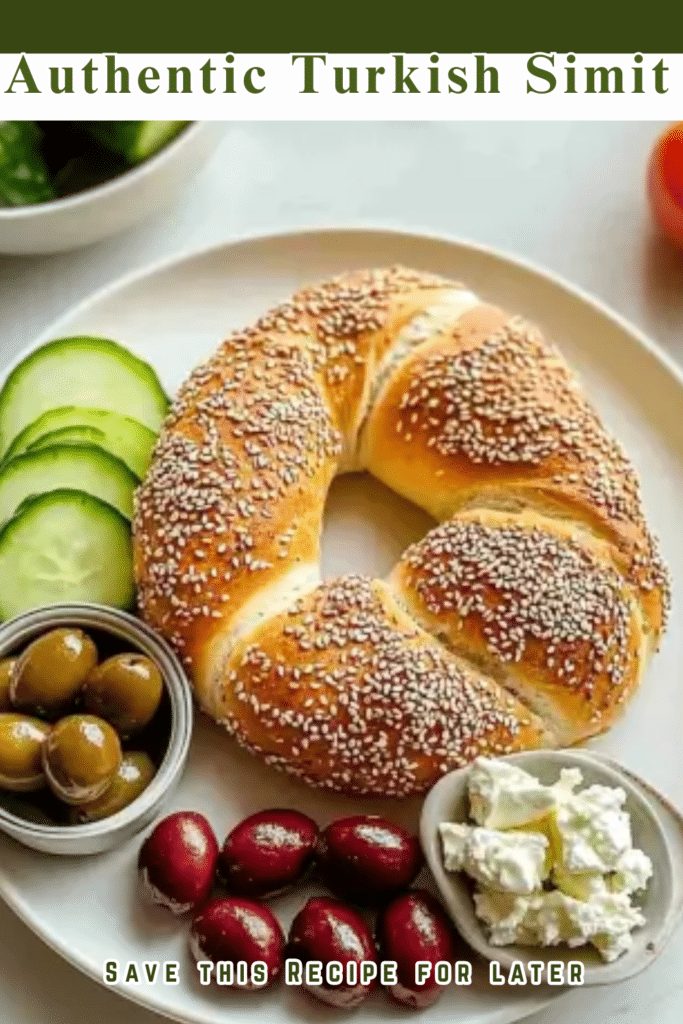
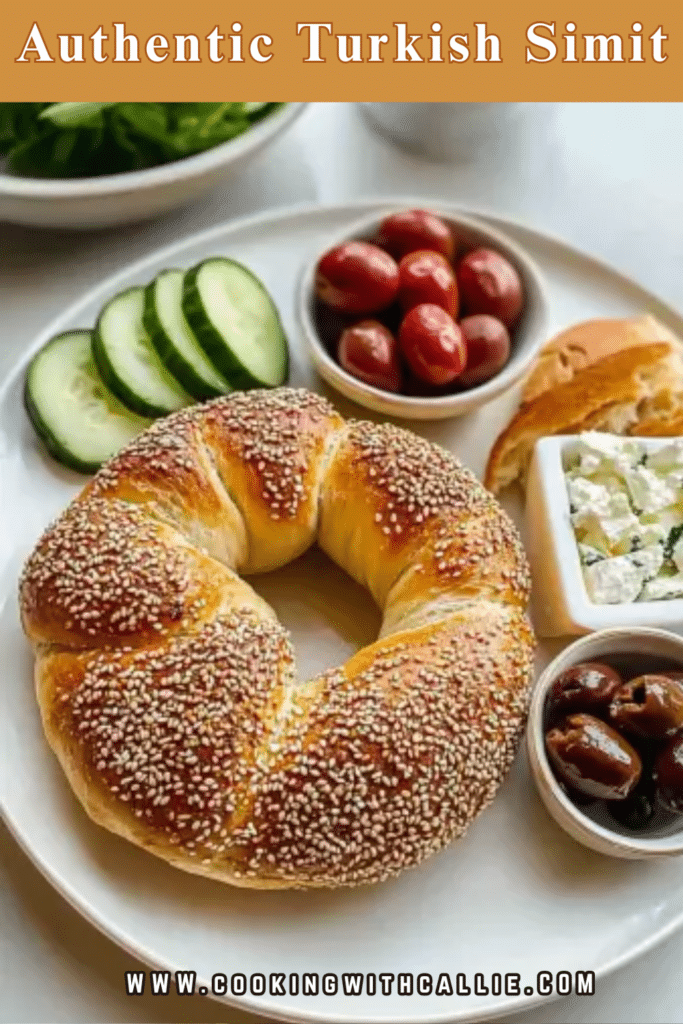
- Serve warm or room temperature with traditional Turkish accompaniments: feta cheese, kalamata olives, sliced cucumbers, sliced tomatoes, and hot Turkish tea or coffee.
Callie’s Kitchen Note
The twist-the-ropes-TIGHTLY-before-shaping-the-ring rule is honestly my second most important secret to genuinely beautiful authentic-looking not-flat-and-untwisted Turkish simit every single time. The first few times I made this recipe, I honestly was nervous about the dough handling and twisted the rope strands very loosely (or sometimes barely twisted them at all). The result was honestly disappointing. The loosely-twisted simit rings completely lost their signature twisted “braid” appearance during the second rise AND the bake. When the simit came out of the oven, the rings looked more like plain donuts rather than the gorgeous twisted bread rings I had seen in Istanbul street carts. The signature spiral pattern that absolutely defines authentic Turkish simit was honestly nowhere to be found. The visual presentation was completely disappointing, even though the flavor was still good. Now I always specifically twist the rope strands VERY TIGHTLY (almost like wringing out a wet towel) before forming the ring shape. The proper technique I follow: After rolling the dough into a 24-inch rope and folding in half, hold the folded end stationary with one hand AND use your other hand to twist the loose ends in the opposite direction. Twist tightly, creating a clear visible spiral pattern along the entire length of the doubled rope. The twisted rope should be tight enough that the spiral pattern is clearly visible (not loose enough that the strands separate). Bring the 2 ends together to form a ring AND pinch firmly to seal. The proper visual cue I now look for: The shaped simit ring should have a CLEARLY VISIBLE twisted spiral pattern around its entire circumference (NOT a smooth uniform appearance). The 2 strands should be tightly intertwined with no gaps visible between them. The pro tip I now follow: After twisting and shaping each ring, use your fingers to gently press the twisted strands together along the length of the ring to encourage them to stick to each other during baking. This prevents the strands from separating during the rise and bake. My sister-in-law learned this trick from me and now ALWAYS twists her simit ropes very tightly. She texted me saying “Cannot believe what a difference tight twisting makes. My simit finally has that gorgeous authentic Istanbul street cart appearance instead of plain rings.” Worth that extra 30 seconds of twisting every single time. Genuine simit-shaping transformation.
Common Mistakes To Avoid
I have hit every one of these, so save yourself the trouble.
- Using HOT water for the yeast. Kills the yeast immediately, dough will not rise. Always use room temperature OR lukewarm water (100-110 degrees F max).
- Loosely twisting the rope strands. Creates flat boring rings without the signature spiral pattern. Twist tightly.
- Skipping the molasses wash. Misses the iconic deep brown color and signature flavor. Always include the wash.
- Underbaking the simit. Creates gummy center. Look for deep golden brown color AND hollow sound when tapped.
- Using untoasted sesame seeds. Misses essential nutty aromatic flavor. Always toast first if raw.
- Overcrowding the baking sheet. Causes uneven baking. Space rings 2 inches apart.
- Skipping the second 10-minute rest after shaping. Creates dense not-airy texture. Always rest before baking.
Storage And Reheating
This Turkish simit stores beautifully and freezes well for future weekend mornings.
Room Temperature Storage
Store cooled simit in an airtight bag or container at room temperature for up to 2 days. Fresh simit is honestly absolutely best within the first 24 hours of baking (the crisp crust is at its peak). For longer storage, see freezing instructions below. For more on safe storage practices for fresh-baked breads, the USDA FoodKeeper guide is a great resource I check often.
Freezer Storage
For longer-term storage, place the completely cooled simit rings in heavy-duty zip-top freezer bags. Squeeze out as much air as possible before sealing. Freeze for up to 1 month. The simit freezes beautifully and reheats almost like fresh-baked. For grab-and-go portions, individually wrap each ring in aluminum foil before placing in the freezer bag (allows you to pull out one or two at a time without thawing the entire batch). Label the bag with the date for easy tracking.
Best Reheating Methods
- Oven (best for crispness restoration): Reheat at 350 degrees F for 5 to 8 minutes until warmed through and the crust is crisp again.
- Toaster oven: Reheat at 325 degrees F for 5 to 7 minutes for single-serving convenience.
- Avoid microwaving: Microwave softens the crust and makes the bread rubbery (bad texture result).
- From frozen: Bake straight from frozen at 350 degrees F for 10 to 12 minutes (no thawing needed).
Creative Leftover Ideas
Cut leftover simit into thick slices and use as the bread base for grilled cheese sandwiches with melted halloumi or aged cheddar. Tear leftover simit into chunks and use as the bread base for traditional Turkish bread pudding with cinnamon, raisins, and milk. Cube leftover simit and toast as fancy sesame-crusted croutons for fresh Mediterranean salads. Use leftover simit as the bun for breakfast sandwiches with scrambled eggs, sliced tomato, and feta cheese. Tear into pieces and dip in olive oil with za’atar for casual appetizers. Crumble cooled simit into small pieces and use as a topping for vegetable soups or chickpea stews. Slice and use as the bread for elegant smoked salmon sandwiches with cream cheese, capers, and fresh dill. Use as the base for fancy avocado toast variations with feta and tomato slices. Mix small pieces into ground meat for meatballs (Turkish kofte-style). Crumble over yogurt with honey and walnuts for a Turkish-style breakfast bowl. Emily likes hers fresh with strawberry jam for school breakfasts. My husband eats his with a hard-boiled egg and tomato for weekend brunch. My niece pairs hers with cream cheese for kid-friendly afternoon snacks.
Callie’s Kitchen Note
For Sunday-morning-Turkish-breakfast-tradition family weekly cultural ritual, this incredible Turkish simit has honestly become my biggest secret weapon for transforming chaotic Sunday mornings into elegant cultural celebrations of our Mediterranean cruise memories with my husband. Before discovering this recipe, Sunday mornings at our house were honestly chaotic affairs of either rushing through cereal or grabbing donuts on the way to church. Now every other Sunday morning during the school year (and weekly during summer vacation), I dedicate 90 minutes to making fresh authentic Turkish simit for our family Sunday brunch. We sit at our family kitchen table with the 6 gorgeous warm sesame-coated bread rings, a platter of traditional Turkish breakfast accompaniments (sliced feta cheese, kalamata olives, fresh tomato slices, sliced cucumbers, hard-boiled eggs, and small bowls of honey and jam), AND small cups of fresh Turkish coffee or hot Turkish black tea (cay). The whole ceremony takes about an hour from start to clean-up, and it has honestly become our preferred Sunday cultural tradition. The total cost per Sunday brunch is around $12 to $18 (which feeds our family of 3 plus has leftovers for Monday school breakfasts), compared to the $60 to $90 we used to spend on Sunday brunch outings at Mediterranean restaurants. My sister-in-law adopted this exact Sunday-morning-Turkish-breakfast-tradition after watching me execute it 2 months in a row at her own visit, and she texted me saying “Best Sunday morning tradition discovery ever. Husband AND all three kids look forward to Sunday Turkish brunches now, no more begging to go to IHOP. Saving $200+ per month on Sunday outings. ICONIC change to our family Sunday routine.” Emily honestly looks forward to “simit Sunday” weekly and says it has become her preferred weekly family tradition. My niece’s older sister told her mom “Aunt Callie’s simit is the only fancy bread I genuinely look forward to all week.” My mother-in-law (who used to host her own Sunday brunches at restaurants) adopted this for her own Sunday hosting and says her friends now expect “Callie’s Turkish breakfast spread” specifically every visit. My brother (who normally would never voluntarily make any bread from scratch) tried this and texted me later “Officially canceled my Sunday IHOP outings. Your homemade simit is way better AND I am saving $50/month on weekend brunches. Adding to my own Sunday morning rotation forever during summer.” My friend Jenna makes these for her family every Sunday during summer and says her husband calls it “the best authentic Mediterranean breakfast experience” outside of actual travel. Worth keeping bread flour, pomegranate molasses, and sesame seeds always stocked in the pantry specifically for this beloved Sunday tradition. Genuine cultural family-bonding magic.
Turkish Simit Variations
Once you nail the base recipe, the variations are honestly endless. Here are the ones my family has loved most over the years.
- Whole grain version: Use a 50/50 whole wheat and bread flour mix for added fiber and nutty rustic flavor depth.
- Natural sweetener: Swap the granulated sugar for coconut sugar or pure maple syrup for refined-sugar-free version.
- Za’atar Middle Eastern flair: Add 1 to 2 tablespoons of za’atar seasoning to the sesame seed coating for absolutely authentic Middle Eastern twist.
- Savory herb variation: Knead 1 to 2 teaspoons of dried rosemary, thyme, or oregano into the dough for elegant savory variation.
- Festive holiday brunch: Serve with strawberry jam, cranberry sauce, or fig jam for festive brunch presentation.
- Mini party platter: Make smaller mini simit rings (1/3 the size) for elegant holiday party platters or appetizers.
- Nigella seed authentic: Add 1 tablespoon of nigella seeds (black sesame seeds) to the sesame coating for authentic Istanbul street vendor style.
- Sumac tangy authentic: Add 1 teaspoon of ground sumac to the sesame coating for tangy lemony Turkish flavor depth.
Callie’s Kitchen Note
The za’atar-Middle-Eastern-flair variation is honestly my mother-in-law’s contribution to this recipe and now my official “fancy adult dinner-party Mediterranean spread” version every couple of months. The first time she suggested adding 2 tablespoons of authentic za’atar seasoning blend (a Middle Eastern spice mix of dried thyme, sumac, sesame seeds, and salt) directly to the sesame seed coating bowl before dipping the simit rings, I was honestly skeptical because I worried the strong herbal sumac-y flavor might clash with the delicate sweet molasses wash OR make the simit taste too aggressively spiced for a breakfast bread. But on a special Saturday evening when she was hosting our extended family for an elegant Mediterranean-themed dinner party at her house, she made her za’atar-coated version for everyone. The result was honestly stunning. The za’atar added gorgeous deep complex herbal-tangy-spice complexity that genuinely complemented the sweet molasses wash AND the toasted sesame seeds absolutely beautifully without overpowering either flavor. The sumac in the za’atar added bright tangy notes that balanced the natural sweetness of the bread. The combination of warm bread, sweet molasses, nutty sesame, AND complex za’atar created the most absolutely layered Mediterranean flavor profile in every single bite. The added complexity transformed the simit from “great breakfast bread” to “absolutely impressive Mediterranean dinner-party appetizer alongside hummus and labneh dips” status. Most importantly, this za’atar version had this incredible “fancy Beirut bistro restaurant” sophistication that the basic version genuinely lacked. My husband took one bite of his mother’s creation and said “Mom, this is genuinely the best simit I have ever had in my life. We need za’atar in every batch from now on.” Emily honestly preferred the za’atar version and now requests it for special weekend family dinners. My father-in-law (who actually traveled extensively in Lebanon during his career) took one bite and said “This is honestly the most authentic Lebanese-style bread I have had since my last trip to Beirut 15 years ago.” My niece Charlotte tried these and called them “the spicy seed bread magic.” My sister-in-law adopted the za’atar version for her own Mediterranean dinner-party hosting and texted me saying “Husband told all his coworkers about your mother-in-law’s za’atar simit version. Officially the most sophisticated bread ever made at home, ICONIC dinner-party upgrade.” My brother (who normally would never voluntarily try anything “ethnic”) tried this and admitted “Okay, the za’atar version is honestly genuinely incredible. Adding to my own Mediterranean dinner-party rotation immediately.” My friend Jenna makes the za’atar version for her annual Mediterranean dinner-party in the fall and says it has become the most-requested element of the entire spread. Worth keeping authentic za’atar seasoning in the spice cabinet specifically for this elegant variation. Genuine mother-in-law-magic Mediterranean dinner-party showstopper.
Serving Suggestions
This Turkish simit shines as an authentic Turkish breakfast centerpiece, an impressive Mediterranean brunch addition, a creative bread option for special occasion meals, or a make-ahead weekend brunch project.
Perfect Pairings
- Authentic Turkish breakfast spread with feta cheese, labneh, olives, cucumbers, tomatoes, and hard-boiled eggs.
- Soft cheeses like Bulgarian feta, French brie, or fresh goat cheese for elegant pairings.
- Mediterranean spreads like hummus, baba ganoush, muhammara, or tzatziki for dip-style sharing.
- Sliced fresh seasonal fruits like figs, pears, or apples with honey for sweet pairings.
- Smoked salmon with cream cheese, capers, and fresh dill for elegant brunch sandwiches.
- Olive oil and za’atar for dipping (classic Lebanese-style breakfast).
- Honey, jam, or fig preserves for sweet morning options.
Best Occasions
I make this for cozy Sunday morning Turkish-style family breakfasts, casual Saturday weekend brunches, impressive last-minute brunch hosting for friends, Mediterranean-themed elegant dinner parties, Mother’s Day brunches, Father’s Day brunches, Easter brunches, summer porch brunch moments, baby and bridal shower elegant brunches, anniversary breakfasts at home, romantic Valentine’s Day brunches, weekly Sunday cultural tradition family rituals, post-cruise vacation memory celebrations, post-Turkey-trip family meals, work-from-home Friday treat brunches, summer porch elegant snacks, weekend movie night snacks, hot summer afternoons (no oven heating needed at room temperature), back-to-school weekend tradition starters, parent-teacher organization international potluck contributions, Christmas morning special breakfast traditions, Boxing Day brunches, New Year’s Day fresh-start brunches, Greek Orthodox Easter celebrations, Mediterranean immigrant family heritage celebrations, college care packages with frozen portions, summer hiking trip portable snacks, casual cocktail party appetizer spreads alongside hummus, elegant garden parties, mom-and-daughter weekend cooking projects, dinner parties for friends with various dietary needs (naturally vegan, easily nut-free), graduation party brunch platters, summer wedding shower brunches, summer rehearsal dinner appetizer spreads, July long weekend backyard barbecues, and any time you want an impressive but authentic Mediterranean spread. They are also perfect for Sabbath family meals and individual breakfast plate presentations at hosted brunches.
Presentation Tips
For the ultimate authentic presentation, stack the golden simit rings on a rustic wooden cutting board or large wooden serving board with small bowls of traditional Turkish accompaniments arranged around the perimeter (feta cheese cubes, kalamata olives, sliced cucumber spears, sliced tomato wedges, hard-boiled eggs cut in half, fresh herbs like mint or dill). For Instagram-worthy photos, capture the moment of breaking open a warm simit ring to show the gorgeous contrast between the crispy sesame-coated golden brown exterior AND the soft chewy white bread interior. The sesame-studded surface against the soft warm bread creates absolutely stunning food photography. For elegant Mediterranean dinner-party hosting, arrange the simit rings hanging from a tall vertical wooden stand (mimicking how Istanbul street vendors display them) for impressive vertical presentation. Add fresh herbs like fresh mint or fresh dill scattered throughout for elegant green accents. Add a sprinkle of high-quality flaky sea salt over the warm simit just before serving for that gourmet artisan finish. For Turkish-themed presentation, serve on small ornate brass or copper trays alongside small Turkish coffee cups and a Turkish water-glass. For brunch hosting, create a “Turkish breakfast spread” tablescape with small ceramic dishes of each accompaniment arranged with the simit in the center.
Beverage Pairings
- Authentic Turkish black tea (cay), traditionally served in small tulip-shaped glass cups for absolutely the most authentic experience.
- Fresh authentic Turkish coffee for the absolute most traditional Turkish breakfast pairing.
- Fresh-squeezed orange juice for refreshing brunch pairing.
- A glass of crisp dry rose, Sauvignon Blanc, or Pinot Grigio for elegant adult brunch wine pairings.
- For something special, a light sparkling wine like Prosecco or Cava for celebration brunches.
- A cafe au lait or cappuccino for European-style coffee pairing.
- For kids, hot chocolate, sparkling apple cider, or cold milk for kid-friendly family pairings.

Turkish Simit FAQ
Yes absolutely, you can easily substitute active dry yeast for instant yeast with one small additional step. Active dry yeast needs to be “bloomed” or activated in warm liquid before mixing with the rest of the dough ingredients.
To use active dry yeast, simply dissolve it in the warm water with the sugar first AND let it sit for 5 to 10 minutes until you see foamy bubbles forming on the surface (this confirms the yeast is alive and active). Then proceed with the recipe as written, adding the oil, flour, and salt. Use the same amount of active dry yeast as instant yeast (1 teaspoon for this recipe). If you do NOT see foamy bubbles after 10 minutes, your active dry yeast may be expired or dead. Start over with a fresh package. For best results, store active dry yeast in the refrigerator or freezer after opening (extends freshness up to 1 year frozen). My friend Jenna uses active dry yeast from her Costco bulk pack and says the blooming step adds only 5 extra minutes but produces equally beautiful results.
A gluten-free flour blend might work for this recipe, but honestly simit relies heavily on gluten development for that signature chewy elastic texture that defines authentic Turkish simit. If you do try a gluten-free version, expect a softer more crumbly texture (not the chewy stretchy authentic version).
For the best gluten-free results, choose a 1-to-1 gluten-free flour blend that already includes xanthan gum (Bob’s Red Mill 1-to-1 Gluten-Free Baking Flour or King Arthur Measure for Measure Gluten-Free Flour are honestly the best for bread applications). If your GF flour does not include xanthan gum, add 1 teaspoon of xanthan gum to the dry ingredients to help with the chewy elastic structure. Increase the water slightly (add 2 to 3 extra tablespoons) since gluten-free flours absorb more liquid. Allow extra rising time (about 45 minutes for the first rise instead of 30). Expect the dough to be stickier and harder to shape into ropes, AND consider making slightly smaller simit (5 instead of 6) for easier handling. The visual presentation may not look quite as authentic as wheat-based simit, but the flavor with the sesame and molasses coating remains delicious. My friend Jenna’s husband has celiac disease and they regularly make a gluten-free version with great results, though they confirm the texture is noticeably softer.
A flat dough that fails to rise is honestly the most common issue with home-baked yeast breads, and almost always fixable. The most likely causes are: 1) Expired or dead yeast, 2) Water temperature too hot which killed the yeast, OR 3) Rising area too cold.
The first fix is to check your yeast. Expired yeast will not activate properly. Look at the expiration date on the package, AND test by mixing a small amount with warm water and sugar. If you do NOT see foamy bubbles forming within 5 to 10 minutes, your yeast is dead and you need to start over with a fresh package. The second fix is to be SURE the rising area is warm enough (around 75 to 85 degrees F is ideal). Cold drafty kitchens can slow or completely halt yeast activation. To create a warm rising environment, you can place the covered dough bowl inside your oven (turned OFF) with just the oven light turned ON (the light bulb provides gentle warmth). Alternatively, place the dough on top of your refrigerator (the back area is naturally warm) or in a cool oven with a bowl of hot water alongside to create steam and warmth. The third fix is to make absolutely sure your water temperature was correct (room temperature or just slightly warm to the touch, NEVER hot). Hot water above 120 degrees F kills yeast on contact. Use a small instant-read thermometer to verify water temperature for guaranteed results. With these adjustments, your simit will rise beautifully every single time.
Yes absolutely, this recipe is perfect for overnight preparation, which makes it ideal for hosting brunches without spending 90 minutes of active prep time on the morning of the event. There are 2 main make-ahead approaches.
For the first approach (overnight slow rise), mix the dough as described in the recipe and let it rise at room temperature for 30 minutes. Then transfer the covered bowl to the refrigerator and let it slow-rise overnight (8 to 12 hours). The cold slow rise actually develops more complex flavor in the bread. The next morning, bring the dough back to room temperature for about 30 minutes, then proceed with shaping, second rise, coating, and baking. For the second approach (shape and freeze), shape the simit rings as directed but do NOT bake. Place the unbaked shaped rings on a parchment-lined baking sheet and freeze until solid (about 2 hours). Transfer the frozen rings to a heavy-duty freezer bag and store for up to 1 month. To bake from frozen, let the rings thaw at room temperature for 30 minutes, then dip in the molasses wash and sesame coating, and bake as directed (may need 2 to 3 extra minutes of bake time). My sister-in-law honestly prefers the overnight slow rise approach because the simit has noticeably deeper flavor.
A gummy soggy center in your finished simit is honestly the most frustrating outcome, but easily preventable in future batches. The most common causes are: 1) Underbaking, 2) Oven temperature too low, OR 3) Rings shaped too thick.
The first fix is to bake the simit longer until you achieve a DEEP golden brown color on the entire surface AND a hollow sound when you tap the bottom of a ring (signs of fully baked bread). 15 minutes is the minimum, but some ovens may need up to 20 minutes for proper doneness. The second fix is to verify your oven is reaching the proper 450 degree F temperature using an oven thermometer (Taylor or OXO brands are honestly affordable and reliable). Many home ovens run 25 to 50 degrees cooler than the dial indicates, which causes underbaking. The third fix is to shape the rope strands slightly thinner before twisting (this allows the bread to bake through more evenly). The fourth fix is to bake on the center oven rack (not the bottom rack which causes uneven browning AND not the top rack which over-browns the surface before the center cooks). With these adjustments, your simit will have a perfectly chewy bread interior every single time.
Absolutely, this Turkish simit is honestly one of the most kid-friendly authentic ethnic breads I make and has been loved by even the most picky little eaters in our extended family. The familiar comforting flavors (kids LOVE warm bread), the fun ring shape (which can be torn apart like a treasure), the nutty sesame seed coating, AND the gentle sweetness from the molasses all make this universally appealing to children. Emily started eating this around age 9 (when I first started making it after our Mediterranean cruise) and now requests it for every weekend family brunch. My niece Charlotte (age 6) calls it “the crunchy seedy bread ring magic” and demands it every visit.
For young children or extra-picky eaters, several easy adjustments make these even more kid-friendly. Reduce the sesame seed coating slightly if your kids find it overwhelming (just brush the molasses wash on top and sprinkle the sesame seeds rather than fully coating). For sesame allergies, substitute poppy seeds OR simply skip the seed coating entirely for plain molasses-glazed simit. Use whole wheat flour blend for added fiber for growing kids. Cut the warm simit into bite-sized pieces for younger kids who have trouble tearing bread. Let kids help with the prep (kids LOVE rolling the ropes, twisting them, AND dipping them in the molasses and sesame seeds). For school lunches, pack individual simit rings with small containers of cream cheese or jam for kid-friendly Mediterranean lunches. The fresh-baked bread provides quality carbs for energy, AND the sesame seeds add essential calcium AND healthy fats. My niece’s older sister calls these “the only fancy bread I really love” and helps make them at every weekend family baking session. For toddlers, tear the bread into smaller pieces, brush off some of the loose sesame seeds (which can be a choking hazard for very young kids), and pair with soft cream cheese or hummus for safer eating.
Recipes You May Like
If this Turkish simit hit the spot, you are going to love these next.
- How To Make Turkish Coffee brings the perfect authentic Turkish-cuisine beverage pairing for your homemade simit. The traditional brunch combination you experienced in Istanbul.
- Homemade Everything Bagels (Vegan-Friendly) brings the same yeasted-bread-ring magic in everything-seasoning-coated bagel form. Perfect for brunch bread comparison.
- Traditional Easter Hot Cross Buns Recipe brings the same traditional yeasted-bread magic in spiced Easter form. Perfect for spring holiday baking.
Conclusion
There is honestly something incredibly satisfying about baking your own bread from scratch. And this incredible Turkish simit recipe truly offers all that signature satisfying crunch, that warm aromatic toasted-sesame fragrance, AND the absolute most authentic Mediterranean flavor that will honestly keep you coming back for more every single weekend. Whether you are sharing it with friends over hot Turkish tea OR enjoying a quiet thoughtful moment of slow morning ritual to yourself with a cup of Turkish coffee, this incredible simit honestly makes every single bite feel a little more special and connected to centuries of beautiful Turkish tradition. The kind of authentic ethnic bread recipe that has rescued countless of our family’s chaotic Sunday mornings AND has become the cornerstone of our Mediterranean cultural-celebration tradition in our extended family for years now.
Do not forget to snap a beautiful photo of your homemade simit and tag me on Pinterest at Pinterest.com/recipescookingwithcallie. I genuinely love seeing all of your beautiful kitchen creations and reading about your own cultural traditions. Reading your kitchen stories is honestly the best part of running this little blog.
If you are a Pinterest person, save this one to your authentic ethnic breads or weekend brunch board so you can find it again next Sunday morning. Follow along at Pinterest.com/recipescookingwithcallie for more recipe ideas, kitchen hacks, and comfort food that just makes life better.
Happy baking, friends.
Callie
Authentic Turkish Simit Recipe

Turkish simit bread is a sesame-crusted, golden ring of dough with a crisp crust and soft center, perfect for breakfast or brunch
- Prep Time: 1 hour
- Cook Time: 20 minutes
- Total Time: 1 hour 20 minutes
- Yield: 6 pieces 1x
- Category: Breakfast
- Method: Baking
- Cuisine: Turkish
- Diet: Vegan
Ingredients
1 ¼ cup room temperature water
1 tablespoon sugar
1 teaspoon instant yeast
1 tablespoon vegetable oil
3 cups bread flour or all-purpose flour
2 teaspoons fine sea salt
¼ cup molasses preferably grape or pomegranate
¼ cup water
1 cup roasted sesame seeds
Instructions
Combine water, sugar, and yeast in a large bowl and stir until dissolved
Add oil, flour, and salt and stir until a rough dough forms
Knead on a floured surface for 5 to 6 minutes until smooth and elastic
Return dough to the bowl, cover, and let rise for 30 minutes
Preheat the oven to 450°F
Divide the dough into 6 pieces and roll each into a ball
Roll each ball into a 24-inch rope, fold in half, and twist
Pinch the ends to form a ring and place on a parchment-lined baking sheet
Let rest for 10 minutes
Mix molasses with water in one shallow bowl and spread sesame seeds in another
Dip each ring in molasses mixture then coat with sesame seeds
Place back on baking sheet and bake for 15 to 20 minutes until golden brown
Cool for 5 minutes before serving




Notes
Use warm not hot water to activate the yeast properly
Pre-roasted sesame seeds enhance flavor and save time
Twisting the dough tightly helps keep the shape while baking
To store, freeze baked simit and reheat in oven for fresh flavor
Nutrition
- Serving Size: 1 simit ring
- Calories: 379
- Sugar: 13g
- Sodium: 715mg
- Fat: 9g
- Saturated Fat: 1g
- Unsaturated Fat: 7g
- Trans Fat: 0g
- Carbohydrates: 65g
- Fiber: 3g
- Protein: 10g
- Cholesterol: 0mg