
This post may contain affiliate links. For more information, see our Affiliate Disclosure Policy.
By Callie
I have a confession. The first time I made beef bourguignon, I was absolutely terrified. I’d seen the Julia Child version, read through at least four different cookbooks, and convinced myself this was one of those recipes that only serious French cooks could pull off. It sat on my “someday” list for over a year before I finally worked up the nerve to try it on a rainy Saturday afternoon.
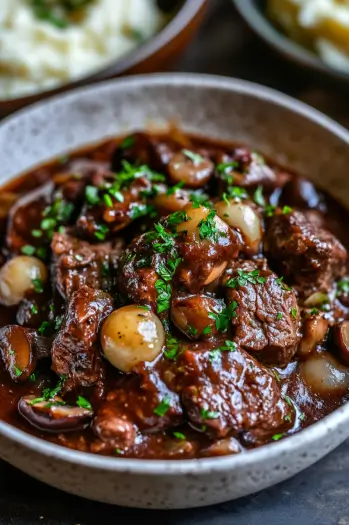
And you know what? It was one of the easiest things I’d ever cooked. Seriously. The hardest part was waiting for it to finish in the oven, because the smell of red wine, bacon, and herbs simmering away for three hours is genuinely torturous when you’re hungry. The beef came out so tender it fell apart when I looked at it, and the sauce was this deep, rich, velvety thing that tasted like it took days to make.
That was about four years ago, and beef bourguignon has been my go-to dinner party recipe ever since. I’ve made it for birthdays, holidays, random Sunday dinners, and one memorable snowstorm where we lost power and I finished the whole thing on a gas burner by candlelight. Every single time, people act like I’ve done something incredibly impressive, and every single time, I think about how it’s really just a stew. A really, really good stew.
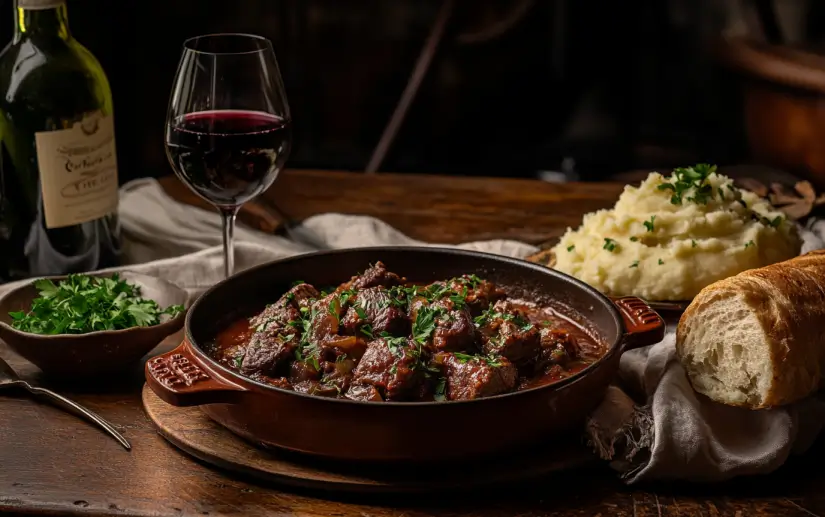
What makes this recipe special is that I’m giving you four different cooking methods – oven, stovetop, slow cooker, and Instant Pot – so no matter what equipment you have or how much time is on the clock, you can make this work. The flavors are deep, layered, and get even better overnight. It’s the kind of meal that makes your whole house smell like a French countryside kitchen.
If you’re a fan of hearty, slow-cooked comfort food, you’ll also want to check out my Dutch Oven Pot Roast – it uses the same low-and-slow approach with a different set of flavors that’s just as satisfying.
Why You Will Like This Beef Bourguignon
- Four cooking methods in one recipe – Whether you have a Dutch oven, a slow cooker, an Instant Pot, or just a regular pot on the stove, this recipe works with what you’ve got
- Make it ahead and it gets better – This is one of those rare dishes where the leftovers actually taste better than the original meal. The flavors keep developing overnight in the fridge
- Impressive without being difficult – The technique is straightforward, but the result looks and tastes like something from a French bistro. It’s the best ratio of effort to payoff I’ve found in cooking
- Feeds a crowd easily – One batch comfortably serves 6 to 8 people, and it doubles well if you need to feed more
- Comfort food at its absolute best – Tender beef, smoky bacon, earthy mushrooms, and a rich red wine sauce. There’s nothing about this dish that isn’t warming and satisfying
- Customizable to your schedule – The oven method takes about 3 hours, the stovetop is similar, the slow cooker works all day while you’re out, and the Instant Pot gets it done in about an hour
- Perfect for special occasions – Date night, holiday dinner, dinner party, or a cozy weekend meal – this recipe fits every one of those situations
- Naturally dairy-free with one easy swap – Replace the butter used for the mushrooms with olive oil, and the whole dish is dairy-free without losing any flavor
Beef Bourguignon Ingredients
Here’s your full shopping list for this classic beef bourguignon recipe. I’ve kept it organized so you can work through it section by section.
For the Bourguignon:
- 1 tbsp extra virgin olive oil
- 6 oz (170 g) bacon, roughly chopped
- 3 lbs (1.4 kg) beef chuck, brisket, or stewing beef, cut into 2-inch chunks
- 1 large carrot, sliced 1/2-inch thick
- 1 large white onion, diced
- 6 cloves garlic, minced (divided – 4 for the stew, 2 for the mushrooms)
- Kosher salt and freshly ground black pepper to taste
- 2 tbsp all-purpose flour
- 12 small pearl onions (optional but recommended)
- 3 cups (710 ml) dry red wine (Pinot Noir, Merlot, or Chianti)
- 2-3 cups (475-710 ml) beef stock
- 2 tbsp tomato paste
- 1 beef bouillon cube, crushed
- 1 tsp fresh thyme, finely chopped
- 2 tbsp fresh parsley, finely chopped (divided)
- 2 bay leaves
- 1 lb (450 g) fresh white or cremini mushrooms, quartered
- 2 tbsp butter (or olive oil for dairy-free)
Ingredient Notes and Why They Matter
Choosing the beef: This is the most important decision you’ll make for this recipe. Beef chuck is my top choice because it has the right balance of meat, fat, and connective tissue. That connective tissue is what breaks down during the long braise and turns the sauce silky and rich. Lean cuts like sirloin or round will dry out and turn stringy. You want marbled, tough-looking cuts – they’re the ones that become meltingly tender after a few hours. Have your butcher cut the pieces into 2-inch chunks if you don’t want to do it yourself.
The wine question: I know “use a wine you’d drink” gets repeated everywhere, but it really does matter here. The wine reduces and concentrates over hours, so any off flavors get amplified. You don’t need an expensive bottle – a solid $10 to $15 Pinot Noir or Merlot works perfectly. Avoid anything labeled “cooking wine” from the grocery store. That stuff is loaded with salt and tastes nothing like real wine.
Fresh versus dried herbs: Fresh thyme and parsley make a noticeable difference in this recipe. The thyme releases its oils slowly over the long cooking time, and the parsley stirred in at the end adds brightness to the finished dish. Dried herbs work in a pinch (use half the amount), but the flavor won’t be as layered.
About the mushrooms: Quartered cremini or white button mushrooms both work well here. I sear them separately at the end rather than adding them to the pot early because mushrooms that simmer for three hours turn to mush. Searing them in butter with garlic right before serving keeps them golden and slightly firm, which gives you a better texture contrast in the final dish.
Callie’s Kitchen Note: I once used a very cheap Cabernet that had been open in my fridge for over a week. The stew came out with this harsh, vinegary edge that no amount of simmering could fix. Now I always open a fresh bottle when I make this – I use three cups for the bourguignon and drink the rest while it cooks. Best cooking strategy I’ve ever come up with.
Possible Substitutions
- Alcohol-free version: Replace the wine with an equal amount of beef stock plus 2 tablespoons of balsamic vinegar and 1 tablespoon of tomato paste. You won’t get the exact same depth, but the stew will still be deeply flavorful
- Vegetarian bourguignon: Swap the beef for a mix of portobello mushrooms, lentils, and root vegetables (parsnips, turnips, potatoes). Use vegetable stock and skip the bacon (or use smoked paprika for that smoky element)
- Gluten-free: Replace the all-purpose flour with a tablespoon of cornstarch mixed with cold water, stirred in during the last 30 minutes of cooking
- Bacon swap: Pancetta works the same way. Turkey bacon will give you some smokiness but won’t render the same amount of fat for browning

How To Make Beef Bourguignon
This is a project recipe, so clear your afternoon and enjoy the process. The active cooking time is only about 30 to 40 minutes, but the total time with braising is around 3 hours for the oven method. I’ll walk you through the traditional oven method in full detail, then give you the adjustments for stovetop, slow cooker, and Instant Pot.
Why We Brown Everything First
Before anything goes into the pot for its long simmer, we brown the bacon, the beef, and the vegetables separately. This seems like extra work, but it’s what separates a good bourguignon from a great one. Browning triggers the Maillard reaction, which creates hundreds of new flavor compounds on the surface of the meat and vegetables. Those browned, caramelized bits – called fond – dissolve into the sauce as it simmers and give the whole dish a depth that you simply can’t get by dumping everything in raw.
- Preheat your oven to 175 degrees C (350 degrees F).
- Heat the olive oil in a large Dutch oven or heavy-bottomed oven-safe pot over medium heat. Add the chopped bacon and cook until it’s crispy and has rendered most of its fat, about 5 to 7 minutes. Transfer the bacon to a plate with a slotted spoon, leaving the fat in the pot. That bacon fat is liquid gold for this recipe.
- Pat the beef completely dry with paper towels. This step is critical. Wet meat steams instead of searing, and you’ll end up with grey, unappetizing chunks instead of a deep golden-brown crust. Season the beef with salt and pepper, then sear it in batches in the hot bacon fat. Give each piece 2 to 3 minutes per side without moving it. Don’t crowd the pot – work in 2 or 3 batches with space between each piece. Transfer the browned beef to the plate with the bacon.
Building the Flavor Base
- In the same pot (don’t wipe it out – all those browned bits are flavor), add the sliced carrot and diced onion. Cook over medium heat for about 3 to 4 minutes until the onion is softening and starting to pick up some color. Add 4 cloves of the minced garlic and cook for another minute until fragrant. The aromatics will start lifting the fond off the bottom of the pot, which is exactly what you want.
- Return the beef and bacon to the pot. Season with a bit more salt and pepper, then sprinkle the flour over everything. Toss it all together and cook for 4 to 5 minutes, stirring occasionally. The flour coats the meat and begins to cook in the fat, which will help thicken the sauce later without needing to add a slurry at the end.
- Add the pearl onions (if using), pour in the red wine and beef stock, and stir in the tomato paste, crushed bouillon cube, thyme, 1 tablespoon of the parsley, and the bay leaves. Give it a good stir, scraping up any remaining browned bits from the bottom of the pot. Bring the whole thing to a simmer.
Callie’s Kitchen Note: The moment you pour the wine into the hot pot, it’s going to bubble up dramatically and fill your kitchen with the most incredible smell. This is called deglazing, and it’s one of the best moments in cooking for me. All those caramelized bits on the bottom of the pot dissolve into the wine and become part of the sauce. If you’ve ever wondered why restaurant stews taste so much deeper than homemade versions, this step is a big part of the reason.
Why We Braise Low and Slow
The long, gentle cooking time isn’t just about making the beef tender (though that’s a big part of it). Braising at a low temperature allows the collagen in the beef chuck to slowly convert to gelatin, which is what gives the sauce that silky, almost glossy quality. If you crank the heat too high, the outside of the meat overcooks and dries out before the collagen has time to break down. Low and slow is the whole point.
- Once the stew is simmering, cover the pot with a tight-fitting lid and transfer it to the preheated oven. Let it braise for 2.5 to 3 hours. Check it once or twice during cooking – the liquid should be gently bubbling, not boiling hard. If it seems too vigorous, drop the oven temperature by 10 degrees.
- The beef is done when it’s completely fork-tender – you should be able to pull a piece apart easily with two forks. If it’s still holding together firmly, give it another 30 minutes. Every cut of beef is slightly different, so trust the texture rather than the clock.
Finishing the Dish
- About 5 minutes before you’re ready to serve, cook the mushrooms. Heat the butter in a skillet over medium-high heat. When it’s foaming, add the quartered mushrooms and the remaining 2 cloves of minced garlic. Sear the mushrooms without moving them for 2 to 3 minutes until golden on one side, then toss and cook for another 2 minutes. Season with a pinch of salt.
- Remove the pot from the oven. Fish out and discard the bay leaves. Stir in the seared mushrooms and the remaining tablespoon of chopped parsley. Taste the sauce and adjust the salt and pepper.
- If the sauce is thinner than you’d like, remove the lid and simmer the pot on the stovetop over medium heat for 10 to 15 minutes to reduce it. You want a sauce that coats the back of a spoon but isn’t as thick as gravy.
Alternative Cooking Methods
Stovetop method: Follow steps 1 through 6 exactly the same way. Instead of transferring to the oven, keep the pot on the stovetop over the lowest heat setting. Cover and simmer for 2.5 to 3 hours, checking every 30 minutes and stirring gently. The key is keeping the heat truly low – if the stew is boiling rather than barely bubbling, it’s too hot.
Slow cooker method: Complete the browning and deglazing steps (1 through 6) on the stovetop, then transfer everything to your slow cooker. Cook on low for 8 to 10 hours or high for 5 to 6 hours. Add the mushrooms in the last 30 minutes. The slow cooker produces incredibly tender beef with minimal effort, and it’s great for days when you want dinner ready when you walk in the door.
Instant Pot method: Brown the bacon and beef using the saute function directly in the Instant Pot. Build the sauce the same way, then seal the lid and cook on high pressure for 35 minutes with a natural pressure release (about 15 minutes). Quick-release any remaining pressure, then stir in the mushrooms. The whole thing takes about an hour and produces results that are surprisingly close to the oven method.
Callie’s Kitchen Note: I’ve tested all four methods back to back, and here’s my honest take. The oven produces the most even, consistent result every time. The stovetop is nearly identical but requires a bit more babysitting to keep the heat steady. The slow cooker is the most hands-off but the sauce tends to be thinner (just simmer it uncovered on high for 15 minutes at the end to thicken). The Instant Pot is fastest and the beef comes out very tender, but the sauce doesn’t reduce and concentrate the way it does in the oven. If I had to pick just one, it’d be the oven. But they’re all genuinely good.
Common Mistakes To Avoid
I’ve been making this recipe for years and I still catch myself almost making some of these. Here are the pitfalls to watch for:
1. Using the wrong cut of beef. This is the most common reason bourguignon doesn’t turn out well. Lean cuts like sirloin, round, or tenderloin will be dry and stringy after braising because they don’t have enough connective tissue or fat. Beef chuck is the best choice. Brisket works too. These are the cuts that start tough and become silky tender with time – that’s exactly what you want for a braise.
2. Not drying the meat before searing. Moisture is the enemy of a good sear. If the surface of the beef is wet, the heat from the pan goes into evaporating that water instead of browning the meat. Pat every piece dry with paper towels, and you’ll get a deep, golden-brown crust that adds serious flavor to the finished stew.
3. Crowding the pot. If the beef pieces are touching each other, they steam rather than sear. The temperature in the pot drops, moisture builds up, and you get grey, bland meat. Work in small batches with plenty of space between pieces. I know it takes longer, but the difference in the final dish is enormous.
4. Using bad wine. The wine is one of the primary flavors in this dish, and it cooks down and concentrates over three hours. A harsh, overly sweet, or stale wine will make the sauce taste off. Use a decent dry red that you’d actually pour yourself a glass of. For understanding how wine affects braising, this guide from the American Chemical Society on cooking with wine explains the science behind why quality matters.
5. Opening the lid too often. Every time you lift the lid, heat escapes and the cooking time extends. Check it twice during the 3-hour braise at most. If you can smell it through the lid, it’s working. Trust the process and leave it alone.
Storage and Reheating
This is genuinely one of the best make-ahead dishes you can cook. The flavors continue to develop in the fridge, so day-two bourguignon is a real thing and it’s spectacular.
Fridge storage: Let the stew cool to room temperature (don’t leave it out for more than 2 hours for food safety), then transfer to airtight containers. It keeps in the fridge for up to 4 days. The sauce will thicken and gel as it cools – that’s the gelatin from the beef collagen, and it’s a sign you did everything right.
Freezing: Beef bourguignon freezes well for up to 3 months. I portion it into individual or double servings so I can pull out exactly what I need. The mushrooms will soften a bit after freezing and reheating, but the overall flavor stays excellent. Thaw overnight in the fridge before reheating.
Reheating methods:
- Stovetop (my go-to): Transfer to a pot and reheat over medium-low heat, stirring occasionally. Add a splash of beef stock if the sauce has thickened too much. Bring it to a gentle simmer and heat through, about 10 to 15 minutes
- Oven: Transfer to an oven-safe dish, cover with foil, and warm at 165 degrees C (325 degrees F) for about 20 to 25 minutes. This is the best method for a large batch
- Microwave: It works, but the results are uneven. Use medium power in 90-second intervals, stirring between each
Meal prep strategy: Make a full batch on Sunday and eat it throughout the week. Serve it over different things each night to keep it interesting – mashed potatoes one day, egg noodles the next, then crusty bread for soaking up the last of the sauce.
For recommended safe cooling and reheating temperatures, the USDA’s food safety guidelines for leftovers are a helpful reference.
Beef Bourguignon Variations
1. Cognac-spiked bourguignon: Add 2 tablespoons of cognac or brandy to the pot right after browning the beef. Let it cook for about 30 seconds before adding the wine. The cognac adds a warm, slightly sweet depth that makes the sauce taste more complex. This is the version I make for special occasions.
2. Root vegetable bourguignon: Add peeled and cubed parsnips, turnips, or sweet potatoes in the last 45 minutes of cooking. They soak up the wine sauce and add natural sweetness and substance. This is especially good in the winter when root vegetables are at their peak.
3. Vegetarian bourguignon: Replace the beef with a combination of portobello mushrooms (cut into thick slabs), French lentils, and chunks of potato. Use vegetable stock, skip the bacon (add a teaspoon of smoked paprika for smokiness instead), and reduce the cooking time to about 45 minutes. It won’t taste like the original, but it’s deeply satisfying in its own right.
4. Gluten-free version: Skip the flour coating step entirely and thicken the sauce at the end with a cornstarch slurry (1 tablespoon cornstarch mixed into 2 tablespoons cold water, stirred into the simmering stew). Serve over mashed potatoes or gluten-free egg noodles.
5. Sun-dried tomato twist: Stir in a handful of chopped sun-dried tomatoes along with the tomato paste. They add a sweet, concentrated tomato flavor and a slightly chewy texture that works surprisingly well in the rich wine sauce.
6. Mushroom-heavy version: Double the mushrooms and add a mix of cremini, shiitake, and oyster mushrooms for a more complex, earthy flavor. Sear them in two batches so they brown properly rather than steaming.
7. Holiday bourguignon: For a festive take, add a cinnamon stick and 3 whole cloves to the pot along with the wine. They add a subtle warmth that makes the whole dish feel like a special occasion. Remove them before serving. I made this version for Christmas dinner last year and everyone asked what was different.
Callie’s Kitchen Note: The cognac version is honestly my personal pick. I discovered it by accident when I grabbed the wrong bottle while cooking one evening. The splash of cognac hit the hot pan, everything sizzled, and the smell that came off that pot was unbelievable. Now I add it every time I’m cooking for guests. It’s a small addition that makes the whole dish taste more polished.
Serving Suggestions
Classic Pairings
Beef bourguignon is traditionally served over something that soaks up the sauce, and that’s really where the magic happens. Creamy mashed potatoes are the classic pairing – pile them in the center of a wide bowl and ladle the stew around and over them. The potatoes absorb the wine sauce and every bite becomes this rich, velvety thing.
Buttered egg noodles are another great option and my personal weeknight choice because they’re fast to cook. Crusty French bread for dipping is all you need if you want to keep things simple. I’ve also served this over polenta, which sounds unusual but the creamy corn flavor pairs beautifully with the rich beef.
Occasion Ideas
- Weekend comfort dinner: This is the quintessential rainy Saturday recipe. Put it in the oven, read a book, and come back to one of the best meals you’ve ever made
- Dinner party showstopper: Make it the day before, reheat before guests arrive, and serve it in a big Dutch oven in the center of the table. Everyone serves themselves, and you look like you’ve been cooking all day (even though you haven’t touched it since yesterday)
- Holiday meal: Beef bourguignon works beautifully for Christmas Eve, New Year’s Day, or any cold-weather holiday where you want something grand but manageable
- Date night: There’s something genuinely romantic about sharing a bottle of wine, using half for the stew and drinking the rest while it cooks
Presentation Tips
Serve in wide, shallow bowls so the sauce can pool around the beef and vegetables. A scattering of freshly chopped parsley on top adds a nice pop of green. Keep the presentation rustic – this is farmhouse food, not fine dining, and that’s part of its charm.
Beverage Pairings
The easiest move is to pour a glass of the same wine you used in the stew. If you want something different, a Burgundy (Pinot Noir from Burgundy, France) is the traditional match for obvious reasons – the dish literally comes from that region. A Cotes du Rhone or Malbec also works well. For non-drinkers, a sparkling water with lemon keeps things clean and refreshing alongside the rich stew, or a dark, malty craft beer complements the deep flavors surprisingly well.
Beef Bourguignon FAQ
Not only can you, I actually recommend it. Beef bourguignon is one of those rare dishes that genuinely tastes better the next day. The flavors have time to marry overnight in the fridge, the sauce firms up slightly from the gelatin and then becomes even silkier when reheated, and the beef absorbs more of the wine sauce as it sits. Make the full recipe, let it cool, store it in the fridge, and reheat gently on the stove the next day. Add the parsley garnish and a splash of fresh stock right before serving to brighten it back up. I’ve done this for every dinner party I’ve ever hosted with this recipe, and it’s saved me every time.
A dry red wine with medium body works best. Pinot Noir is the traditional choice since this dish comes from the Burgundy region of France, where Pinot Noir is the primary grape. Merlot and Chianti are both excellent too. Avoid anything too tannic (like a heavy Cabernet Sauvignon) because the tannins can turn bitter after hours of reduction. Also avoid sweet wines, “cooking wine” from the grocery store, or anything you wouldn’t drink on its own. The wine is one of the three most important flavors in the dish (alongside the beef and the bacon), so it needs to be good. A $10 to $15 bottle is more than enough.
A few possible reasons. First, you may have added too much stock. Start with 2 cups and only add the third if the liquid doesn’t cover the beef. Second, the lid may not have been tight enough, allowing steam to escape without the sauce reducing. Third, if you used the slow cooker, the sauce almost always needs reducing at the end – transfer it to the stovetop and simmer uncovered for 15 minutes. You can also thicken it with a cornstarch slurry (1 tablespoon cornstarch mixed into 2 tablespoons cold water) stirred into the simmering stew.
Yes, and it’s a great option when you don’t have 3 hours. Use the saute function to brown the bacon, sear the beef, and build the sauce exactly as described. Then seal the lid, set it to high pressure for 35 minutes, and let the pressure release naturally (about 15 minutes). The beef will be tender and the sauce will be flavorful, though it won’t have the same depth of reduction as the oven method. I usually simmer the sauce uncovered on the saute function for another 10 minutes after pressure cooking to thicken it up. It’s not quite the same as the oven version, but it’s about 80% of the way there in a third of the time.
The most likely reason is that it hasn’t cooked long enough. Every cut of beef is a little different, and some batches of chuck need closer to 3.5 hours to become truly fork-tender. If the beef is holding together firmly when you test it with two forks at the 3-hour mark, put the lid back on and give it another 30 minutes. The second possibility is that your oven is running too hot. If the stew is boiling hard instead of gently simmering, the outside of the meat tightens before the inside can break down. Drop the temperature by 15 degrees and check again in 30 minutes. Patience is really the answer here.
Yes, and they’re actually what I use most of the time. Fresh pearl onions are a pain to peel (you have to blanch them first, then slip the skins off one by one), and frozen pearl onions taste nearly identical in the finished dish. Add them directly from frozen when you add the wine and stock. They’ll thaw and soften during the long braise. The texture is very slightly different from fresh, but honestly, in a stew this flavorful, nobody will notice.
Recipes You May Like
If this beef bourguignon is your kind of cooking, these recipes follow the same philosophy of simple technique with big, deeply developed flavors:
- Dutch Oven Pot Roast – Another low-and-slow Dutch oven recipe where the beef braises until it’s falling apart. If you love the process of browning, deglazing, and letting time work its magic, this one will feel very familiar.
- Beef Stroganoff – Easy One-Pot Recipe – A quicker weeknight option that still delivers that rich, beefy, saucy comfort. It’s the fast version of the same mood this bourguignon puts you in.
- Roasted Chicken and Vegetables – For when you want that same cozy, hands-off oven dinner but with poultry instead of beef. The herbs and roasted vegetables give it a similar French countryside feel.
Conclusion
Beef bourguignon is one of those recipes that I think every home cook should have in their back pocket. Not because it’s complicated – it really isn’t. But because it delivers the kind of deep, satisfying flavor that makes people stop mid-bite and say, “This is incredible.” And then you get to casually say, “Thanks, it’s just a stew,” which is one of the best feelings in cooking.
Give yourself a weekend afternoon, open a bottle of wine, and enjoy the process. The browning, the deglazing, the slow simmer, the smell filling your kitchen for hours – that’s the fun part. And when you finally sit down with a bowl of tender beef in that rich, glossy wine sauce, I promise you’ll understand why this dish has been a French classic for over a century.
If you try this recipe, I’d love to hear about it! Leave a comment, tag me on social media, or just save this pin so you can find it the next time you want to make something really special.
Happy cooking!
Callie


The Ultimate Guide to Making Perfect Beef Bourguignon

Beef Bourguignon is a classic French dish featuring tender chunks of beef simmered in red wine with smoky bacon, earthy mushrooms, and fresh herbs. Perfect for cozy family dinners or special occasions, this dish offers rich, comforting flavors that will impress any crowd.
- Prep Time: 15 minutes
- Cook Time: 3 hours
- Total Time: 3 hours 15 minutes
- Yield: 6–8 servings 1x
- Category: Main Course
- Method: Oven (includes variations for stove top, Instant Pot, and slow cooker)
- Cuisine: French
- Diet: Gluten Free
Ingredients
- 1 tablespoon extra-virgin olive oil
- 6 ounces bacon, roughly chopped
- 3 pounds beef brisket, chuck steak, or stewing beef, cut into 2-inch chunks
- 1 large carrot, sliced ½-inch thick
- 1 large white onion, diced
- 6 cloves garlic, minced (divided)
- ½ teaspoon coarse salt
- ¼ teaspoon ground pepper
- 2 tablespoons all-purpose flour
- 12 small pearl onions (optional)
- 3 cups red wine (Merlot, Pinot Noir, or Chianti)
- 2–3 cups beef stock
- 2 tablespoons tomato paste
- 1 beef bouillon cube, crushed
- 1 teaspoon fresh thyme, finely chopped
- 2 tablespoons fresh parsley, finely chopped (divided)
- 2 bay leaves
- 1 pound fresh white or brown mushrooms, quartered
- 2 tablespoons butter
Instructions
- Preheat oven to 350°F (175°C).
- Heat olive oil in a large Dutch oven or heavy pot. Sauté the bacon until browned and crisp. Remove and set aside.
- Pat beef dry with paper towels. Sear in batches in the bacon fat until browned on all sides. Transfer to the dish with bacon.
- Sauté the carrot and diced onion until softened (about 3 minutes). Add 4 cloves minced garlic and cook for 1 minute.
- Drain excess fat, leaving about 1 tablespoon in the pot. Return the beef and bacon to the pot. Season with salt and pepper. Sprinkle with flour, toss to coat, and cook for 4-5 minutes.
- Add pearl onions, wine, and enough stock to just cover the meat. Stir in tomato paste, bouillon, thyme, parsley, and bay leaves. Bring to a simmer.
- Cover and transfer to the oven. Cook for 2-3 hours or until beef is fall-apart tender.
- While the beef cooks, sauté mushrooms in butter with 2 cloves of garlic until golden (5 minutes). Set aside.
- Remove the pot from the oven. Strain the sauce into a large bowl, discard herbs, and skim off any fat.
- Return beef and vegetables to the pot. Stir in mushrooms. Simmer sauce uncovered until thickened, then pour it over the beef mixture.
- Serve hot, garnished with parsley, over mashed potatoes, rice, or noodles.


Notes
- For a milder sauce, reduce the wine to 2 cups and increase the beef stock to 3 cups.
- Make ahead: Tastes even better the next day! Cool completely, refrigerate, and reheat over low heat.
- Gluten-free option: Use a gluten-free flour substitute.
Nutrition
- Serving Size: 1 bowl
- Calories: 624 kcal
- Sugar: 7 g
- Sodium: 1,163 mg
- Fat: 25 g
- Saturated Fat: 9 g
- Unsaturated Fat: 16 g
- Trans Fat: 0.2 g
- Carbohydrates: 19 g
- Fiber: 3 g
- Protein: 59 g
- Cholesterol: 151 mg