This post may contain affiliate links. For more information, see our Affiliate Disclosure Policy.
By Callie
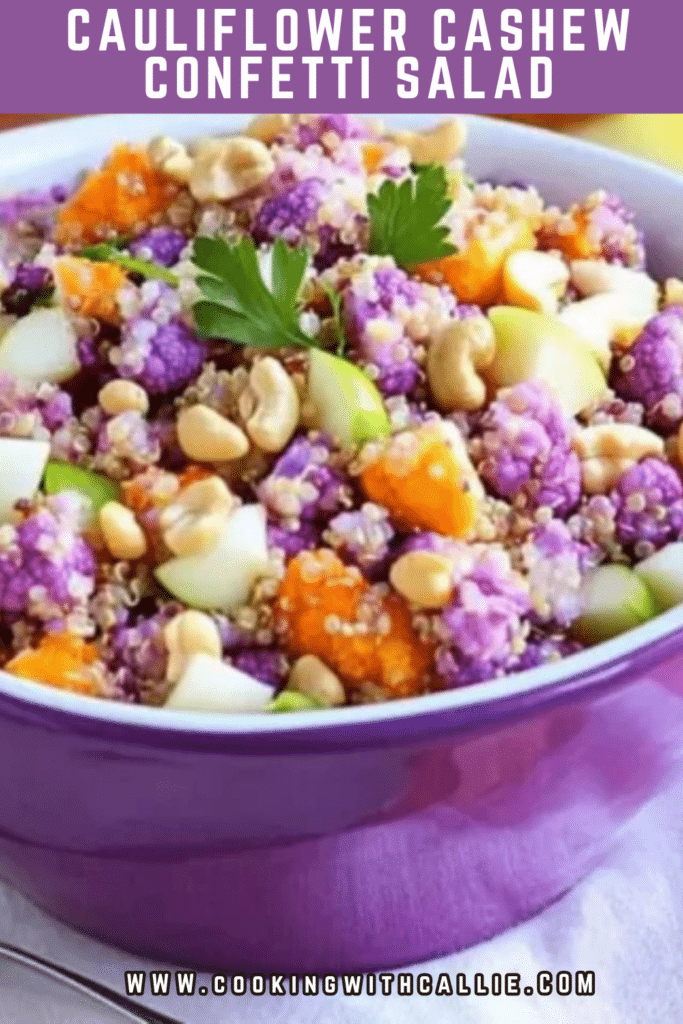
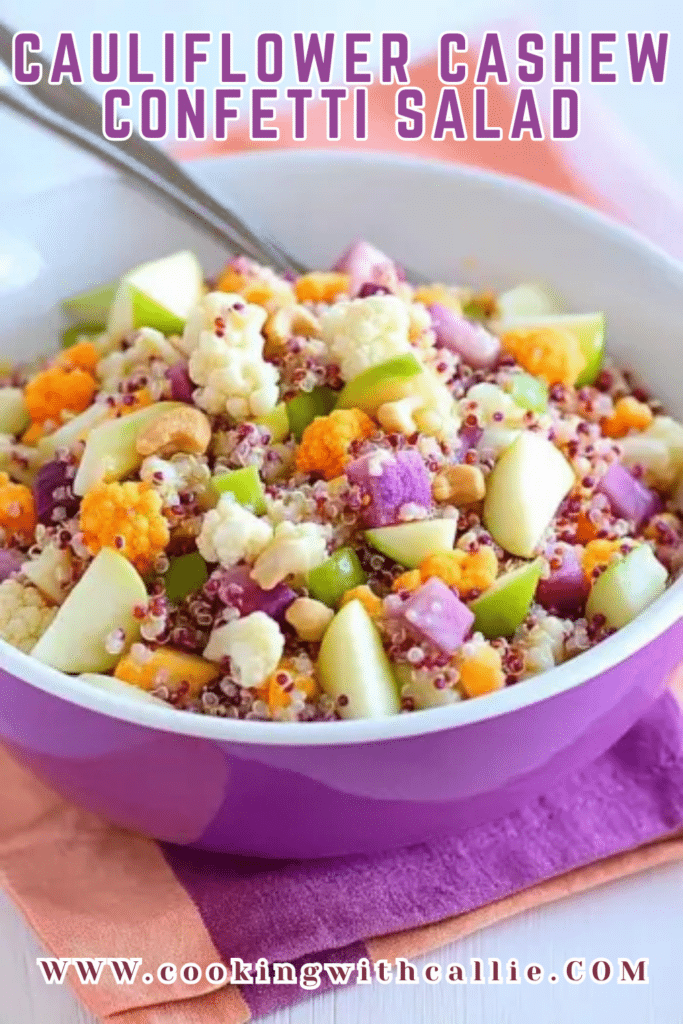
This cauliflower cashew confetti salad started at the farmer’s market on a Saturday morning when the produce stall had the most vivid purple and orange cauliflower I’d seen all season – the deep violet of the purple heads and the warm amber-orange of the orange variety are specifically the visual that makes the “confetti” name accurate rather than aspirational. Raw chopped cauliflower, tart Granny Smith apple, roasted cashews, and cooked-and-cooled quinoa, all tossed in a garlic shallot dressing with lemon, maple, and sumac. Ten minutes of active work. The dressing’s sumac adds a specifically Middle Eastern-inflected, citrus-adjacent tartness that makes the whole salad taste specifically more considered than its preparation time suggests.
The dressing is worth specific attention before making it: raw minced garlic and minced shallot go directly into the lemon juice, maple syrup, sumac, and shallot salt without any oil added. This is specifically an oil-free dressing in its base form (a small drizzle of olive oil over the finished salad is optional, not required), and it works because the lemon juice’s acid mellows the raw garlic and shallot’s harshness during the 10-15 minutes the salad sits before serving. The result is a dressing that is pungent in the best way – assertive with garlic and shallot, bright from the lemon, slightly warm from the sumac, and lightly sweet from the maple – rather than the palate-scalding raw-garlic experience that putting raw garlic directly on a salad without acid can produce.
This is entirely plant-based, gluten-free, and dairy-free with no substitution required – the same quality as the broccoli crunch salad and the Mediterranean gluten-free pasta salad, making it the third addition to the “everyone eats from the same bowl” category of recipes that accommodate every common dietary need while being genuinely good rather than accommodation-good. For the broccoli-based companion that uses similar raw vegetable crunch with different flavor framing, the Broccoli Crunch Salad With Apples And Almonds is the lemon-Dijon companion that uses the same raw-cruciferous-vegetable-as-crunch-base approach in a slightly different flavor direction – both feature apple and a lemon-forward dressing; the cruciferous vegetable and the nut are different.
Speed Hacks – Cauliflower Cashew Confetti Salad In 10 Minutes:
- Use pre-cooked quinoa from the refrigerator (meal-prepped ahead or from a frozen quinoa packet) – the quinoa is the only component that requires actual cooking; having it ready eliminates the only step that takes more than prep time
- Make the dressing while the quinoa cools (if cooking from scratch) – the dressing takes 2 minutes to whisk; it can mellow in the bowl while the other components are prepped
- Buy pre-cut cauliflower florets from the produce section – this eliminates the coring and chopping step for the cauliflower, the most time-consuming prep element in the recipe
- The dressing keeps for 5 days refrigerated in a small jar – making it ahead means day-of prep is literally just chopping and tossing with pre-made dressing
- Toss chopped apple with lemon juice immediately after cutting (use a small splash from the dressing’s lemon) to prevent browning – this 20-second step preserves the apple’s color and firmness for up to 4 hours
Why You Will Love This Cauliflower Cashew Confetti Salad
- Purple and orange cauliflower varieties are specifically more than visual novelties – they have slightly different flavor profiles from standard white cauliflower that add complexity to a raw application. White cauliflower: mild, slightly nutty, neutral enough to absorb dressings without competing. Purple cauliflower (colored by anthocyanin, the same pigment in red cabbage and blueberries): a slightly more earthy, slightly more mineral flavor note alongside the standard cauliflower character. Orange cauliflower (high in beta-carotene, which produces the color): a slightly sweeter, slightly more carrot-adjacent flavor compared to white. In a raw salad where the cauliflower’s own flavor is detectable: the three-color combination produces more flavor complexity than any single variety alone. When colored varieties aren’t available: white cauliflower is entirely appropriate and produces a still-excellent salad with different (but equally good) visual presentation.
- Sumac is specifically the spice that makes this dressing distinctly different from a standard lemon vinaigrette, and it’s worth adding to the pantry specifically for this purpose and many others. Sumac is a dried and ground red berry from the Middle East with a specifically fruity, wine-adjacent tartness that is distinct from vinegar’s sharp acid or lemon juice’s citrus acid. It provides tartness without adding liquid (which would affect the dressing’s consistency), a slightly fruity dimension that brightens the lemon’s more straightforward acid, and a reddish-purple color that tints the dressing. In the Tajín parallel from the Mexican street corn pasta salad: sumac is the specifically correct spice for this recipe’s flavor direction the same way Tajín is the specifically correct spice for elote. Both are specialty spices worth keeping on hand for the range of dishes they improve. Sumac is available at most Middle Eastern grocery stores, spice shops, and increasingly at major grocery stores in the spice section.
- Granny Smith apple specifically rather than sweet apple varieties provides a tartness that works as a flavor component of the salad rather than just a sweetness that competes with the dressing’s sweet maple. The dressing already has maple syrup for sweetness. A sweet apple (Honeycrisp, Fuji) adds another sweetness source that can make the salad taste slightly cloying in combination with the maple. Granny Smith’s tartness provides acidity and contrast – the apple’s firm, tart flesh against the dressing’s sweet-sour balance produces a more specifically interesting combination than sweet-apple-plus-sweet-dressing would. Granny Smith is also specifically the firmest common apple variety, maintaining its crisp texture for the longest period in a dressed salad.
- Roasted cashews (rather than raw) provide a richer, more specifically buttery, more aromatic nut character that raw cashews can’t match – and they soften slightly in contact with the dressing, becoming creamy-edged rather than uniformly hard. Raw cashews: mild, slightly waxy, uniform in texture throughout. Roasted cashews: golden exterior, specifically warm and nutty from the roasting’s Maillard browning, with a slightly softer texture from the heat’s effect on the cashew’s natural fats. In a salad where the cashew should be a distinct flavor element rather than just a textural crunch: roasted specifically contributes more. Unsalted roasted cashews are specifically preferred here because the dressing’s shallot salt provides the salad’s salt level – salted cashews would over-season the salad in combination with the dressing’s salt.
- Cooked-and-cooled quinoa provides a complete protein, complex carbohydrate base, and specifically nutty, slightly earthy flavor that converts this from a vegetable side dish into a nutritionally complete meal. Quinoa is a complete protein (containing all nine essential amino acids) – one of the few plant-based ingredients that provides complete protein in the same way animal proteins do. The cooked-and-cooled quinoa in this salad provides approximately 8g of protein per cup. Combined with the cashews’ approximately 5g per 1/4 cup, the salad provides meaningful protein in a plant-based format. The quinoa’s slightly nutty, slightly earthy flavor complements the cauliflower’s clean freshness and the dressing’s garlic-lemon-sumac character.
Cauliflower Cashew Confetti Salad Ingredients
Garlic Shallot Dressing
- 3 cloves garlic, finely minced (approximately 1 tablespoon)
- 1 large shallot, finely minced (approximately 3-4 tablespoons)
- Juice of 1 lemon (approximately 3 tablespoons fresh lemon juice)
- 1 tablespoon maple syrup
- 1 teaspoon ground sumac
- 1 teaspoon shallot salt or garlic salt (or 1/2 teaspoon fine sea salt)
Salad (Serves 4-6)
- 1 head purple cauliflower, cored and chopped into small florets (approximately 2 cups)
- 1 head orange cauliflower (or standard white), cored and chopped into small florets (approximately 2 cups)
- 2 Granny Smith apples, cored and chopped into 1/2-inch pieces
- 3/4 cup cooked quinoa, completely cooled
- 1/2 cup roasted unsalted cashews, roughly chopped
Ingredient Notes And Substitutions
Making the dressing with raw garlic and shallot: The dressing in this recipe has no oil added – it’s lemon juice, maple syrup, sumac, salt, and raw aromatics. This is an intentional choice that produces a specifically intense, pungent, bright dressing that the 10-15 minute rest with the salad mellows appropriately. If the raw garlic and shallot combination tastes very sharp when the dressing is first whisked: that is correct. After 15 minutes in contact with the lemon juice’s acid, the sharp raw aromatics mellow considerably. If you prefer a less assertive dressing: allow it to sit for 30 minutes before dressing the salad, or reduce the garlic to 2 cloves.
Where to find sumac: Middle Eastern grocery stores (the most reliable source), specialty spice shops, Whole Foods Market (typically in the bulk spice section), or online. A bottle of sumac costs approximately $4-7 and lasts 6-12 months. Beyond this recipe, sumac is excellent: sprinkled on hummus before serving, added to fattoush salad, stirred into yogurt dips, sprinkled on roasted vegetables, added to grain salads generally. It’s the spice that, once you have it, you find yourself adding to everything.
Colored vs white cauliflower: Purple and orange cauliflower are available at farmer’s markets (especially in fall when cauliflower is in peak season), specialty grocery stores, and Whole Foods. Standard white cauliflower from any grocery store produces an equally good salad with different visual presentation. The purple variety turns slightly more muted in color after being dressed (the anthocyanin pigment reacts to the acid’s pH); the orange variety maintains its color more reliably.
Callie’s Kitchen Note: The farmer’s market origin of this recipe is specifically the kind of “buy the beautiful thing and figure out what to do with it” cooking that produces some of the most interesting dishes. The purple and orange cauliflower were there, they were beautiful, and I bought them before having a plan. The dressing came together from what I had on hand: garlic and shallots from the pantry, lemon from the fruit bowl, sumac that I keep specifically because it improves almost everything it touches, and maple syrup that lives on the counter. The cashews and quinoa were meal-prep leftovers. The assembly took 10 minutes. The result was specifically the “this looks like something from a restaurant” reaction from my husband – the visual impact of the purple-and-orange cauliflower against the pale quinoa and green apple is genuinely striking. Buy the interesting produce first. The recipe follows.

How To Make Cauliflower Cashew Confetti Salad
1- Prepare The Quinoa And Make The Dressing
If cooking quinoa from scratch: rinse 1/3 cup dry quinoa in a fine-mesh strainer (removing the natural bitter saponin coating), combine with 2/3 cup water and a pinch of salt in a small saucepan, bring to a boil, reduce to a simmer, cover and cook for 12-15 minutes until the liquid is absorbed and the quinoa’s spiral germ is visible. Spread on a plate or baking sheet to cool completely – approximately 15-20 minutes at room temperature. Do not add warm or hot quinoa to the salad (warm quinoa wilts the apple and makes the salad slightly watery from the steam).
While the quinoa cools: make the dressing. In a large mixing bowl (large enough for the entire salad): whisk together the minced garlic, minced shallot, lemon juice, maple syrup, sumac, and shallot salt until uniform. The dressing will look thin and bright yellow-green from the lemon. Allow to sit while you prep the remaining ingredients – the 10-15 minutes of rest mellows the raw garlic and shallot. If you have the time: prepare the dressing 30 minutes ahead for the most thoroughly mellowed result.
Why Sumac Is The Dressing’s Defining Spice
Ground sumac provides tartness in a completely different way than lemon juice or vinegar. Lemon juice and vinegar provide tartness from citric acid and acetic acid respectively – clean, sharp, specifically sour. Sumac provides tartness from malic acid and citric acid in combination with specifically fruity, slightly wine-adjacent aromatic compounds (terpenes and polyphenols from the dried berry’s skin and flesh). The result is a tartness that has dimension beyond sourness: a slightly fruity, slightly earthy, specifically Middle Eastern-inflected acid note that lemon alone can’t provide. One teaspoon in the dressing turns a basic lemon-garlic-maple dressing into a specifically sumac-forward dressing with clear Middle Eastern-inspired character.
2- Prep The Salad Components
Core the cauliflower heads and chop into small, uniform florets – approximately 1-inch pieces. Smaller florets (rather than large, branching florets) produce better dressing coverage (more surface area in contact with the dressing per piece) and more even distribution throughout the salad. Wash and dry the cauliflower thoroughly – wet cauliflower dilutes the dressing the same way wet broccoli does in the crunch salad.
Core and chop the Granny Smith apples into approximately 1/2-inch pieces. Immediately toss with 1-2 teaspoons of lemon juice (use a small amount from the dressing’s lemon) to prevent browning. Roughly chop the cashews into approximately half-size pieces – this produces better distribution throughout the salad than whole cashews, which can gather in clusters.
3- Toss And Adjust
Add the cooled cauliflower (both colors if using), chopped apple, cooled quinoa, and chopped cashews to the bowl with the dressing. Using tongs or two large spoons: toss thoroughly until every piece of cauliflower and apple is coated with the dressing. The quinoa will absorb some of the dressing’s liquid; this is normal and improves the quinoa’s flavor. Taste and adjust: more lemon if it needs brightness, a pinch more salt if it needs more seasoning, a small additional squeeze of maple if the tartness is too sharp.
Serve immediately or refrigerate for 30-60 minutes. After 30-60 minutes: the cauliflower has absorbed some of the dressing and the raw garlic and shallot’s pungency has mellowed further. The quinoa has absorbed the dressing’s flavor and become more complex. The apple pieces are slightly more tart from the dressing’s lemon. The 30-60 minute version is specifically the more developed, more cohesive flavor result.
Callie’s Kitchen Note: The “raw garlic and shallot in lemon juice” dressing approach is specifically the technique I want to call out because it seems intimidating on paper and produces a surprisingly mellowed result in practice. Straight raw minced garlic has a pungency that can overpower a dish. The same minced garlic macerated in lemon juice for 15-30 minutes: the acid partially breaks down the allicin compounds responsible for garlic’s sharpest harshness, producing a garlic that is still assertive and fragrant but no longer raw-sharp. The same applies to the shallot. The dressing whisked together and allowed to sit in the mixing bowl while you prep the remaining ingredients is specifically the version to make – not the dressing poured over the salad immediately after whisking. Those 10-15 minutes of rest produce a meaningfully better dressing.
Common Mistakes To Avoid
Adding Warm Quinoa
Warm quinoa wilts the apple, makes the cashews slightly soggy, and produces steam that condenses in the bowl and dilutes the dressing. Let the quinoa cool completely on a plate – approximately 15-20 minutes at room temperature – or use pre-cooked quinoa from the refrigerator. Cold quinoa from the refrigerator is specifically the most convenient approach and produces the best texture in the salad.
Not Drying The Cauliflower After Washing
The same principle as the broccoli crunch salad: water trapped in the cauliflower florets releases into the dressing during the tossing and sitting, diluting the dressing’s flavor and producing watery pooling at the bowl’s bottom. Wash, then dry thoroughly in a salad spinner or with paper towels before adding to the bowl.
Using Pre-Salted Roasted Cashews
The dressing’s shallot salt or garlic salt provides the salad’s sodium content. Adding salted cashews on top of this produces an over-salted result that is difficult to correct. Use unsalted roasted cashews specifically; add any additional salt through the dressing.
Dressing Immediately Before Serving (Not Allowing Rest Time)
The best version of this salad is not the just-dressed version but the 30-60-minute-rested version. The rest allows the raw garlic and shallot to mellow in the acid, the cauliflower to absorb the dressing’s flavor, and the quinoa to become more thoroughly seasoned. If you’re preparing for a specific meal time: dress 30-60 minutes before serving rather than immediately before.
Over-Mixing After Assembly
Aggressive tossing or excessive re-tossing breaks the apple pieces into smaller, irregular pieces and can make the salad look mushy at the apple portion. Toss thoroughly once with tongs, then leave it. If tossing again before serving: gently fold rather than vigorously tossing.
Callie’s Kitchen Note: The visual impact of purple-and-orange cauliflower against pale quinoa and Granny Smith apple’s green skin is specifically what produces the “this looks like something from a restaurant” reaction – and this reaction comes from the produce selection, not from any cooking technique. A 10-minute recipe where the primary wow factor comes from buying interesting produce rather than performing interesting technique is specifically the kind of recipe I find myself making more often than complex ones, because the investment is in the shopping decision (buying the colorful cauliflower when it’s there) rather than in the kitchen time. The cooking (which in this case is just dressing assembly and tossing) takes 10 minutes. The visual impact takes as long as it takes to recognize colorful cauliflower at the market and buy it.
Storage Notes
Dressed salad: In an airtight container for up to 4 days. The cauliflower softens slightly over the first 24 hours as the acid in the dressing breaks down the cell walls; by day 2 it is slightly less crunchy but still pleasant and the flavors are more fully developed. The apple pieces soften and deepen in color over storage; they remain good but less visually vibrant by day 3.
Undressed components: The cauliflower and quinoa (without apple, cashews, or dressing) store in an airtight container for up to 5 days. Cut and lemon-treated apple fresh at each serving for maximum color and texture. The dressing stores in a small jar in the refrigerator for up to 5 days – the raw garlic and shallot continue mellowing during refrigerator storage, making day-3 dressing actually more specifically balanced than day-1 dressing.
Freezing: Not appropriate – the cauliflower and apple would become mushy after thawing. Refrigerator-only preparation.
Cauliflower Cashew Confetti Salad Variations
Add Dates And Fresh Mint For A Middle Eastern Direction
Add 4-5 Medjool dates, pitted and roughly chopped, to the assembled salad. Stir in 2 tablespoons of fresh mint leaves, roughly torn. The dates’ intensely sweet, slightly caramel-adjacent flavor against the sumac dressing’s tartness is a specifically Middle Eastern-inspired combination (dates and sumac appear together in many Levantine dishes for exactly this sweet-tart contrast). The mint adds fresh herbaceousness that amplifies the sumac’s aromatic quality. This is the version to make for a mezze-style table alongside hummus, pita, and roasted vegetables.
Add Pomegranate Arils For Festive Color
Add 1/2 cup of fresh pomegranate arils to the assembled salad. The ruby-red pomegranate seeds against the purple, orange, and green confetti colors add another visual dimension and a specifically sweet-tart, juicy flavor note. The pomegranate is specifically complementary to the sumac in the dressing (both are tart, both are fruity, both are used extensively in Middle Eastern cooking). This is the specifically festive, specifically holiday-appropriate version for fall and winter gatherings when pomegranates are in season.
Roasted Cauliflower Version (Warmer Direction)
Toss the cauliflower florets with 2 tablespoons of olive oil, salt, and the teaspoon of sumac from the dressing recipe. Roast at 425 degrees F for 20-25 minutes until the edges are golden and caramelized. Allow to cool completely before combining with the other ingredients and a slightly lighter version of the garlic shallot dressing (reduce the garlic to 2 cloves and increase the maple to 1.5 tablespoons for the warmer-flavored roasted cauliflower). The roasted version is a completely different eating experience from the raw version – warm, caramelized, specifically autumn-appropriate – and specifically worth making as a separate dish rather than a variation.
Serving Suggestions
For A Mezze-Style Spread
The cauliflower cashew confetti salad alongside hummus, warm pita or flatbread, and a cucumber salad produces a specifically Middle Eastern-inspired mezze spread that showcases the sumac dressing’s flavors in their cultural context. The visual of the confetti salad on a platter among white hummus and the golden pita produces exactly the “this looks like something from a restaurant” assessment that the purple-and-orange cauliflower earns at the farmer’s market.
As A Complete Plant-Based Main
A serving of this salad with the quinoa component provides approximately 12-14g of plant-based protein (quinoa plus cashews). Increase the quinoa to 1.5 cups for a more substantial main-course serving. Add 1/2 cup of cooked lentils or a handful of chickpeas for additional protein. The substantial, filling, specifically nutritious quality of the raw cauliflower, quinoa, and cashew combination makes this specifically appropriate as a complete meal rather than an accompaniment.

Cauliflower Cashew Confetti Salad FAQ
Yes – lightly steaming for 2-3 minutes produces cauliflower that is slightly tender but still has significant crunch, which many people prefer over fully raw. Full roasting (20-25 minutes at 425 degrees F) produces a completely different dish – the roasted cauliflower variation described above. For the raw version: the cauliflower’s crunch and its ability to absorb the dressing’s flavor while maintaining its structure is specifically what the recipe is built around. For those who find raw cauliflower’s texture too firm: the 2-3 minute steam is the middle ground that softens without eliminating the texture.
Sumac tastes like a tart, slightly fruity, slightly wine-adjacent version of lemon’s sourness – citrus-adjacent but distinctly different from lemon juice. It provides a specifically Middle Eastern-inspired tartness that makes the dressing interesting in a way that more lemon juice wouldn’t replicate. Can you skip it? Yes – replace with an additional 1/2 teaspoon of lemon zest and a teaspoon of red wine vinegar for a similar (but not identical) tartness. The result will be a good dressing; it will not be the same dressing. If you have access to sumac: use it. If not: the substitute works.
Very well, especially with the component-storage approach. The dressed salad keeps for 4 days in the refrigerator with progressively softer cauliflower texture but maintained and deepening flavor. For the crunchiest multi-day result: store the cauliflower, quinoa, and cashews together (undressed) and the dressing separately; cut fresh apple and combine with dressing at each serving. The undressed base stores for up to 5 days; the dressing for 5 days in a jar. This approach provides 5 days of salad from one preparation session with 2-3 minutes of day-of assembly.
Yes – the quinoa can be replaced with cooked farro (nuttier, chewier), cooked couscous (lighter, faster-cooking, not gluten-free), cooked millet (smaller, slightly more neutral), or simply omitted for a completely grain-free version. The quinoa’s role is primarily: bulk and complete protein. Without it: the salad is lighter, more specifically vegetable-forward, and less filling as a main course (though still excellent as a side). Any substitution or omission is appropriate based on dietary need and preference.
Recipes You May Like
If this cauliflower cashew confetti salad has you building a collection of vibrant, raw-vegetable-forward salads with specifically interesting dressings that are plant-based, gluten-free, and dairy-free without trying to be, here are three more from the blog in the same spirit.
Broccoli Crunch Salad With Apples And Almonds – The lemon-Dijon companion that uses the same raw-cruciferous-vegetable-as-crunch-base approach with broccoli instead of cauliflower, almonds instead of cashews, and a lemon-Dijon-maple dressing instead of the garlic-shallot-sumac dressing. Both are naturally vegan, gluten-free, dairy-free, and feature apple and a lemon-forward dressing; the specific cruciferous vegetable, the nut, and the dressing direction are completely different. Together they cover two different raw cruciferous vegetable salads for the same gathering.
Loaded Broccoli Salad – The richer, more indulgent broccoli companion that uses raw broccoli as the crunchy base in a creamy dressing format rather than a vinaigrette. Where the cauliflower confetti salad is specifically light, oil-free in the dressing, and plant-based throughout, the loaded broccoli salad is richer and more specifically crowd-pleasing in the “this has everything in it” direction. Both feature raw cruciferous vegetables as the base; the dressing richness level and the accompanying elements are completely different.
Apple Arugula Salad With Maple Balsamic Dressing – The leafy green companion that uses the same firm-apple-in-a-salad principle in a peppery arugula format with a maple balsamic dressing. Where the cauliflower confetti salad is specifically about the raw cauliflower’s crunch as the base, the apple arugula salad is specifically about the leafy green’s delicate bitterness as the base. Both use tart-sweet apple as a supporting flavor element; the base vegetable, the dressing, and the occasion are completely different.
Conclusion
This cauliflower cashew confetti salad earns its name from the purple-orange-green-gold visual and its place in the regular rotation from the sumac dressing’s specifically interesting character. The farmer’s market purchase came before the recipe; the recipe assembled itself in 10 minutes from pantry staples. The best dishes often happen this way: buy the beautiful thing, figure out the rest.
Let the raw garlic and shallot sit in the lemon juice while you prep the other components – 15 minutes of rest produces a meaningfully mellower dressing. Cool the quinoa completely before adding it. Dry the cauliflower thoroughly. Toss gently and once. Refrigerate 30-60 minutes for the most developed flavor. These five things produce the confetti salad that earns the “this looks like something from a restaurant” response from a 10-minute preparation.
Tell me in the comments whether you found purple and orange cauliflower at your market or used white, and whether the pomegranate aril addition happened in the fall. Save this to Pinterest for your next potluck, mezze spread, or any meal that calls for a salad with genuine visual impact and no apology needed for being plant-based – and happy cooking!
Happy cooking! – Callie
Cauliflower Cashew Confetti Salad

This colorful Cauliflower Cashew Confetti Salad is a 10-minute, no-fuss recipe packed with crunch, bright flavor, and nourishing ingredients. It’s loaded with vibrant purple and orange cauliflower, tart green apples, creamy cashews, and fluffy quinoa—all tossed in a bold lemony garlic shallot dressing. Perfect for meal prep, potlucks, or a fresh side dish.
- Prep Time: 10 minutes
- Cook Time: 0 minutes
- Total Time: 10 minutes
- Yield: 4–6 servings 1x
- Category: Salad, Side Dish
- Method: No-Cook, Tossed
- Cuisine: Modern, Plant-Based
- Diet: Gluten Free
Ingredients
Garlic Shallot Dressing
- 3 cloves garlic, peeled and finely minced
- 1 large shallot, peeled and finely minced
- Juice of 1 lemon
- 1 tablespoon maple syrup
- 1 teaspoon sumac
- 1 teaspoon shallot salt
Cauliflower Cashew Confetti Salad
- 1 head purple cauliflower, cored and chopped
- 1 head orange cauliflower, cored and chopped
- 2 Granny Smith apples, cored and chopped
- ¾ cup cooked quinoa
- ½ cup cashews, chopped
Instructions
-
Cook quinoa according to package instructions. Set aside to cool.
-
In a large mixing bowl, whisk together garlic, shallot, lemon juice, maple syrup, sumac, and shallot salt to make the dressing.
-
Clean and chop both cauliflower heads into small, uniform florets.
-
Core and dice the apples into bite-sized pieces.
-
Roughly chop the cashews.
-
Add cauliflower, apples, cooked quinoa, and cashews to the bowl with the dressing.
-
Toss everything together until evenly coated and colorful. Taste and adjust seasoning if needed.
-
Serve immediately or chill before serving for enhanced flavor.




Notes
-
Want to make it nut-free? Sub cashews for roasted sunflower or pumpkin seeds.
-
If sumac isn’t on hand, a splash of red wine vinegar or lemon zest makes a great substitute.
-
Salad stores well in the fridge for up to 4 days.
-
For best results, let quinoa cool before mixing to keep salad crisp.
Nutrition
- Serving Size: 1.5 cups
- Calories: 210
- Sugar: 7g
- Sodium: 220mg
- Fat: 9g
- Saturated Fat: 1g
- Unsaturated Fat: 7g
- Trans Fat: 0g
- Carbohydrates: 27g
- Fiber: 5g
- Protein: 6g
- Cholesterol: 0mg