

This post may contain affiliate links. For more information, see our Affiliate Disclosure Policy.
By Callie
Eggplant Parmesan is the Italian-American vegetarian main that produces specifically the same satisfaction as a hearty meat-based casserole while being entirely meatless – not because it’s pretending to be something it isn’t, but because it genuinely is substantial, deeply flavored, and layered in a way that makes each serving feel complete. The combination of breadcrumb-coated eggplant (crispy on the outside, yielding at the center), rich marinara, and the two-cheese combination of melted mozzarella and Parmesan has been refined through decades of Italian-American cooking to a state where each element is specifically doing its job. The mozzarella provides the gooey, stretchy melt. The Parmesan provides the sharp, nutty flavor that the milder mozzarella doesn’t produce alone. The marinara provides the acid and the herb complexity that prevents the casserole from being one-dimensional richness.
The technique decisions in this recipe are all designed around addressing the fundamental challenge of eggplant Parmesan: eggplant contains approximately 92% water by weight, and if that water isn’t managed properly before and during cooking, the finished dish is soggy rather than layered, wet rather than sauced, and texturally disappointing rather than satisfying. The sweating step (salting and waiting 10 minutes), the flour-egg-breadcrumb coating (which creates a barrier against moisture migration), and the not-overdoing-the-sauce assembly (enough to provide flavor in every bite, not so much that the casserole pools liquid) are the three interventions that produce the version worth making.
This is the weekend project recipe – the one that takes about an hour of total time and produces a casserole that reheats beautifully over the following days. My husband considers it “the vegetarian dinner that doesn’t feel like a compromise,” which is the most useful endorsement it could receive. I’ve made it at least 20 times and the sweating-breadcrumbing-baking sequence is genuinely well-established in my muscle memory at this point. For the Italian casserole companion that applies the same layered pasta-sauce-cheese architecture to a pasta format, the Three Layer Vegetable Lasagna is the pasta-based companion where the same flavors are built around noodles instead of eggplant.
Why You Will Love This Eggplant Parmesan
- The sweating step is the intervention that separates eggplant Parmesan that works from eggplant Parmesan that disappoints. Eggplant’s cell walls contain a large amount of water. When eggplant is cooked without prior moisture removal, this water releases during cooking and saturates the surrounding breadcrumbs, cheese, and sauce – producing the wet, soggy, structurally compromised casserole that gives poorly made eggplant Parm a bad reputation. Salt applied to eggplant slices draws moisture out of the cells through osmosis within 10-15 minutes, and blotting with paper towels removes that moisture before it can enter the cooking environment. The result: a firmer, drier eggplant that produces less moisture during cooking and maintains the layered structure through baking.
- The flour-egg-breadcrumb breading creates a moisture barrier that protects the eggplant’s crust from the sauce’s liquid. The flour layer adheres to the eggplant surface and creates a base for the egg wash. The egg wash sticks to the flour and creates a base for the breadcrumbs. The breadcrumbs provide the crispy exterior. Together, these three layers form a coating that is significantly more moisture-resistant than unbreaded or lightly coated eggplant – the layers protect the eggplant’s texture through both the initial frying or baking and the subsequent assembly bake in marinara. Skipping any layer in the three-step breading produces a less protected eggplant that is more susceptible to sogginess.
- Making the breadcrumbs from scratch rather than using pre-packaged produces noticeably better texture and flavor. Store-bought Italian breadcrumbs are fine and are a legitimate time-saver. Homemade breadcrumbs from fresh bread, toasted and processed with Parmesan, garlic powder, and herbs, produce a coarser, more irregular texture that adheres more unevenly to the eggplant’s surface – creating highs and lows in the crust that brown at slightly different rates and produce more textural complexity than the uniform fine grain of pre-packaged breadcrumbs. The irregular texture is the feature, not the bug. Homemade breadcrumbs also don’t contain the anti-caking agents of pre-packaged, which means they absorb the egg wash differently and produce a more cohesive crust.
- The bake-versus-fry choice genuinely produces different results worth knowing about. Fried eggplant has a more deeply golden, richer crust with the specific flavor of eggplant cooked in olive oil – a slightly sweet, nutty complexity from the oil contact that baked eggplant doesn’t develop. Baked eggplant is lighter, less rich, and more accessible for weeknight preparation (no standing over oil, no oil splatter, less cleanup). Both produce good eggplant Parmesan; fried is specifically more indulgent and more traditional; baked is specifically more accessible and arguably healthier. The recipe accommodates both methods with the same breading and the same assembly – choose based on your preference and occasion.
- The casserole improves with a 24-hour refrigerator rest after assembly and before baking. Like lasagna, eggplant Parmesan assembled and refrigerated overnight has flavors that have integrated more completely than same-day assembled-and-baked versions. The marinara’s moisture is more evenly distributed through the layers; the herbs from the sauce have infused the surrounding cheese and breadcrumb; and the overall flavor is more unified. This is also the make-ahead quality that makes eggplant Parmesan specifically practical for a dinner party – all the time-intensive work happens the day before, and the day-of work is purely the oven phase.
Eggplant Parmesan Ingredients
Eggplant
- 2 medium to large eggplants (about 2 lbs / 900g total)
- 1/2 cup (65g) all-purpose flour
- 3 large eggs (or 4 medium), whisked
- 1/4 cup olive oil (for the fry method) or cooking spray and 2 tablespoons olive oil (for the bake method)
- Kosher salt for sweating
Homemade Breadcrumbs
- 6 slices of bread (about 1.5 cups / 150g crumbs) – slightly stale bread or day-old bread makes the best crumbs
- 1/2 cup (50g) Parmesan cheese, freshly shredded
- 2 teaspoons Italian herb blend
- 1 teaspoon garlic powder
- 1/2 teaspoon salt
- 1/2 teaspoon freshly ground black pepper
Assembly
- 1.5 to 2.5 cups (360-600ml) marinara sauce – good-quality jarred or homemade
- 1 lb (450g) fresh mozzarella, sliced 1/4-inch thick, or low-moisture mozzarella, shredded
- 1/3 cup (35g) freshly shredded Parmesan
- 1-2 tablespoons fresh basil leaves, chopped or torn (for garnish, added after baking)
- 1 teaspoon fresh oregano, chopped (optional, for garnish)
Ingredient Notes And Substitutions
Eggplant selection – firm and fresh matters: Choose eggplants that feel firm and heavy for their size with tight, glossy skin and bright green stems. Soft spots indicate overripeness; wrinkled skin indicates age. Older eggplants have more developed seeds and more pronounced bitterness. The seeds in older eggplant contribute both to sogginess (the seed areas are the most water-dense) and to the bitter flavor that sweating is designed to address. Firm, fresh eggplants are naturally less bitter, have fewer and smaller seeds, and have less excess moisture even before the sweating step.
Fresh mozzarella vs low-moisture shredded: Fresh mozzarella (the soft, slightly wet kind) melts more completely and produces beautiful, flowing cheese layers with the classic stretchy, gooey eggplant Parm texture. It also releases some of its moisture during baking – which can contribute to excess liquid in the casserole. Low-moisture mozzarella (the shredded supermarket variety) melts differently – drier, tighter, and doesn’t produce as much liquid during baking. For eggplant Parmesan specifically, where moisture management is already the central challenge: low-moisture shredded mozzarella is the more practical choice. Fresh mozzarella is the more delicious choice if you’re confident in the sweating and sauce-quantity steps to manage the overall moisture.
Marinara quantity – the critical sauce balance: 1.5 cups is the conservative choice that produces the most structurally stable casserole – enough sauce for flavor in every bite, not so much that the casserole is soupy. 2.5 cups is the generous choice for anyone who loves a heavily sauced result but accepts a slightly looser final texture. Start with 1.5 cups and add more at the table (passed in a separate warm bowl alongside the casserole) for anyone who wants additional sauce. This approach controls the moisture in the casserole itself while accommodating different sauce preferences.
Callie’s Kitchen Note: My husband’s “vegetarian dinner that doesn’t feel like a compromise” assessment comes with a useful backstory. He is a committed meat-eater who views vegetarian main courses with friendly skepticism when they’re presented as equivalent to meat-based versions. When he describes eggplant Parmesan as “not feeling like a compromise,” what he means is that the dish is satisfying on its own terms – not because it resembles chicken Parmesan or replaces it, but because the layered combination of crispy eggplant, rich sauce, and melted cheese is specifically complete as what it is. The eggplant Parmesan doesn’t need to be compared to a meat version to be a good dinner. It’s a good dinner because of what it is. This is, I think, the right way to think about vegetarian cooking generally: the best vegetarian dishes aren’t approximations of meat dishes, they’re dishes that are excellent on their own terms.

How To Make Classic Eggplant Parmesan
The Full Timeline
Total elapsed time: approximately 1 hour 15 minutes. Breakdown: sweating the eggplant (10 minutes passive wait), making breadcrumbs (8-10 minutes), breading the eggplant (15 minutes), cooking the eggplant (25 minutes for baking, 15-20 minutes for frying in batches), assembling the casserole (10 minutes), final bake (30 minutes). The breadcrumb-making can happen during the sweating step to overlap the time. Like the vegetable tart, the total time is reduced significantly by running parallel steps.
1- Sweat The Eggplant
Remove the stems from the eggplants. Slice crosswise into 1/4 to 1/2-inch rounds – 1/4-inch for a more tender, faster-cooking slice; 1/2-inch for more substantial slices with a distinct yielding interior. Arrange the slices in a single layer on a large baking sheet or two baking sheets if needed. Sprinkle salt generously over all the upward-facing surfaces – enough that you can see the salt on the eggplant’s surface. Wait 10-15 minutes. You’ll see droplets of moisture appear on the eggplant’s surface – this is the cellular moisture being drawn out by osmosis. After 10-15 minutes: use paper towels to thoroughly blot all the moisture from the eggplant’s surface, pressing firmly. Flip the slices and blot the second side as well. The eggplant should look slightly deflated and the paper towels should be visibly wet from the absorbed moisture.
Why The Sweating Step Works
Eggplant cells contain large vacuoles filled with water. Salt applied to the cut surface creates an osmotic gradient – water molecules from inside the cell move outward toward the saltier surface environment. The visible droplets on the surface after 10-15 minutes are this cellular water that has moved through the cell walls and pooled at the surface. Blotting removes this water permanently from the eggplant slice; it doesn’t return to the cells after blotting. The result: the eggplant’s overall water content is measurably lower after sweating than before, which means less water released into the cooking environment during frying or baking and less water released into the casserole during the assembly bake.
2- Make The Breadcrumbs And Set Up Breading Station
Toast the bread slices in the oven or toaster until lightly golden – the toasting removes moisture from the bread and produces a more absorbent crumb that sticks to the egg wash better than un-toasted bread. Process the toasted bread in a food processor until it reaches a coarse, uneven crumb (smaller pieces than pea-sized but not a fine powder). The irregular texture is the goal. In a bowl, combine the breadcrumbs with the shredded Parmesan, garlic powder, Italian herb blend, salt, and pepper. Mix thoroughly.
Set up three shallow bowls in a row: flour in the first, whisked eggs in the second, seasoned breadcrumbs in the third. This is the standard breading sequence (flour-egg-breadcrumb) that produces the most complete, most durable coating. The flour gives the egg something to grip; the egg gives the breadcrumbs something to grip; the breadcrumbs provide the crispy, flavorful exterior. Each layer is necessary for the structure of the one above it.
3- Bread The Eggplant
Working with one eggplant slice at a time: dredge lightly in the flour, shaking off any excess. The flour coat should be thin and even – just enough to cover the surface, not a thick, heavy layer. Dip in the egg wash, allowing excess to drip off. Press both sides into the breadcrumb mixture, applying gentle pressure to adhere the crumbs but not pressing so hard that you compress the coating – you want a slightly irregular, textured crust, not a compacted smooth one. Set the breaded slice on a plate or clean baking sheet. Repeat for all slices. Allow the breaded slices to rest for 5-10 minutes before cooking – this rest allows the layers to bond more firmly, producing a more adherent crust that’s less likely to fall off during frying or handling.
4- Cook The Eggplant (Fry Or Bake)
Frying method: Heat 1-2 tablespoons of olive oil in a large skillet over medium to medium-high heat until shimmering. Add eggplant slices in a single layer (don’t crowd – work in batches if needed). Cook for 2-3 minutes per side until deep golden-brown on both sides. The crust should be visibly amber-colored and slightly firm to the touch. Transfer to a paper-towel-lined plate. Add more oil between batches as needed. The oil absorbs into the eggplant during frying and produces the richer, more specifically Italian-American flavor.
Baking method: Preheat oven to 350 degrees F (175 degrees C). Brush a large sheet pan with olive oil or spray generously with cooking spray. Arrange the breaded slices in a single layer. Brush the tops of each slice with olive oil or spray with cooking spray. Bake for 25-30 minutes until golden-brown and crispy, flipping once at the halfway point. The baked version is slightly less rich and slightly less golden than the fried version, but is specifically easier to manage in quantity and produces less mess.
Callie’s Kitchen Note: The “rest for 5-10 minutes before cooking” step for the breaded eggplant is the technique detail I learned after several batches where the breading fell off during cooking. The problem: egg wash that hasn’t had time to dry slightly at the breadcrumb contact points adheres weakly – when the breaded slice hits the hot oil or the hot pan, the egg can slide rather than grip. After a 5-minute rest, the outer surface of the egg wash has dried slightly and the breadcrumbs have adhered more firmly. The resulting crust holds together through flipping, through the assembly, and through the assembly bake. I now set up the breading station, bread all the slices, and then do something else for 5 minutes before cooking starts. The waiting is specifically worth it.
5- Assemble The Casserole
Preheat the oven to 400 degrees F (200 degrees C). In a large rectangular casserole dish (9×13 inches works for a generous batch), spread a thin layer of marinara over the bottom of the dish – just enough to coat, which prevents the bottom eggplant layer from sticking and provides a flavor base.
Arrange a single layer of cooked eggplant slices over the marinara. Top with one-third of the mozzarella and a spoonful of marinara per eggplant slice. Sprinkle with a portion of the shredded Parmesan. Repeat: eggplant, mozzarella, marinara, Parmesan. Continue until all the eggplant is used, finishing with the remaining mozzarella and Parmesan on the very top layer.
The marinara distribution is the element that requires the most judgment: spread it to cover but don’t pool it. The sauce should be present in every bite after baking but shouldn’t create a layer of liquid at the casserole’s bottom. Too much sauce at each layer stage accumulates to a significantly soggy result by the time the casserole is assembled; proper portions of sauce per layer produce a dish where each bite has sauce without the overall casserole becoming wet.
6- Bake And Rest
Bake uncovered at 400 degrees F for 25-30 minutes until the cheese is completely melted, bubbling at the edges, and golden-brown to slightly blistered on the top surface. Remove from oven. Rest for 5-10 minutes before cutting and serving – hot casseroles cut immediately produce sliding, falling layers; rested casseroles hold their shape when cut and produce the clean, composed slices that look specifically attractive on the plate. The resting time is also when the layers firm up slightly from the heat, making the portions easier to serve without falling apart.
Scatter the fresh basil over the top just before serving (not before baking – fresh basil turns black and bitter at 400 degrees F). A few leaves of fresh oregano if you have it. A thin drizzle of extra-virgin olive oil for the glossy finish that the photograph shows.
Callie’s Kitchen Note: The make-ahead assembly is specifically how I manage this dish for a dinner party. I assemble the entire casserole the afternoon before the dinner – all the sweating, breading, cooking, and layering happens in the afternoon; the casserole goes into the refrigerator, assembled but unbaked. The next day, I pull it from the refrigerator 30 minutes before baking to take the chill off, then bake as directed. The refrigerator rest overnight actually improves the flavor – the marinara’s moisture distributes more evenly through the layers, the herbs from the sauce infuse the surrounding cheese, and the overall flavor is more unified than the same-day assembled version. This is one of the few recipes where the make-ahead approach genuinely produces a better result rather than just an equivalent one.
Common Mistakes To Avoid
Skipping The Sweating Step
Already explained at length: eggplant that isn’t sweated releases excess moisture into the cooking environment and the casserole. The soggy eggplant Parmesan that gives the dish its undeserved bad reputation in some households is almost always caused by skipped or rushed sweating. The 10-15 minutes is passive wait time during which you can be making breadcrumbs or setting up the breading station. Include it every time.
Over-Saucing At Assembly
More sauce feels generous during assembly and produces a wet, heavy casserole after baking. Each layer needs enough marinara to flavor the surrounding cheese and eggplant, not a full covering layer. Spread sauce by spooning small amounts over each eggplant slice rather than spreading a full sauce layer. The sauce quantity compounds through the layers – what seems moderate per layer becomes quite a lot of sauce by the final layer. Start conservative and remember that more sauce can always be passed at the table.
Not Letting The Breaded Slices Rest Before Cooking
Already addressed in the Kitchen Note: the 5-10 minute rest allows the breading to adhere more firmly before the heat of frying or baking can cause it to slide. This is the step most often skipped by home cooks in a hurry, and it’s the one that most often produces “the breading fell off” results.
Not Resting After Baking
A casserole cut immediately from a 400-degree F oven produces sliding layers and runny cheese that makes serving difficult and makes the portions look specifically messy. Five minutes of resting allows the cheese to firm slightly from molten to just-barely-set, and the liquid to redistribute within the layers. The five-minute rest between “out of the oven” and “first cut” produces a cleanly serving casserole that holds its shape on the plate.
Using Pre-Shredded Cheese
Pre-shredded mozzarella contains anti-caking agents that prevent the smooth, flowing melt of freshly shredded or sliced cheese. Pre-shredded Parmesan has the same issue with a more dramatic effect on flavor (the anti-caking agent is more detectable in Parmesan’s sharp flavor). Freshly shredded or sliced cheese produces better texture and flavor in a casserole where cheese is a primary element. Take the 5 extra minutes to shred from a block.
Callie’s Kitchen Note: The air fryer reheating method deserves more attention than most reheating sections give it. A leftover slice of eggplant Parmesan at 350F in the air fryer for 5-7 minutes produces something close to fresh-baked quality: the breaded eggplant crust, which softens in the refrigerator from the marinara’s moisture, re-crisps in the air fryer‘s hot circulating air. The cheese re-melts. The overall texture is closer to the original than any oven or microwave reheating achieves. If you have an air fryer and leftover eggplant Parm: this is the specific application where the air fryer produces a dramatically better result than alternatives. It’s specifically worth knowing.
Storage And Reheating
Refrigerator: Store the baked casserole in an airtight container or tightly covered with foil for up to 4 days. The layers hold well; the eggplant’s breadcrumb coating softens from the sauce’s moisture but is restored to some crispness through reheating.
Oven reheating (best for portion): Reheat individual portions or the whole casserole at 350 degrees F for 12-15 minutes covered with foil (to retain moisture), then uncovered for the last 3-4 minutes to allow the cheese to re-melt and slightly brown. Better than microwave for quality.
Air fryer reheating (best for crispness): Individual slices at 350 degrees F for 5-7 minutes. The circulating air re-crisps the softened breadcrumb coating in a way that the oven‘s more humid environment doesn’t fully achieve. The air fryer is specifically the best reheating method for any breaded casserole.
Freezer: Freeze in individual portions (separately wrapped in plastic wrap, then foil) for up to 2 months. Thaw overnight in the refrigerator and reheat as above. The texture after freezing is slightly softer than fresh but still good. The casserole can also be assembled raw (unbaked) and frozen for up to 1 month – bake directly from frozen at 350 degrees F for 45-55 minutes, covered for the first 35 minutes, then uncovered to melt and brown the cheese.
Eggplant Parmesan Variations
Baked (Not Fried) Lighter Version
Use the baking method throughout. After breading: spray the eggplant slices generously with cooking spray on both sides rather than brushing with oil. Bake at 400 degrees F for 20-25 minutes, flipping once. This produces a crust that is crispy without the oil absorption of frying. The finished casserole is lighter and less rich than the fried version. For a weeknight family dinner where lower fat is a consideration without sacrificing the fundamental dish: this is the approach.
Ricotta Layer Eggplant Parmesan
Add a ricotta layer between each eggplant-mozzarella pairing. Mix 1 cup whole-milk ricotta with 1 egg, salt, pepper, and a tablespoon of fresh basil. Spread a thin layer of the ricotta mixture over each eggplant layer before adding the mozzarella. The ricotta adds a creamy, slightly tangy dimension to the layered structure that makes this version closer to a vegetable lasagna in character. The ricotta layer also absorbs some of the marinara’s moisture during baking, which produces a firmer overall casserole. This is the most indulgent and the most specifically restaurant-eggplant-parm-reminiscent variation.
Spicy Arrabbiata Eggplant Parmesan
Replace the standard marinara with arrabbiata sauce – a tomato sauce made with a generous amount of red pepper flakes that produces a bright, spicy version of the tomato base. The heat of the arrabbiata specifically contrasts with the mild, creamy mozzarella and the tender eggplant interior in a way that standard marinara’s gentler profile doesn’t. Add 1/2 teaspoon of crushed red pepper flakes directly to the mozzarella layer as well for additional heat presence throughout each bite. This is the version for anyone who appreciates the classic dish but wants it bolder and more assertive.
Eggplant Parmesan Stacks (Individual Plated Version)
Rather than a casserole, build individual stacks: place one large eggplant slice on the plate, top with a spoonful of warm marinara and a mozzarella slice, add a second eggplant slice, repeat two more times for a three-layer stack, and finish with marinara, mozzarella, and Parmesan on top. Broil briefly (1-2 minutes) to melt and bubble the top cheese layer. The stacked individual presentation is specifically appropriate for a dinner party where each plate receives its own composed portion rather than a casserole slice. The flavor is identical to the casserole version; the presentation is more formal.
Serving Suggestions
Complete Italian Dinner
The eggplant Parmesan as a main course alongside: garlic bread (specifically to soak up any extra marinara from the plate), a simple arugula salad with lemon and Parmesan vinaigrette (the peppery bitterness provides the contrast that the rich casserole specifically needs), and a glass of Chianti or Sangiovese. This combination is the classic Italian-American dinner-party setup where the eggplant Parmesan is the star and the other elements are supporting.
Pasta Companion
A smaller portion of eggplant Parmesan alongside a simple pasta (spaghetti with olive oil and garlic, or a simple cacio e pepe) produces a more substantial dinner where the two Italian-American classics complement each other. The pasta absorbs any extra marinara; the eggplant provides the main protein and texture event. This is the family dinner format where everyone gets a smaller casserole portion alongside their pasta rather than the casserole being the entire main.
Beverage Pairings
Medium-bodied Italian red wine – Chianti Classico or Sangiovese – is specifically correct here. The wine’s acidity cuts through the richness of the cheese and mirrors the acidity of the marinara. Montepulciano d’Abruzzo is an excellent more affordable alternative. For non-alcoholic: sparkling water with a squeeze of lemon provides the same acidity that the wine contributes.

Eggplant Parmesan FAQ
For the best result: yes. The sweating step removes excess cellular moisture that would otherwise release into the casserole during baking. Skipping it produces a casserole that is noticeably more watery and less structurally defined than a properly sweated version. That said: modern eggplant varieties (particularly globe eggplants sold at major grocery stores) have been selectively bred to be less bitter and slightly less water-dense than heritage varieties. A very fresh, firm, young eggplant sweats less dramatically than an older one. If you have a very fresh eggplant and are short on time: salt briefly (5 minutes) and blot as thoroughly as possible. It won’t be as effective as the full 10-15 minutes, but it’s better than nothing.
No – the skin on eggplant holds the slice together during breading, frying, and the assembly. Without the skin, the eggplant’s soft interior can fall apart when handled and when stacked in the casserole. The skin also becomes fully tender during baking and is not detectable as a separate, tough element in the finished dish. Leave the skin on.
Yes, and it’s specifically recommended. Assemble the casserole (including the final cheese layer) and refrigerate covered for up to 24 hours. Remove from refrigerator 30 minutes before baking. Add 5-10 minutes to the baking time since the casserole starts cold. The overnight rest produces better flavor integration than same-day baking, as described in the Kitchen Note above.
Any good-quality marinara works. The simplest guidance: it should taste like good tomato sauce on its own – meaning it has real tomato flavor, proper herb seasoning, and a balanced acidity. It should not taste flat, canned, or heavily sweetened. For jarred: Rao’s Homemade is consistently excellent and produces specifically good eggplant Parmesan. Mid’s, Priano (Aldi), and Classico Traditional Basil are all solid options at lower price points. For the best result at any price: make your own with canned San Marzano tomatoes, olive oil, garlic, and fresh basil.
Three possible causes beyond insufficient sweating. First: too much sauce in assembly. Reduce the sauce quantity and distribute more carefully in thin layers. Second: fresh mozzarella releasing moisture during the bake. Switch to low-moisture shredded mozzarella, or slice fresh mozzarella and allow the slices to drain on paper towels for 20-30 minutes before use. Third: the eggplant was cut too thick (over 1/2 inch) – thicker slices hold more moisture through the sweating process and release more during baking. Slice at 1/4 to 1/2 inch maximum.
Yes – substitute gluten-free all-purpose flour for the dredging, and use gluten-free breadcrumbs (or make your own from gluten-free bread). The sweating, breading, cooking, and assembly processes are identical. The texture of gluten-free breading is slightly different from wheat-based (typically slightly less crispy and slightly more fragile), but the overall dish is completely workable and recognizable as eggplant Parmesan.
Recipes You May Like
If this eggplant Parmesan has you building a collection of Italian-American vegetarian casseroles and Italian comfort food recipes, here are three more from the blog in the same category.
Three Layer Vegetable Lasagna – The pasta-based Italian-American vegetarian casserole companion. Where the eggplant Parmesan uses breaded eggplant slices as the layering element with marinara and two cheeses, the vegetable lasagna uses pasta sheets with a ricotta filling and roasted vegetable layers in the same sauce-and-cheese format. Both are layered, baked Italian-American casseroles; both are complete vegetarian main courses; and both improve with a 24-hour refrigerator rest before baking. The eggplant Parm is the crispier, lighter version and the lasagna is the pasta-forward, heartier version of the same casserole concept.
Crispy Zucchini Fritters – The moisture-management companion that applies the same salt-and-blot technique to zucchini in a completely different format. Like eggplant, zucchini is approximately 95% water by weight and requires thorough moisture removal before cooking for the best texture. Where the eggplant Parmesan sweats eggplant and uses it in a casserole, the zucchini fritters squeeze the moisture from zucchini and use it in pan-fried cakes. Both recipes require the same fundamental understanding of how to manage high-water-content vegetables. Knowing both gives you two completely different preparations from the same moisture-management technique foundation.
Elegant Roasted Vegetable Tart – The sophisticated pastry-based vegetarian main companion for occasions when the eggplant Parmesan’s casserole format is too casual and a more composed vegetarian main is the goal. Where the eggplant Parm is hearty, rustic, and Italian-American in character, the roasted vegetable tart is elegant, French-influenced, and specifically appropriate for a dinner party where the presentation matters as much as the flavor. Both are vegetarian main courses built around roasted or cooked vegetables; the eggplant Parm is the comforting family dinner version and the vegetable tart is the dinner-party version.
Conclusion
This eggplant Parmesan is the dinner that convinced my husband – someone who views vegetarian main courses with friendly skepticism – that a meatless casserole can be a genuinely satisfying dinner rather than a compromise. Sweating the eggplant, resting the breaded slices, not over-saucing, and resting after baking. These four steps, done consistently, produce the crispy-bottomed, gooey-cheesy, deeply flavored eggplant Parmesan that earns its reputation as Italian-American comfort food at its best.
Make it ahead if you can. The overnight refrigerator rest between assembly and baking is one of the few times in cooking where waiting produces a genuinely better result. The next-day bake from a night-before assembly, with the flavors fully integrated: that’s the version worth making for a dinner party.
Tell me in the comments whether you went with the fry method or the bake method, and whether you tried the ricotta layer variation. Save this to Pinterest for your next family dinner, dinner party vegetarian main, or any night the whole family needs Italian comfort food – and happy cooking!
Happy cooking! – Callie
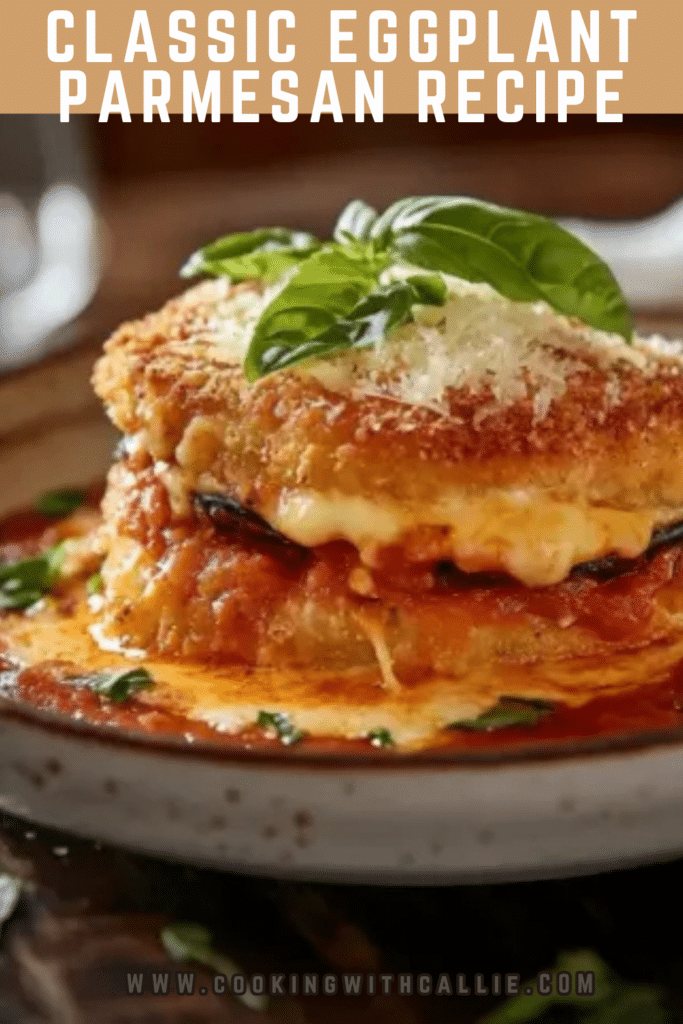
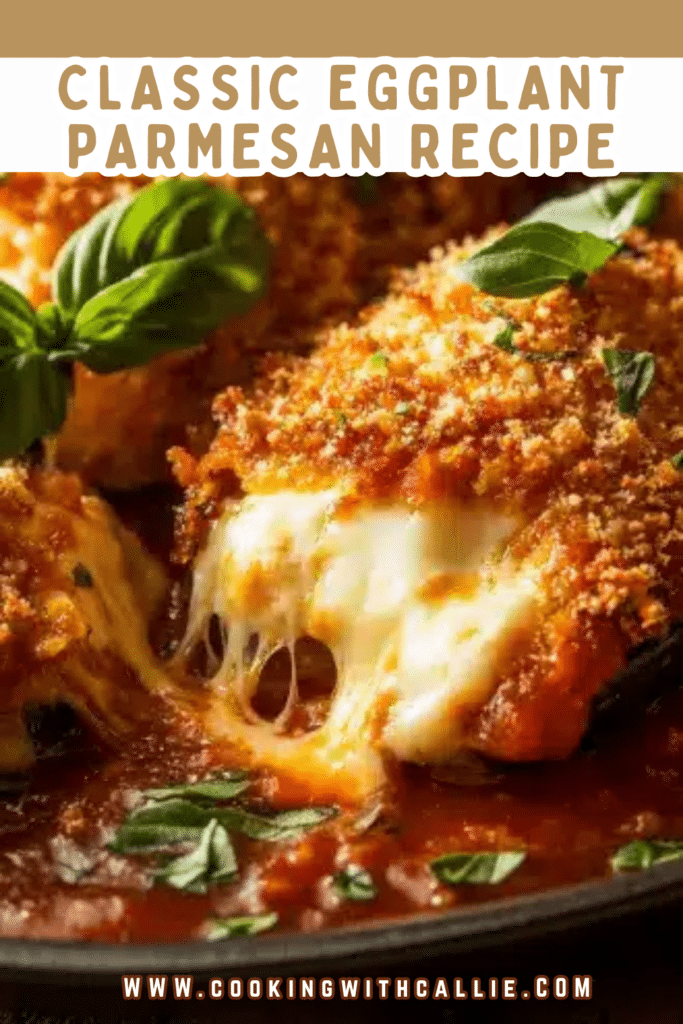
Classic Eggplant Parmesan Recipe

Classic Eggplant Parmesan is the ultimate comfort food—crispy, golden-brown breaded eggplant slices layered with rich marinara and gooey melted mozzarella. Whether baked or fried, this dish is packed with flavor and perfect for a hearty family meal.
- Prep Time: 50 minutes
- Cook Time: 30 minutes
- Total Time: 1 hour 20 minutes
- Yield: 6 servings 1x
- Category: Main Dish
- Method: Baked or Fried
- Cuisine: Italian
- Diet: Vegetarian
Ingredients
Eggplant
- 2 medium to large eggplants
- 1/2 cup all-purpose flour
- 3 large eggs (or 4 smaller eggs)
- 1/4 cup olive oil (for frying method)
Homemade Breadcrumbs
- 6 slices of bread (about 1 1/2 cups) or store-bought breadcrumbs
- 1/2 cup Parmesan cheese, shredded
- 2 teaspoons Italian herb blend
- 1 teaspoon garlic powder
- 1/2 teaspoon salt
- 1/2 teaspoon black pepper
Toppings
- 1 1/2 cups marinara sauce (up to 2 1/2 cups for extra sauce)
- 1 lb mozzarella cheese
- 1/3 cup Parmesan cheese, shredded
- 1–2 tablespoons fresh basil, chopped
- 1 teaspoon fresh oregano, chopped
Instructions
- Slice & Sweat the Eggplant – Cut eggplants into 1/4 to 1/2-inch rounds. Sprinkle with salt and let sit for 10 minutes to release excess moisture. Pat dry.
- Prepare Breadcrumbs – Toast bread slices and process into fine crumbs. Mix with Parmesan, Italian herbs, garlic powder, salt, and pepper.
- Bread the Eggplant – Coat slices in flour, dip in whisked eggs, then cover in the breadcrumb mixture. Shake off excess.
- Cooking Methods:
- Frying – Heat 1-2 tablespoons of oil in a skillet. Fry eggplant slices for 2-3 minutes per side until golden brown. Drain on paper towels.
- Baking – Preheat oven to 350°F. Place breaded eggplant slices on an oiled baking sheet and bake for 25 minutes until golden.
- Assemble – Spread marinara on the bottom of a baking dish. Layer breaded eggplant, mozzarella, marinara, and Parmesan. Repeat.
- Bake – Bake at 400°F for 30 minutes uncovered, until the cheese is melted and bubbly.
- Garnish & Serve – Top with fresh basil and oregano. Enjoy!


Notes
- For extra crispy eggplant, let the breaded slices rest for 5-10 minutes before frying or baking.
- Make it gluten-free by using gluten-free flour and breadcrumbs.
- Prep ahead – Bread the eggplant slices up to a day in advance and refrigerate.
- Use store-bought marinara to save time without sacrificing flavor.
Nutrition
- Serving Size: 1 portion
- Calories: 450
- Sugar: 7g
- Sodium: 820mg
- Fat: 22g
- Saturated Fat: 9g
- Unsaturated Fat: 11g
- Trans Fat: 0g
- Carbohydrates: 45g
- Fiber: 6g
- Protein: 21g
- Cholesterol: 85mg