This post may contain affiliate links. For more information, see our Affiliate Disclosure Policy.
By Callie
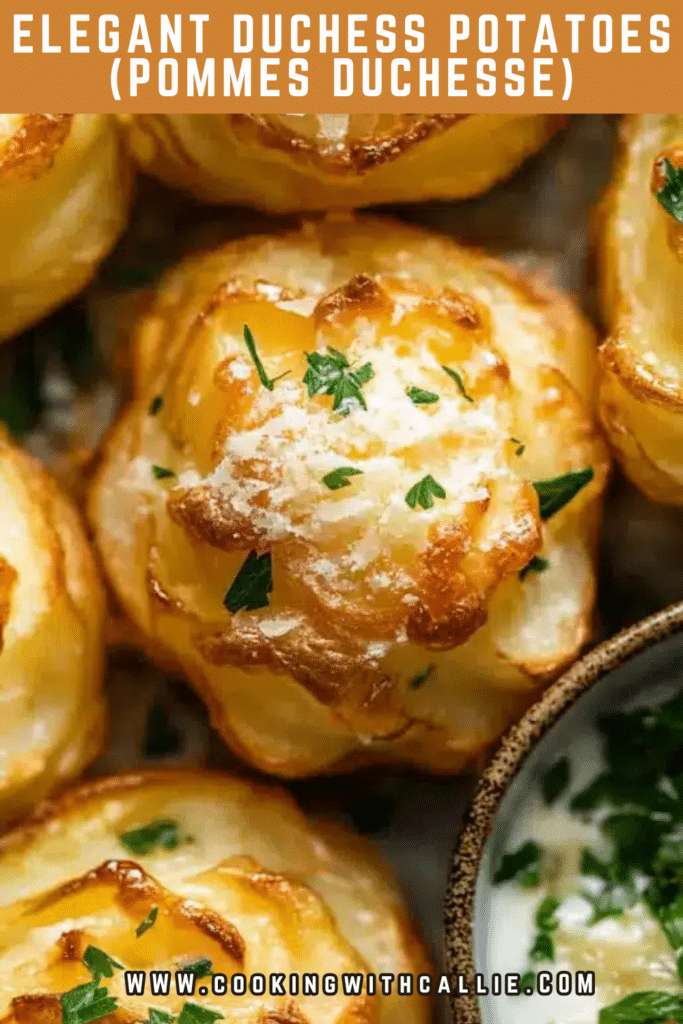
Duchess potatoes are the French side dish that solves the specific dinner party problem of serving a hot, impressive potato alongside a main course without any last-minute cooking chaos. The potatoes are boiled, mashed with butter, heavy cream, and egg yolks, piped into rosettes on a baking sheet, and refrigerated until needed – then simply baked for 20-25 minutes before serving. Everything except the baking happens hours or a day before the meal. The result is the most visually distinctive potato preparation available from a home kitchen: golden-brown, slightly crispy ridged rosettes from the piped star tip, with a rich, velvety, egg-yolk-enriched interior that is specifically denser and more complex than plain mashed potatoes.
The egg yolks are specifically the ingredient that elevates duchess potatoes above standard mashed potatoes and makes them worth the piping step. Four egg yolks for 2.5 pounds of potatoes add richness (from the yolks’ fat), a specifically golden color to the interior (from the yolks’ carotenoids), structure (from the yolks’ proteins that set slightly during baking, helping the piped shape hold its form), and depth of flavor. The difference between egg-yolk duchess potatoes and plain mashed potatoes piped into a shape is specifically the difference between a restaurant-quality preparation and a domestic one. The egg yolks are not optional decoration.
My husband made an honest assessment the first time I served these at a dinner party: “these are the most impressive potato I’ve ever had here.” Coming from someone who specifically knows and appreciates potatoes in many formats, this was specifically meaningful. Emily’s reaction was more focused on the shape: “why do they look like that?” The answer is the star tip – the same piping tip you’d use for frosting swirls on a cake, producing the same ridged, rosette shape in savory potato. She then ate three of them. For the beef companion that specifically deserves duchess potatoes alongside it, the Classic Beef Wellington is the most specifically pairing-appropriate main course for duchess potatoes – both are French-inspired, both are specifically occasion-appropriate, and the richness of the wellington specifically calls for the richness and structure of the duchess potato rather than a lighter side.

Why You Will Love These Duchess Potatoes
- The make-ahead capability is specifically the most valuable quality of duchess potatoes for entertaining. The entire preparation through the piping step can be completed up to 24 hours before the meal. Pipe the rosettes, cover the baking sheets loosely with plastic wrap, and refrigerate. On the day of the dinner: remove from the refrigerator 30 minutes before baking, brush with melted butter, and bake for 20-25 minutes. The host doesn’t need to be managing any potato preparation in the last 30 minutes before service – everything is done. This is specifically the side dish that removes potato stress from dinner party logistics.
- Four egg yolks for 2.5 pounds of potatoes is the ratio that produces a pipeable, structurally stable potato mixture that holds its shape during baking. The egg yolks’ proteins (predominantly apo-proteins and lipoproteins) coagulate during the 375-degree F bake, setting the piped shape structurally and preventing the rosettes from slumping. Without egg yolks: plain mashed potatoes piped into rosettes will hold their shape briefly but will gradually lose their ridged definition as the heat causes the starch and fat to relax. With egg yolks: the protein network sets during baking and maintains the piped shape through the full baking time. The yolks are specifically the stabilizing ingredient that makes the piped shape a baked shape rather than a briefly piped shape.
- Warm butter and cream (rather than cold) are specifically required for a smooth, lump-free mashed potato base. Cold butter added to hot mashed potatoes doesn’t fully incorporate – it creates pockets of solid fat rather than distributing evenly throughout the potato. Cold cream similarly cools the potatoes rapidly and makes them difficult to work with. Warm butter (just melted) and warm cream (heated in a small saucepan) incorporate smoothly into the hot mashed potato, producing a uniform, silky base that pipes evenly. The lumps that appear in rushed duchess potatoes almost always come from cold fat added to cooling potatoes.
- The star tip produces the ridged surface that crisps and browns in the oven while the smooth interior remains soft. A plain round tip produces smooth-surfaced rosettes that brown uniformly but without the distinctive ridged appearance of duchess potatoes. A star tip’s ridged opening produces ridges and valleys on the rosette’s surface – the ridges are the thinnest points of the potato that dry and crisp first in the oven, creating the specific golden-brown, slightly crunchy exterior that contrasts the interior’s smoothness. The visual appeal and the textural contrast of duchess potatoes both come from the star tip specifically.
- Brushing with melted butter before baking is the step that produces the deeply golden, caramelized finish rather than a pale, matte surface. Potato starch alone doesn’t brown dramatically at 375 degrees F in a 20-25 minute bake – the temperature and time aren’t sufficient for significant Maillard browning of the potato’s starch and sugars. Melted butter brushed over the rosette surface provides milk solids and fats that brown readily at 375 degrees F, producing the specific deep-golden color that makes duchess potatoes visually impressive. Without the butter brush: pale, adequate duchess potatoes. With it: specifically golden, visually dramatic duchess potatoes.
Duchess Potatoes Ingredients
Potato Mixture (Makes 12-16 Rosettes)
- 2.5 lbs (about 1.1 kg) russet potatoes, peeled and cut into 1-inch pieces
- 1/4 cup (57g) unsalted butter, melted and warm
- 1/4 cup (60ml) heavy cream, warm
- 4 large egg yolks, room temperature
- 1 teaspoon fine salt
- 1/2 teaspoon freshly ground black pepper
- Pinch of freshly grated nutmeg (optional but specifically recommended)
Finishing
- 2 tablespoons melted butter for brushing before baking
- 2 tablespoons finely grated Parmesan for garnish after baking (optional)
- Fresh flat-leaf parsley, finely chopped, for garnish
Ingredient Notes And Substitutions
Why russets specifically, again: Duchess potatoes require the same high-starch, low-moisture russet potato as hash browns and the same reason: the high starch content produces the fluffy, cohesive, smooth mash that holds together when piped and maintains its shape during baking. Waxy potatoes (red, Yukon Gold) produce a denser, stickier mash that pipes less cleanly and doesn’t develop the same light interior texture. Russet is specifically the right potato for this preparation.
The nutmeg addition: A pinch (1/8 teaspoon maximum) of freshly grated nutmeg is the specific spice addition used in classical French mashed potato preparations including duchess potatoes. Nutmeg in small quantities adds a warm, slightly floral, slightly sweet-spice note that is specifically complementary to the richness of butter, cream, and egg yolk. Detectable in the finished potato as “something warm and interesting in the background” by most tasters, though rarely identified as nutmeg unless they’re looking for it. This is the same subtle-spice principle as the ginger in the strawberry oatmeal bars – present as complexity rather than identifiable flavor.
Separating the egg yolks: Only the yolks are used in this recipe – not whole eggs and not egg whites alone. Egg whites in duchess potatoes produce a drier, slightly gummy texture from the white’s protein structure (which is different from the yolk’s richer fat-and-protein structure). The yolks provide richness, color, flavor, and the specific protein network that stabilizes the piped shape. Carefully separate the yolks from the whites – any white mixed into the yolks adds moisture and changes the mixture’s consistency.
Callie’s Kitchen Note: My husband’s “most impressive potato I’ve ever had here” assessment came at the end of a dinner where I’d specifically served duchess potatoes alongside a roasted beef tenderloin. The potatoes were made the day before (piped on the baking sheet, covered, refrigerated overnight), and the day-of work was removing them from the refrigerator 30 minutes before baking and sliding the sheet into the oven when the tenderloin was resting. He didn’t know they’d been made the day before until I mentioned it after dinner. The make-ahead capability is specifically the most important quality for a dinner party – not the taste alone, but the combination of impressive result and zero day-of effort. That combination produces specifically the most useful dinner party potato available.

How To Make Duchess Potatoes
1- Boil And Mash The Potatoes
Place the peeled, 1-inch-piece potatoes in a large pot. Cover with cold water by approximately 1 inch. Bring to a boil over high heat, then reduce to a simmer. Cook for 15-20 minutes until a fork slides easily into the thickest piece with no resistance. Do not overcook – potatoes that have absorbed too much water produce a waterlogged mash that is too loose to pipe and that results in flat, spreading rosettes rather than tall, structured ones.
Drain the potatoes thoroughly in a colander. Return them to the hot pot for 1-2 minutes over low heat, stirring occasionally – this “drying out” step evaporates additional surface moisture from the just-drained potatoes and produces a drier, more absorbent base for the butter and cream. This step is specifically what French cooking refers to as “dessécher” (to dry out) and is specifically what makes the difference between a mash that will hold a piped shape and one that will spread.
Mash the dried potatoes using a potato ricer (best result – produces the smoothest, most uniformly textured mash) or a potato masher (good result – slightly more textured) or a food mill (good result – similar to ricer). Do not use a stand mixer or food processor – the mechanical agitation over-develops the potato’s starch, producing a gluey, gummy texture that won’t pipe properly and won’t produce a light interior.
Why The “Dry Out” Step Produces Specifically Better Duchess Potatoes
Potatoes that have just been drained still have surface moisture from the cooking water clinging to them. This surface moisture, if incorporated directly into the mashed potato, dilutes the butter and cream and produces a looser, wetter mash. The 1-2 minutes over low heat after draining evaporates this surface moisture: the pot’s residual heat converts the water to steam, the steam escapes, and the potato’s surface becomes slightly drier. The result: a mash that absorbs the butter and cream without the dilution effect of the surface water, producing a richer, more specifically flavorful base and a firmer, better-piping consistency.
2- Add The Enrichments And Season
With the mashed potatoes in the warm pot: add the warm melted butter and stir until completely incorporated. Add the warm heavy cream and stir until smooth and uniform. Season with salt, black pepper, and the pinch of nutmeg if using. Taste and adjust.
Add the egg yolks one at a time, stirring vigorously after each addition. The one-at-a-time approach ensures each yolk is fully incorporated before the next is added – adding all four at once risks the yolks not integrating uniformly before the potato cools and makes the mixture harder to stir. After all four yolks are incorporated: the mixture should look specifically golden-yellow (from the yolks’ carotenoids), silky, and thick enough to hold a soft shape when a spoon is lifted. If it looks too loose to pipe: return the pot to low heat for 2-3 minutes, stirring constantly, to evaporate additional moisture.
3- Pipe The Rosettes
Fit a large piping bag with a large star tip (Wilton 1M or similar – the large opening is necessary for the mixture to flow without clogging; too small a tip produces pressure that tears the bag). Fill the piping bag with the warm potato mixture – work in batches if the bag overfills. Twist the top closed and press any air pockets out of the bag before starting.
On parchment-lined baking sheets: hold the piping bag perpendicular (straight up and down, not at an angle) approximately 1 inch above the parchment. Pipe in a clockwise spiral starting from the outside and ending with a small peak at the center – or pipe starting from the center and ending with a swirl at the top. The specific spiral direction matters less than the consistent bag angle and the controlled, continuous pressure that produces a uniform height and diameter. Each rosette should be approximately 2-3 inches wide and 1.5-2 inches tall. Space the rosettes 2 inches apart on the baking sheet.
Callie’s Kitchen Note: Emily’s “why do they look like that?” question when she first saw the piped duchess potatoes is specifically the question that makes the piping step feel worthwhile. The answer – the star tip creates the ridges and the spiral motion creates the rosette shape – is immediately understandable, and she spent several seconds examining a rosette closely before eating it to confirm the ridges she could see were the same as the tip’s opening. She then asked if she could try piping one, which she did, and produced a rosette that was perfectly serviceable if slightly asymmetrical. Duchess potatoes are specifically one of the rare savory preparations where the visual is as compelling as the flavor – they communicate effort and occasion through appearance in a way that a bowl of mashed potatoes, regardless of quality, cannot.
4- Bake And Serve
Preheat the oven to 375 degrees F (190 degrees C). If the rosettes have been refrigerated: remove from the refrigerator 30 minutes before baking to take the chill off (cold rosettes take longer to heat through and may not brown as evenly as room-temperature ones). Brush each rosette with melted butter – use a pastry brush and apply a thin, even layer to all the ridges and the top surface. Apply a second brush of butter for a deeper golden color if desired.
Bake on the middle rack for 20-25 minutes until the ridges are deep golden brown and the peaks have developed the specific caramelized color that indicates the butter has fully browned on the potato’s surface. The rosettes should look specifically golden – not pale (underbaked), not dark brown (overbaked). Remove from the oven and allow to cool on the baking sheet for 2-3 minutes before serving (the edges continue crisping slightly as they cool).
Garnish with finely grated Parmesan (if using) and fresh flat-leaf parsley. Transfer to the serving platter or table directly from the baking sheets for the most impressive presentation – the rosettes on the golden parchment look beautiful and serving them this way is casual in the best sense.
Callie’s Kitchen Note: The Parmesan garnish is optional in the recipe and specifically recommended in practice. Finely grated Parmesan over the hot, just-out-of-the-oven duchess potatoes produces a specific result: the fine Parmesan bits land on the hot butter-brushed surface and begin to melt into a gossamer layer of nutty, salty cheese over each ridge. After 2-3 minutes on the hot potatoes: the Parmesan is melted rather than grated, producing a specifically more elegant finish than the raw-grated appearance. For a dinner party where the presentation matters: apply the Parmesan the moment the pan comes out of the oven and let it melt for 2-3 minutes before serving. For a casual family meal: apply it at any point. Both are specifically good.
Common Mistakes To Avoid
Not Drying Out The Potatoes After Draining
Wet potatoes produce loose mash that pipes messily and spreads in the oven rather than maintaining the rosette shape. The 1-2 minute return to low heat after draining is specifically the step that produces the firmer, drier base needed for successful piping and shape-holding.
Adding Cold Butter Or Cold Cream
Cold fat doesn’t incorporate into mashed potatoes smoothly – it produces pockets and uneven texture. Warm the butter until melted; warm the cream in a small saucepan or microwave for 30 seconds. Both should be warm (not hot, not cold) when incorporated.
Using A Stand Mixer Or Food Processor
Mechanical over-processing of cooked potato develops the starch into a gluey, gummy texture (the same problem as over-kneaded bread but in potato form). Use a potato ricer, food mill, or masher – these tools break down the potato cells by pressure rather than by mechanical agitation and produce the fluffy, light texture that the ricer specifically is famous for.
Piping With Cold Potato Mixture
The potato mixture should be warm when piped – warm potato flows through the star tip smoothly and produces clean ridges. Cold potato is stiffer, requires more pressure, and often produces the bag tearing or the ridges blurring from the uneven pressure required. If the mixture cools before you finish piping: return the pot to very low heat briefly to warm it back to pipeable temperature.
Not Brushing With Butter Before Baking
Unbuttered duchess potatoes bake pale and lack the golden-brown visual drama that makes them specifically impressive. The butter brush is specifically what produces the color. It takes 30 seconds. Do not skip it.
Callie’s Kitchen Note: The make-ahead overnight approach is specifically what converted duchess potatoes from an interesting recipe I knew about to a recipe I actually make regularly. Before I tested the overnight method, I assumed piped potato rosettes would deform or dry out in the refrigerator. After testing: the refrigerator-rested rosettes hold their shape perfectly and bake identically to same-day-piped ones. The cold actually helps – the chilled potato is slightly firmer and maintains its piped ridges more distinctly than warm potato would during refrigeration. The overnight rest is not a compromise; it’s specifically a quality-neutral approach that produces all the day-of convenience without any result trade-off. This is specifically the discovery that made duchess potatoes a practical dinner party staple rather than a special-occasion complexity.
Storage And Reheating
Unbaked, refrigerator: Piped rosettes covered loosely with plastic wrap for up to 24 hours. The best make-ahead approach – bake fresh at serving time.
Unbaked, freezer: Pipe rosettes onto parchment-lined baking sheets. Freeze uncovered until solid (approximately 2 hours). Transfer to a freezer-safe bag or container with parchment between layers. Freeze for up to 2 months. Bake from frozen at 375 degrees F for 30-35 minutes (10 minutes extra for frozen) until golden. The frozen-then-baked result is equivalent to the fresh-baked result.
Baked, refrigerator: Up to 3 days in an airtight container. Reheat in the oven at 350 degrees F for 10-15 minutes or in the air fryer at 325 degrees F for 5-7 minutes. Both restore crispness reasonably well; the oven produces more even reheating for multiple rosettes simultaneously.
Duchess Potatoes Variations
Cheesy Duchess Potatoes
Add 1/2 cup of finely grated Gruyere (or sharp cheddar, or a combination) to the potato mixture along with the egg yolks. The cheese melts into the mixture and adds a specific savory, slightly sharp richness that plain duchess potatoes don’t have. The cheesy version is specifically appropriate alongside simpler proteins – grilled chicken, pork chops, a simple roast – where the potato should provide more of the meal’s flavor complexity. Sprinkle additional Gruyere over each rosette before baking for a visible cheese crust at the peaks.
Roasted Garlic Duchess Potatoes
Roast a whole head of garlic (wrapped in foil with olive oil, 400 degrees F for 40-45 minutes) until the cloves are soft and golden. Squeeze the roasted garlic out of the skins and mash into a smooth paste. Add 6-8 squeezed cloves (approximately 2 tablespoons of roasted garlic paste) to the potato mixture with the egg yolks. The roasted garlic’s sweet, caramelized, specifically complex flavor is fundamentally different from raw garlic’s sharpness – it enriches the potato without adding any harsh garlic bite. This is the most specifically elegant variation and the one most appropriate alongside a formal holiday main course.
Truffle Duchess Potatoes
Replace the heavy cream with 3 tablespoons of heavy cream plus 1 tablespoon of truffle oil (added after the potatoes are removed from the heat – truffle oil’s aromatic compounds degrade under sustained heat). Add 1 tablespoon of finely chopped black truffle if budget allows. The truffle version is specifically the luxury version – the earthy, intensely aromatic truffle character against the rich egg yolk and butter potato produces a side dish that is specifically appropriate alongside a similarly luxurious main course (the beef Wellington, a seared filet mignon, a roasted rack of lamb).
Serving Suggestions
Dinner Party Main Course
The duchess potato rosettes arranged on a white serving platter, garnished with Parmesan and parsley, are specifically the most visually impressive potato presentation available for a formal dinner. Place 2-3 rosettes per person alongside the main protein. The combination of the golden, ridged potato rosette against a dark sauce (the beef wellington’s rich red wine jus, the roasted lamb’s herb pan sauce) produces the visual of a restaurant plate specifically. No other potato preparation communicates the occasion’s formality as effectively as duchess potatoes.
Holiday Meal
Duchess potatoes alongside a roasted turkey or a standing rib roast replace the traditional mashed potato in a way that requires no last-minute attention. The make-ahead capability is specifically the quality that makes them suitable for holiday cooking where the oven is occupied by the main event and the host’s attention is divided. Slide the baking sheet into the oven when the main is resting. By the time the carving is done: the duchess potatoes are golden and ready.

Duchess Potatoes FAQ
Yes – two alternatives. First: a zip-top bag with the corner snipped off produces a plain round rosette without ridges (no star tip texture), but the circular piped shape is still visually far more impressive than a spooned mound. Second: use a fork to create decorative patterns in small scooped mounds – this is the “rustic duchess potato” format that doesn’t pipe at all but applies the same recipe in a more casual presentation. The egg yolk mixture and the baked finish are still specifically good regardless of the piping method.
The mixture was too warm and loose when piped. Hot potato retains more fluidity and the rosette loses definition as it bakes. Solutions: allow the mixture to cool for 5-10 minutes before piping (it firms slightly as it cools), and/or add an extra egg yolk to the mixture (the additional protein strengthens the structure). Alternatively: if the rosettes are already piped and slumping, refrigerate them for 30 minutes before baking – the cold firms the butter and potato and helps the rosette hold its shape during the first minutes of the bake.
Use any large round tip (produces smooth rosettes without ridges – still visually structured and impressive), or use a zip-top bag with a corner snipped to approximately 1/2-inch (produces a plain round piped shape). The ridged texture of the star tip is the visual signature of duchess potatoes and the source of the crispy-exterior quality (ridges crisp faster than smooth surfaces). Without the ridges: the potatoes are still duchess potatoes in every sense except the traditional visual. Still worth making.
Visual and structural cues: the peaks and ridges are specifically deep golden brown (not pale gold – specifically deep), the parchment paper around the rosette’s base shows a small pool of clarified butter that has browned slightly, and the overall rosette looks significantly more golden than when it went in. At 20 minutes: check the color. If the ridges are golden but the valleys are still pale: 5 more minutes. If the ridges are deep golden: done. The Maillard browning of the butter and potato surface proceeds from the ridges (thinnest, most exposed) inward toward the valleys and the base.
Recipes You May Like
If these duchess potatoes have you building a collection of specifically elegant, specifically occasion-appropriate side dishes that communicate care and formality without requiring last-minute stress, here are three more from the blog in the same spirit.
Classic Beef Wellington – The main course that most specifically calls for duchess potatoes alongside it. Where the duchess potatoes provide the specifically French, specifically elegant potato side, the beef wellington provides the specifically theatrical, specifically celebratory beef-and-pastry main. Both are make-ahead-friendly (the wellington can be assembled in advance and refrigerated before its final bake), both are French-inspired, and both communicate the occasion’s importance through their visual complexity.
Filet Mignon With Red Wine Sauce – The simpler, faster companion main course that pairs naturally with duchess potatoes for a weeknight occasion that should feel specifically special without the wellington’s full project level. The filet mignon’s concentrated richness and the red wine sauce’s depth specifically benefit from the duchess potato’s richness and structure alongside them. Both the filet and the duchess potatoes can be largely prepared ahead; both are individually impressive; together they produce a dinner that earns the “restaurant at home” description.
Garlic Herb Crusted Rack Of Lamb – The holiday-or-celebration companion that pairs naturally with duchess potatoes on a festive table. The rack of lamb’s elegant presentation (the frenched bones, the herb crust) matches the duchess potatoes’ piped visual formality – both are preparations that communicate that the occasion is specifically worth the effort. Alongside: a simple green vegetable (haricots verts, roasted asparagus) completes the plate with color and freshness against the richness of the potato and the lamb.
Conclusion
These duchess potatoes are the most visually impressive potato preparation available from a home kitchen, the one that earned “most impressive potato I’ve ever had here” from my husband, and specifically the side dish that requires zero day-of work for a dinner party – all the preparation happens the day before. Dry out the potatoes after draining. Use warm butter and cream. Add the egg yolks one at a time. Pipe while warm. Brush with butter before baking. Refrigerate overnight. Bake 20-25 minutes before serving. That is the complete technique.
The nutmeg is optional. Include it. The Parmesan is optional. Include it. The make-ahead overnight approach is optional. Use it. All three things are worth doing.
Tell me in the comments whether you tried the roasted garlic version or the truffle variation, and whether the make-ahead overnight approach worked as seamlessly as described. Save this to Pinterest for your next dinner party, holiday feast, or any occasion that calls for a potato that is specifically as impressive as the main course alongside it – and happy cooking!
Happy cooking! – Callie

Elegant Duchess Potatoes Recipe (Pommes Duchesse)

Duchess Potatoes are rich, creamy, and beautifully golden bites of whipped mashed potatoes piped into elegant swirls and baked until crisp. With a buttery exterior and a soft, delicate center, this French classic makes an impressive yet easy side dish for any special occasion. Perfectly crisp on the outside and melt-in-your-mouth tender inside, they’re a must-try for holiday dinners or elegant weeknight meals.
- Prep Time: 15 minutes
- Cook Time: 25 minutes
- Total Time: 40 minutes
- Yield: 4–6 servings 1x
- Category: Side Dish
- Method: Baking
- Cuisine: French
- Diet: Vegetarian
Ingredients
- 2 ½ pounds russet potatoes (about 3–4 large potatoes), peeled and chopped into 1-inch pieces
- ¼ cup unsalted butter
- ¼ cup heavy cream
- 4 large egg yolks
- 1 teaspoon salt
- ½ teaspoon ground black pepper
- Melted butter (or cooking oil spray) for brushing
- Fresh parsley, finely chopped (for garnish)
- Parmesan cheese, finely grated (for garnish)
Instructions
- Place potatoes in a large pot and fill with water to cover them by about one inch. Bring to a boil over high heat, then reduce heat, cover, and simmer for 15-20 minutes until potatoes are tender.
- Drain and return the potatoes to the pot or transfer them to a mixing bowl. Mash using a potato masher or fork until smooth.
- Add butter, heavy cream, egg yolks, salt, and pepper. Whisk until the mixture is silky and lump-free, about 1-2 minutes.
- Preheat oven to 375°F. Line two large baking sheets with parchment paper.
- Transfer the mashed potatoes, in batches, to a pastry bag fitted with a large star tip. Pipe 2-3 inch wide swirls onto the prepared baking sheets, spacing them evenly.
- Lightly brush the tops with melted butter or spray with cooking oil spray for a golden finish.
- Bake on the middle rack for 20-25 minutes or until golden brown.
- Garnish with parsley and finely grated Parmesan cheese before serving.


Notes
- For extra crispiness, broil the potatoes for the last 2-3 minutes of baking.
- To make ahead, prepare the piped potatoes and refrigerate them for up to 24 hours before baking.
- If the mixture is too loose to hold its shape, let it cool slightly before piping.
Nutrition
- Serving Size: 1 portion
- Calories: 180
- Sugar: 1g
- Sodium: 350mg
- Fat: 10g
- Saturated Fat: 6g
- Unsaturated Fat: 3g
- Trans Fat: 0g
- Carbohydrates: 19g
- Fiber: 2g
- Protein: 4g
- Cholesterol: 100mg