
This post may contain affiliate links. For more information, see our Affiliate Disclosure Policy.
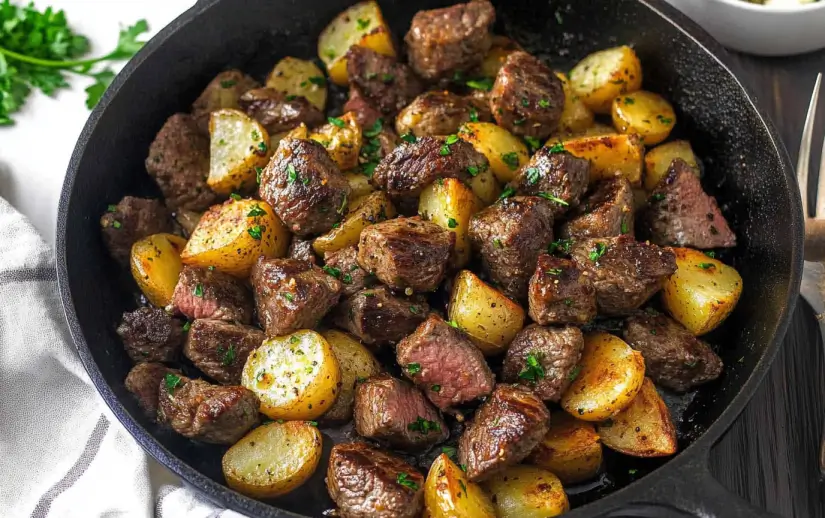
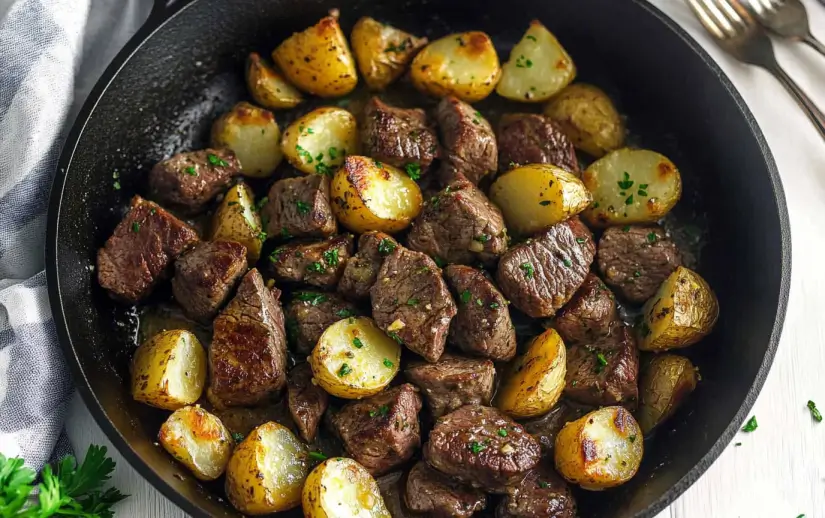
A skillet dinner that tastes like a steakhouse meal but costs a fraction of the price and takes a fraction of the time. That’s the specific promise this garlic butter steak bites and potatoes recipe makes and genuinely keeps. Two pounds of sirloin cut into bite-sized pieces, seared until dark and caramelized in garlic butter, then tossed with golden, herb-coated potatoes in the same skillet. Dinner for six, one pan to wash, ready in under an hour.
The technique that makes this recipe specifically excellent rather than just adequate is the two-stage cooking approach: the potatoes cook first in garlic, fresh rosemary, and oregano infused butter, then get steamed briefly with a quarter cup of water to cook through perfectly from the inside while the outside stays golden. They come out with a genuinely restaurant-quality texture – crispy and golden at the surface, tender all the way through. Then the steak gets the full attention of a cleaned-off skillet at medium-high heat – high heat, not crowded, properly seared rather than steamed.
Sirloin specifically is the right steak for this recipe. It’s flavorful enough to stand up to the assertive garlic-herb butter, affordable enough to make this a practical weeknight dinner rather than a special occasion splurge, and lean enough that it doesn’t release excessive fat into the pan during searing. Good marbling (you want visible white fat running through the meat when you look at the raw steak) is the quality indicator to look for – well-marbled sirloin stays juicy through the hot sear while leaner sirloin can become tough if it goes past medium doneness.
My husband calls this “the dinner that tastes like it took two hours but didn’t.” He’s not wrong. For another one-skillet steak-and-something dinner that follows the same principle of maximum flavor from minimum effort, my Smothered Creamy Skillet Chicken uses the same one-pan, fond-building technique in a creamy direction rather than a butter-and-herb one – an excellent variation for alternating through the weekly rotation.
Why You Will Like This Garlic Butter Steak Bites and Potatoes
- The two-stage potato cooking produces genuinely restaurant-quality texture – Saute the potatoes in garlic butter with herbs until the surfaces are golden, then add water and cover to steam them tender from the inside. This specific sequence produces potatoes that are crispy on the outside and fully cooked through on the inside – not the raw-in-the-center or soggy-throughout results you get from cooking potatoes through in one phase.
- Searing the steak separately from the potatoes produces proper caramelization – Steak added to a crowded pan with potatoes doesn’t sear – it steams. Removing the potatoes and searing the steak in the same hot, slightly coated pan allows proper Maillard reaction caramelization across all surfaces of each steak piece. The difference in flavor between properly seared steak and steamed steak is significant and specifically worth the extra step.
- The garlic and fresh herbs in the potato stage infuse the entire dish – Cooking the garlic, rosemary, and oregano with the potatoes in the first stage means the herbs bloom in the butter and coat every potato piece thoroughly. When the steak goes into the same buttery, herb-scented pan, it picks up all of those aromatics through the fond and the residual butter. Everything in the final dish tastes cohesively of garlic and herbs rather than having some pieces more seasoned than others.
- One pan, one cleanup – The potatoes cook in the skillet. The steak sears in the same skillet. Everything comes together in the same skillet. The only other dish is the bowl where the potatoes wait while the steak cooks. This is genuinely minimal cleanup for a full dinner.
- Fresh rosemary and oregano specifically make a noticeable difference – Fresh herbs have volatile aromatic compounds that dried herbs lose during drying. In a dish with this few ingredients where each one matters, fresh rosemary’s piney fragrance and fresh oregano’s bright herbal quality are specifically good. Dried herbs work in a pinch at one-third the quantity but the fresh herb version is meaningfully better.
- 38 grams of protein per serving and naturally gluten-free – Two pounds of sirloin across six servings is a genuinely high-protein dinner without any gluten-containing ingredients.
- Yukon Gold potatoes specifically hold their shape through cooking and reheating – Starchy russet potatoes fall apart when steamed and sauteed; Yukon Golds and red potatoes hold their shape, maintain their golden exterior, and reheat without becoming mealy.
- Under an hour total including all prep – 10 minutes of prep (cutting steak and potatoes, mincing garlic and herbs), 25 minutes of cooking, and dinner is on the table. For a steak dinner that requires no specialized equipment or technique beyond a hot skillet, this is a genuinely efficient timeline.
Garlic Butter Steak Bites and Potatoes Ingredients
Eleven ingredients. Here’s everything you need.
- 2 pounds sirloin steak, cut into 1-inch pieces
- 1 pound Yukon Gold or red potatoes, cut into bite-sized pieces
- 4 tablespoons butter, divided
- 1 tablespoon olive oil
- 6 cloves garlic, minced
- 1 tablespoon fresh rosemary, finely chopped
- 1 tablespoon fresh oregano, finely chopped
- 1 teaspoon kosher salt, divided
- 1/2 teaspoon black pepper
- 1/4 cup water
- 2 tablespoons fresh parsley, finely chopped
Ingredient Notes and Shopping Tips
Sirloin steak – the cut that balances flavor, tenderness, and price: Top sirloin is the specific cut to look for – it’s the most flavorful and appropriately marbled section of the sirloin subprimal. It has enough intramuscular fat (marbling) to stay juicy through the hot sear without releasing so much fat that it creates a greasy dish. Look for steaks with visible white marbling running through the meat when buying – pale, minimally marbled sirloin tends to become tough and dry during high-heat cooking. The steak should be cut into 1-inch pieces after trimming any large fat caps. Too small (half-inch) and the pieces overcook before developing a proper sear. Too large (2-inch) and the exterior is well-seared while the interior remains cold. One inch is the specific size that allows proper caramelization on the outside while cooking the interior to a desirable medium doneness in the same timeframe.
Why ribeye and New York strip work too: Ribeye has significantly more fat than sirloin, which produces richer, more deeply flavored steak bites but also more fat rendering into the pan during cooking. New York strip has a fat cap that should be trimmed before cubing – the leaner strip muscle produces bites that are a bit firmer than sirloin. Both are excellent if you want a more indulgent version; sirloin is the practical choice that produces excellent results at a lower price point.
Yukon Gold potatoes – specifically these: Yukon Gold potatoes are a waxy-starchy hybrid variety that holds their shape beautifully through the saute-and-steam cooking method while developing a golden, slightly crispy exterior from the butter contact. Their naturally buttery, slightly sweet flavor pairs specifically well with the garlic-herb butter and the steak. Red potatoes are an excellent alternative – even waxier, holding their shape slightly better. Russet potatoes are too starchy – they tend to fall apart during steaming and produce a mealy texture rather than the golden, intact potato pieces this recipe requires.
Fresh herbs vs. dried – why it matters here: Rosemary and oregano cooked in butter during the potato stage bloom their volatile aromatic compounds into the fat, infusing the entire butter with their character. Fresh rosemary has a piney, slightly resinous, very specifically herbal fragrance that dried rosemary partially loses during drying. Fresh oregano has a bright, assertive, floral-herbal quality. Together, bloomed in butter with garlic, they produce an aromatic cooking fat that infuses every potato and then every steak bite with specifically herbed character. Dried herbs work at one-third the quantity but the dish is measurably less aromatic and flavorful.
European-style or grass-fed butter: European-style butter (83 to 84% butterfat versus American butter’s standard 80%) has a richer, more complex flavor and produces a more deeply golden, more aromatic garlic butter sauce. Grass-fed butter (Kerrygold is the most widely available) has a similarly rich, complex quality from the varied diet of grass-fed cattle. Either produces a noticeably better final sauce than standard American butter. Worth the marginal price difference for a dish where butter is the primary sauce ingredient.
Substitutions That Work
- Ribeye or New York strip instead of sirloin: Richer, more indulgent result; ribeye specifically produces a more deeply flavored, fattier steak bite
- Sweet potatoes instead of Yukon Gold: Sweeter, softer, different character – particularly good in the fall version; they cook faster so check at 4 to 5 minutes into the steaming stage
- Cauliflower florets instead of potatoes (low-carb): Cauliflower sauteed in garlic herb butter and steamed briefly is genuinely excellent; reduce the water to 2 tablespoons and the steaming time to 3 to 4 minutes
- Dried herbs at one-third quantity: 1 teaspoon dried rosemary and 1 teaspoon dried oregano in place of the tablespoon each of fresh; still good, less aromatic
- Thyme and sage instead of rosemary and oregano: A more specifically autumnal, earthy herb combination that’s particularly good in fall and winter versions of this dish
- Add Worcestershire: A tablespoon of Worcestershire sauce added to the skillet when returning the potatoes adds a deep, savory, umami element that amplifies the steak’s flavor

How To Make Garlic Butter Steak Bites and Potatoes
Two stages in one skillet. The potatoes go first. Here’s every technique detail.
1: The Potatoes – The Two-Phase Technique
Cut the potatoes into bite-sized pieces – roughly three-quarter to one-inch cubes. Even sizing matters: pieces of dramatically different sizes cook at different rates and produce some that are overcooked and mushy while others are still hard. Take an extra minute to cut them consistently.
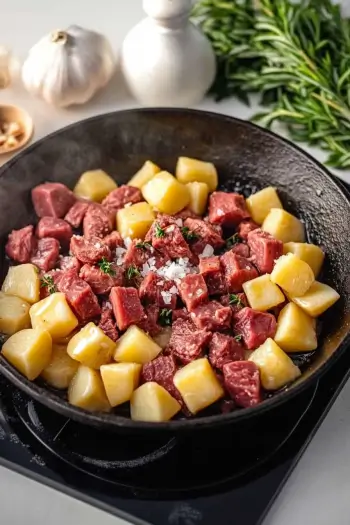
Heat one tablespoon of butter and the olive oil in a large, heavy-bottomed skillet over medium heat. The combination of butter and olive oil is intentional: the olive oil raises the smoke point of the butter and prevents it from burning at medium heat, while the butter provides the rich, specifically buttery flavor and browning quality that olive oil alone doesn’t produce. Add the potato pieces, all six cloves of minced garlic, the fresh rosemary, fresh oregano, and half a teaspoon of kosher salt. Stir to coat everything in the butter and oil.
Cook for 5 minutes, stirring occasionally, until the garlic is fragrant and the potato surfaces are starting to develop light golden color. The garlic will become very fragrant quickly – if it starts browning too dark (darker than light golden) in the first 2 minutes, reduce the heat slightly. Browned garlic is bitter; lightly golden garlic is sweet and aromatic.
Pour in the quarter cup of water – it will spatter against the hot butter and oil, so pour carefully along the edge of the pan rather than directly into the center. Immediately reduce the heat to medium-low and cover the skillet tightly with a lid. The water creates steam inside the covered skillet that cooks the potatoes through from the inside while the residual butter continues developing the exterior. Steam for 5 to 10 minutes until a fork inserted into the largest potato piece slides in with no resistance. Check at 5 minutes; if any pieces still have a firm center, cover and continue for up to 5 more minutes.
Callie’s Kitchen Note: The water-and-cover technique for the potatoes is the step that most specifically produces the “crispy outside, tender inside” result. Without the steaming step, potatoes cooked exclusively in butter need much more time at much higher heat to cook through and they often go from undercooked to slightly burnt exterior before the center cooks. With the steam, the interior cooks completely in the 5 to 10 minute covered period and the exterior golden color from the butter sauté stage stays intact. This technique also works for cooking vegetables in any skillet dish where you want fully cooked vegetables without extended cooking time.
2: Searing the Steak – Maximum Heat, Not Crowded
Transfer the cooked potatoes to a bowl and cover with foil to keep warm. Return the skillet to medium-high heat and add the remaining three tablespoons of butter. Let it melt completely and heat until it’s foaming and just beginning to brown at the edges – this is called beurre noisette (brown butter) territory and the nutty, slightly caramelized quality it adds to the steak sear is specifically excellent.
Pat the steak pieces completely dry with paper towels immediately before adding them to the pan. This is the single most impactful prep step for steak searing: wet steak in a hot pan steams rather than sears. The moisture on the surface of wet steak must evaporate before the Maillard reaction (the browning and caramelization that produces flavor) can begin. Dry steak begins browning immediately on contact with the hot butter. The result is a deeply caramelized, dark brown crust rather than a grey, steamed surface.
Add the steak pieces to the hot butter in a single layer – if your skillet isn’t large enough for all of them without overlapping (they should not be touching each other), cook in two batches. Crowded steak pieces steam each other and don’t develop the sear. Season with the remaining half teaspoon of kosher salt and the black pepper. Cook without moving for 2 minutes to allow the first sear to develop, then turn and cook another 2 to 3 minutes, turning the pieces as needed to sear all sides.
Callie’s Kitchen Note: The doneness of steak bites is harder to assess by visual cues alone than a whole steak is, since you’re looking at small pieces seared on multiple sides rather than one large surface. A meat thermometer inserted into the largest piece is the most reliable tool. For medium-rare: pull at 130 to 135 degrees F (the carryover heat during the 3-minute rest will bring it to 135 to 140 degrees F). For medium: pull at 140 to 145 degrees F. For medium-well: pull at 150 degrees F. The steak bites in this recipe continue cooking slightly when returned to the pan with the potatoes for the final toss, so I pull them about 5 degrees below my target doneness.
The Final Toss and Finishing
Return the warm potatoes to the skillet with the seared steak. The skillet will still have the brown butter and all the flavorful fond from the steak searing. Toss everything together for 1 to 2 minutes over medium heat, turning the potatoes and steak through the buttery pan drippings until every piece is coated and glistening. Add the fresh parsley, stir to combine, and remove from heat immediately.
Rest the dish for 2 to 3 minutes before serving. The fresh parsley adds a bright, clean herbal note that cuts through the richness of the butter and completes the dish visually with a scatter of green. Finish with a pinch of flaky salt (Maldon specifically) over the top just before serving – the visible salt crystals add texture and a specific flavor burst that makes the whole dish taste more specifically seasoned.
Speed Hacks for Faster Assembly
- Cut the steak and potatoes and mince the garlic and herbs up to 24 hours ahead – refrigerate separately in covered containers; day-of cooking is just heat and go
- Use pre-minced garlic from a jar to save 3 minutes of prep
- Buy pre-cut steak tips or stew beef if your grocery store carries them – same flavor, no cutting work
- Keep a small container of pre-made herb mix in the fridge at the start of the week – rosemary, oregano, and parsley already finely chopped and ready to measure from
Common Mistakes To Avoid
A few specific technique choices consistently separate a genuinely excellent version of this dish from an average one.
Not patting the steak dry before searing. This is the most impactful single step. Wet steak steams; dry steak sears. Pat every piece thoroughly dry with paper towels immediately before adding to the hot pan. The paper towel should come away visibly dry from the steak’s surface before it goes in.
Crowding the steak in the pan. Overlapping or touching steak pieces produce steam rather than sear. Each piece needs space around it for the hot air to reach all surfaces. Cook in two batches if necessary – it takes an additional 4 to 5 minutes but the quality difference (properly seared versus steamed) is significant.
Letting the garlic burn in the first stage. Garlic goes from raw to perfectly golden to burnt in a narrow window at medium heat. Keep a close eye during the first 5 minutes of cooking and reduce the heat if the garlic is coloring faster than the potatoes are. Burnt garlic is specifically bitter and can’t be saved – it affects the flavor of the entire dish.
Skipping the steaming step for the potatoes. Potatoes cooked only in butter at medium heat take much longer to cook through and risk burning the exterior before the interior is done. The water-and-cover steaming step specifically is what produces fork-tender potatoes in 5 to 10 minutes without burning the surface.
Overcooking the steak. Sirloin at well-done is significantly tougher and less juicy than sirloin at medium or medium-rare. Use a meat thermometer and pull the steak at 5 degrees below your target doneness since carryover heat and the final toss with the potatoes continue cooking it slightly. Medium-rare: pull at 130 degrees F. Medium: pull at 140 degrees F.
Storage And Reheating
This dish stores well but requires gentle reheating to prevent the steak from overcooking.
Fridge up to 3 days: Store in an airtight container. The garlic butter flavor infuses more deeply into the potatoes and steak during storage – day-two leftovers are often more deeply flavored than the freshly made dish.
Freezer up to 2 months: The potatoes will soften slightly upon thawing (this is true of all cooked potatoes that are frozen). Thaw overnight in the refrigerator before reheating.
Reheating Without Overcooking the Steak
Skillet (best): Place in a skillet over medium-low heat with a tablespoon of butter and a small splash of water or broth. Stir occasionally as it heats – the butter re-coats the ingredients and the steam from the water or broth prevents drying. Pull from heat as soon as the steak is just warmed through. Extended skillet reheating at higher heat overcooks the steak and makes it tough.
Microwave: Place in a microwave-safe container, add a tablespoon of water on top, cover loosely, and heat at 60% power in 30-second intervals, stirring between each, until just warmed through. The reduced power prevents the steak from cooking further during reheating. Full power microwaving produces tough, overcooked steak even from medium-rare leftovers.
Garlic Butter Steak Bites and Potatoes Variations
The garlic-herb butter base is flexible and takes several compelling directions.
Mushroom Addition: After removing the potatoes from the skillet and before searing the steak, add 8 ounces of sliced cremini mushrooms to the hot pan and cook for 5 to 6 minutes until golden and their moisture has cooked off. Remove and set aside with the potatoes. Sear the steak, then return both mushrooms and potatoes for the final toss. The mushrooms add an earthy, meaty depth that pairs naturally with the steak and garlic butter.
Balsamic and Worcestershire Direction: Add a tablespoon of balsamic vinegar and a tablespoon of Worcestershire sauce to the skillet when you return the potatoes and steak for the final toss. The balsamic adds a sweet-acidic complexity and the Worcestershire adds umami depth. Toss for an additional minute to allow the liquids to reduce and glaze the steak and potatoes. This version has a more complex, specifically steakhouse-sauce quality.
Parmesan Finish: After the final toss and before removing from heat, scatter two tablespoons of freshly grated Parmesan over the top and cover for 30 seconds to let it melt slightly. The Parmesan adds a salty, nutty, specifically cheese-forward richness that makes the dish feel more specifically Italian in character.
Sweet Potato Fall Version: Replace the Yukon Gold potatoes with one pound of sweet potatoes cut into the same bite-sized pieces. Sweet potatoes cook faster than Yukon Golds in the steaming stage – check at 4 minutes rather than 5. Add a pinch of cinnamon and a pinch of smoked paprika to the herb blend. The sweet potato and steak combination with garlic butter, cinnamon, and paprika is a specifically autumnal direction that is genuinely excellent for fall dinners.
Spicy Version: Add a quarter teaspoon of crushed red pepper flakes and a quarter teaspoon of cayenne to the potato stage with the other spices. The heat builds through the whole dish as the spices infuse the garlic butter. Serve with a small dollop of sour cream on the side for a cooling contrast.
Serving Suggestions
This garlic butter steak bites and potatoes is a genuinely complete one-pan meal and pairs naturally with several complementary sides.
As a standalone skillet dinner: Bring the skillet directly to the table for a rustic, family-style presentation that keeps everything warm throughout the meal. The skillet still has the garlic butter from the cooking process and every piece that’s picked up goes back into that butter for additional flavor. This is the most casual, most specifically cozy serving format.
With a simple green salad: A handful of arugula or mixed greens dressed with lemon juice, a small drizzle of olive oil, and flaky salt alongside this rich, buttery skillet dinner provides freshness and acidity that specifically complements the richness of the garlic butter. The contrast makes each component taste better.
For a date night dinner: Plate individually in warmed shallow bowls with the steak and potatoes arranged carefully rather than scooped randomly. Add a pinch of flaky salt across the top. A few fresh rosemary sprigs as garnish on the rim of the plate. Serve with garlic bread and a glass of Cabernet Sauvignon. This same 35-minute skillet dinner in careful plating looks and feels specifically impressive for a date night at home.
For a casual gathering: Make a full double batch (two skillets running simultaneously, or the same skillet in two sequential batches) and serve buffet style from a large serving dish. Garlic bread and a green salad alongside. The steak and potatoes dish travels well from skillet to serving dish and holds warmth for 15 to 20 minutes at room temperature – practical for gathering formats where guests don’t all sit down simultaneously.
Beverage pairings: Cabernet Sauvignon is the definitive wine pairing for beef with garlic and rosemary – the wine’s dark fruit, tannins, and oak complement the steak’s richness and the herb butter’s complexity in a way that’s been recognized as classic for decades. Syrah (or Shiraz) is another excellent option with a slightly more peppery, floral quality that specifically complements rosemary. For beer, an amber ale or brown ale provides malt richness that mirrors the butter without competing with the garlic herbs. Sparkling water with lemon is the most refreshing non-alcoholic option alongside the rich, buttery steak dish.
Garlic Butter Steak Bites and Potatoes FAQ
Top sirloin is the best combination of flavor, texture, and price for steak bites. It has enough marbling to stay juicy through the high-heat sear without being so fatty that it releases excessive grease into the pan. Ribeye is more richly flavored and more tender but releases significantly more fat during cooking and costs more per pound. New York strip (minus the trimmed fat cap) produces bites that are slightly firmer and less fatty than sirloin. Tenderloin would produce the most tender bites but tends to be lean to the point of drying out at high heat and costs significantly more. For meal prep purposes where the leftovers will be reheated: sirloin is the most resilient – it stays acceptably tender through refrigeration and reheating better than the leaner cuts.
A meat thermometer inserted into the largest piece is the most reliable method. Pull at 130 to 135 degrees F for medium-rare (the target for most steak applications – the steak is pink throughout and maximally juicy), 140 to 145 degrees F for medium (slightly less pink, still juicy), or 150 to 155 degrees F for medium-well (minimal pink, less juicy). Remember that the steak continues cooking during the 2-minute rest and during the final toss with the potatoes – factor in about 5 degrees of carryover and pull slightly below your target temperature. Visual assessment of small steak bites is less reliable than a thermometer because they’re browned on all surfaces and you can’t cut one open to check without ruining it for the final presentation.
Yes – replace the potatoes with one of two options. Cauliflower florets (cut into similar bite-sized pieces as you’d cut the potato) work well with the same garlic-herb-butter technique; reduce the steaming time to 3 to 4 minutes and use only 2 tablespoons of water since cauliflower releases its own moisture. Turnips are another option – they have a slightly earthy, slightly bitter quality that works well with the garlic butter and fresh herbs and they hold their shape through cooking similarly to potatoes. Either substitution produces a complete, satisfying, low-carbohydrate dinner with the same rich garlic butter direction and the same seared steak.
Three most common causes. First: the steak was overcooked. Sirloin past medium-well becomes noticeably tougher because the muscle fibers contract and expel moisture at higher internal temperatures. Always use a thermometer and pull at or below your target doneness. Second: the steak was too wet when it went into the pan – wet steak steams rather than sears, which produces a grey, somewhat rubbery exterior texture rather than the seared, caramelized crust. Pat completely dry before searing. Third: the steak bites were too large – two-inch pieces take longer to cook through and the exterior is often overcooked before the interior reaches the target temperature. Cut to one-inch pieces specifically.
Yes – boneless skinless chicken thighs cut into one-inch pieces work well with the same technique. The cooking time for chicken is longer: saute for 5 to 6 minutes, turning, until cooked through to 165 degrees F internal temperature. The same garlic-herb butter and potato technique applies identically. The result is a genuinely excellent garlic butter chicken and potatoes dish that’s lighter than the steak version but similarly satisfying. Boneless thighs are significantly more forgiving of slight overcooking than breasts – use thighs rather than breast pieces for the best result.
Recipes You May Like
If this garlic butter steak bites and potatoes has become your go-to one-skillet dinner, here are three more hearty, flavor-packed one-pan meals worth adding to the weekly rotation:
- Smothered Creamy Skillet Chicken – The creamy skillet companion to this garlic butter approach. Same one-pan technique, same fond-building flavor development, completely different sauce direction with a rich cream base. An excellent weekly alternation when you want the one-pan format but in a chicken-and-cream direction rather than steak-and-butter.
- Lemon Pepper Tilapia Sheet Pan Dinner – For when you want a one-pan dinner in a lighter, fish-based direction. Same minimal cleanup philosophy, same weeknight-appropriate timeline, completely different protein and flavor direction.
- One Pan Sausage and Vegetable Saute – Another bold, sear-forward one-pan dinner that follows the same browning-and-tossing approach. Different protein (Italian sausage), different vegetables, same satisfying skillet dinner format.
Conclusion
This garlic butter steak bites and potatoes is the dinner that tastes like it took two hours and took 35 minutes. Two pounds of properly seared sirloin. Golden, herb-infused Yukon Gold potatoes cooked in the same garlic butter. Fresh rosemary, fresh oregano, six cloves of garlic, and fresh parsley finishing the whole thing. One skillet, one cleanup.
Pat the steak dry before searing. Don’t crowd the pan. Use the two-stage potato technique (saute then steam). Pull the steak at 5 degrees below your target doneness. Use fresh herbs if you can. Those five things produce a skillet dinner that genuinely satisfies the steakhouse craving at a fraction of the cost and effort. Come back and tell me in the comments whether you tried the mushroom addition or the balsamic direction, and what you served alongside. And save this on Pinterest for every future evening when you want something bold and satisfying from one pan in under an hour.
Happy cooking, friends!
Callie


Garlic Butter Steak Bites & Potatoes
Garlic Butter Steak Bites & Potatoes is a one-pan wonder that brings juicy seared sirloin steak and golden potatoes together in a rich garlic herb butter. It’s quick, comforting, and perfect for weeknight dinners or casual gatherings.
- Prep Time: 20 minutes
- Cook Time: 35 minutes
- Total Time: 55 minutes
- Yield: 6 servings 1x
- Category: Dinner
- Method: Stovetop
- Cuisine: American
- Diet: Gluten Free
Ingredients
4 tablespoons butter divided
1 tablespoon olive oil
1 pound potatoes cut into bite-sized pieces
6 cloves garlic minced
1 tablespoon fresh rosemary finely chopped
1 tablespoon fresh oregano finely chopped
1 teaspoon kosher salt divided
2 pounds sirloin steak cut into 1-inch pieces
½ teaspoon black pepper
¼ cup water
2 tablespoons fresh parsley finely chopped
Instructions
- Heat 1 tablespoon of butter and olive oil in a large skillet over medium heat
- Add the potatoes, garlic, rosemary, oregano, and ½ teaspoon salt
- Cook for 5 minutes, stirring occasionally, until garlic is golden and fragrant
- Add water to the skillet and cover with a lid
- Reduce heat to medium-low and cook 5–10 minutes until potatoes are fork-tender
- Transfer potatoes to a bowl and tent with foil to keep warm
- Add remaining butter to the skillet and increase heat to medium-high
- Once melted, add steak pieces and season with remaining salt and pepper
- Sear steak for 4–6 minutes until browned and cooked to desired doneness
- Return potatoes to the skillet and stir to combine
- Cook for 1–2 more minutes until everything is heated through
- Stir in fresh parsley and remove from heat
- Serve immediately


Notes
- Use Yukon Gold or red potatoes for the best texture
- Cut steak into even 1-inch cubes to cook uniformly
- Let the steak sit at room temperature for 10–15 minutes before searing
- Fresh herbs add the most flavor but dried can work in a pinch
- Store leftovers in an airtight container in the fridge for up to 3 days
Nutrition
- Serving Size: 1 portion (1/6 of recipe)
- Calories: 450
- Sugar: 1g
- Sodium: 500mg
- Fat: 29g
- Saturated Fat: 12g
- Unsaturated Fat: 15g
- Trans Fat: 0g
- Carbohydrates: 12g
- Fiber: 1g
- Protein: 33g
- Cholesterol: 115mg