
This post may contain affiliate links. For more information, see our Affiliate Disclosure Policy.
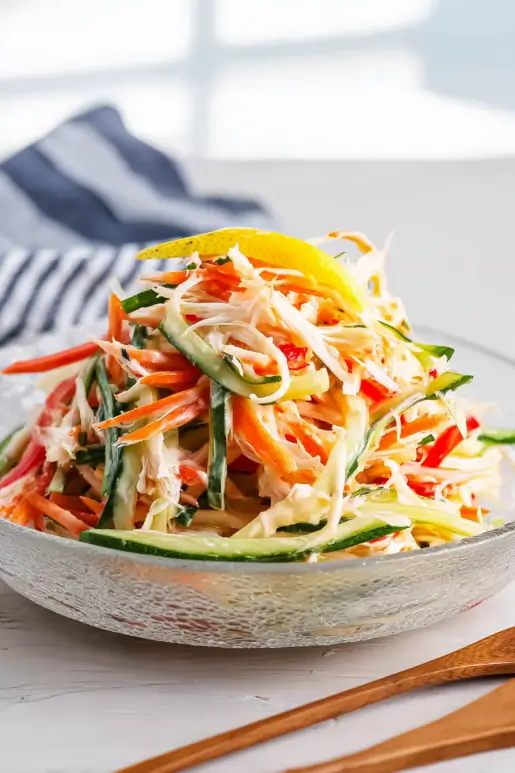
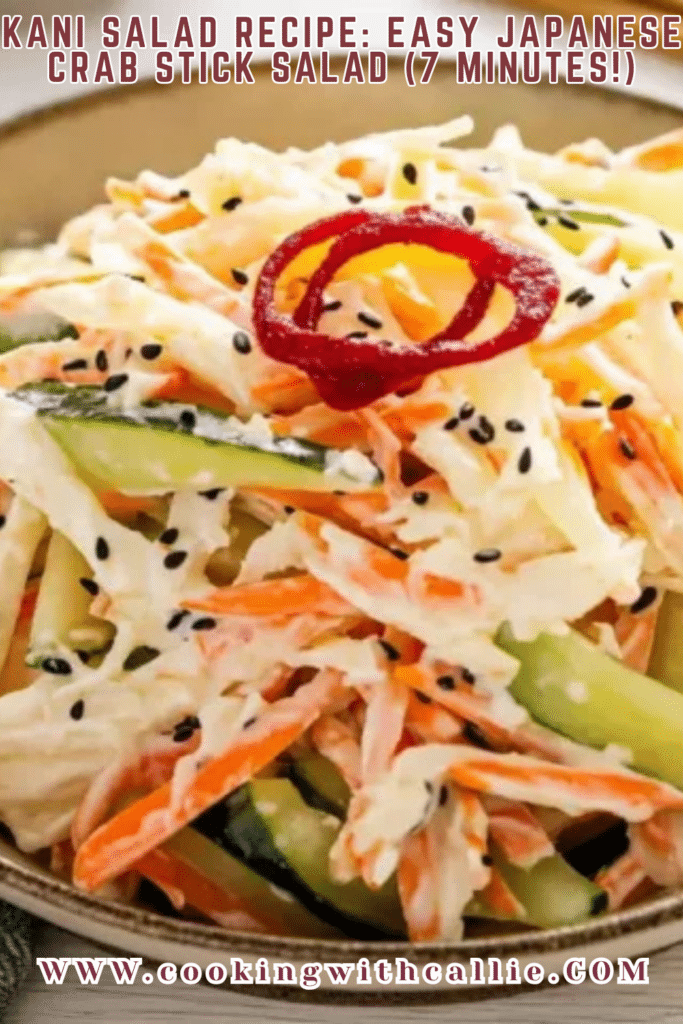
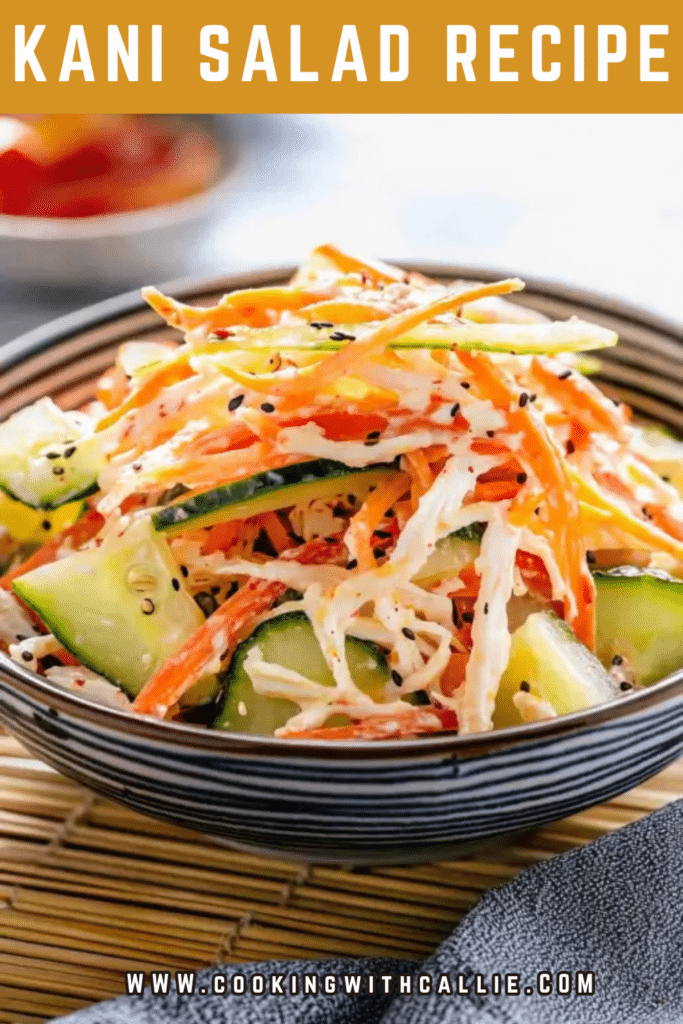
The first time I had kani salad was at a sushi restaurant – one of those places that sets it down before you’ve ordered anything else, a small chilled bowl of creamy, slightly tangy, crunchy-sweet crab stick salad that disappears before the edamame arrives. It’s one of those dishes that seems too simple to be as good as it is: shredded imitation crab, crisp cucumber and carrot julienned thin, and a creamy Kewpie mayo dressing with lemon and optional sriracha heat. Seven minutes from refrigerator to bowl. No cooking whatsoever.
The thing that makes kani salad specifically good rather than just adequate is Kewpie mayonnaise. Regular American mayo is fine for many things but in this specific application it produces a noticeably less interesting result. Kewpie is made with only egg yolks (not whole eggs) and rice vinegar rather than distilled vinegar – it’s richer, slightly tangier, and has a specifically umami-adjacent depth from the higher yolk proportion that makes the dressing taste more specifically Japanese than an equivalent American mayo dressing would. It’s available at most Asian grocery stores, increasingly at mainstream grocery stores in the international aisle, and online. The difference in this particular recipe is specific and worth seeking out.
Hand-pulling the crab sticks into strands is the technique detail most often skipped and specifically worth doing. Imitation crab (surimi) has a fibrous, layered internal structure that separates naturally into long, thin strands when pulled by hand. These irregular, thin strands have significantly more surface area than choppped or fork-shredded pieces and absorb the Kewpie mayo dressing more completely and more evenly. The hand-pulled texture is also specifically more textural and visually interesting in the bowl than uniform chopped pieces.
I make this for sushi nights at home when Emily requests a sushi spread and I’m doing California rolls or cucumber rolls – the kani salad is the appetizer that everyone eats standing at the kitchen counter while the rice cooks. It also works as a quick, satisfying weekday lunch that feels specifically more interesting than a standard salad. For more quick, Japanese-inspired, no-cook dishes that work in the same spirit, my Mexican Tuna Salad is the bold, protein-forward companion in a completely different direction – both are fast, satisfying, and specifically more interesting than they have any right to be from their simple ingredient lists.
Why You Will Like This Kani Salad
- Kewpie Japanese mayonnaise is specifically better than American mayo in this dressing – Made from egg yolks only (not whole eggs) and seasoned with rice vinegar, Kewpie has a richer, slightly tangier, specifically umami-forward character that produces a more genuinely Japanese-tasting dressing. This is the ingredient choice that most specifically makes the salad taste like the sushi restaurant version.
- Hand-pulling the crab sticks produces better texture and more dressing absorption than cutting – Pulling imitation crab by hand separates it along its natural fiber lines into long, irregular strands with more surface area than chopped pieces. These strands absorb the Kewpie dressing more completely and create a more texturally varied, more specifically satisfying salad.
- Ready in 7 minutes with zero cooking – Whisk the dressing. Pull the crab. Julienne the vegetables. Combine. That’s genuinely the whole process in under 7 minutes.
- The imitation crab (surimi) is specifically designed for this application – Surimi is processed from real fish (typically pollock) that’s been pulverized, flavored to taste like crab, formed into sticks, and cooked during processing. It’s safe to eat directly from the package, pulls beautifully into strands, has a sweet, mild, crab-adjacent flavor that holds the Kewpie dressing well, and costs a fraction of real crab.
- The optional sriracha transforms this from mild and creamy to spicy and complex – Two teaspoons of sriracha in the dressing adds heat without making the salad specifically spicy – it adds complexity and depth to the creamy Kewpie base. More sriracha pushes toward specifically spicy. The kid-friendly version skips it entirely.
- Naturally gluten-free – Most imitation crab and Kewpie mayo are gluten-free; verify labels for strict compliance.
- Stores for up to 3 days in the refrigerator – Though best served fresh when the vegetables are at maximum crunch, it’s genuinely good through day 3.
- Kid-friendly when served without the sriracha – The mild, creamy, slightly sweet flavor profile without heat is specifically appealing to children. It’s the appetizer that kids at a sushi restaurant actually want to eat.

Kani Salad Ingredients
Seven ingredients including seasoning. Here’s everything.
Salad
- 1 lb imitation crab sticks (surimi), shredded by hand
- 1/2 large English cucumber, julienned
- 1 large carrot, julienned
Kewpie Dressing
- 1/2 cup Kewpie Japanese mayonnaise
- 1.5 tablespoons fresh lemon juice
- 2 teaspoons sriracha (optional for heat)
- Salt and pepper to taste
Ingredient Notes and Shopping Tips
Imitation crab sticks – choosing the right format: Imitation crab (surimi) is sold in several forms at grocery stores: in individual stick packages, in chunk form, and occasionally pre-shredded. For kani salad, the stick format that “pulls apart like string cheese” (as the original recipe describes) is specifically the right choice. Look for the long, cylindrical sticks rather than the flake or chunk varieties – the cylindrical sticks have the fibrous, layered structure that produces the most satisfying long strands when pulled by hand. Better brands have more crab-adjacent flavor and a more pleasant, less rubbery texture. Louis Kemp, Trident, and Trans-Ocean are all widely available and produce good results. The package label should say “surimi seafood” or “imitation crab.” Keep refrigerated and use within the package’s date.
Kewpie mayonnaise – where to find it and why specifically: Kewpie is Japan’s most iconic mayo brand, recognizable by its soft red tube packaging with the Kewpie doll logo. It’s available at Japanese and Korean grocery stores, Asian supermarkets, and increasingly at mainstream grocery stores (in the international or Asian foods aisle) and online at Amazon. Kewpie’s formulation specifically differs from American mayo in two important ways: it uses egg yolks only (no whites), producing a richer, more deeply flavored mayo with higher fat content per volume, and it uses rice vinegar rather than distilled white vinegar, which adds a milder, slightly sweeter acidity with umami undertones. For kani salad specifically, the difference between Kewpie and American mayo is more noticeable than in most applications – the dressing with Kewpie tastes specifically Japanese and specifically restaurant-quality in a way American mayo doesn’t replicate. If Kewpie is genuinely unavailable, use the best-quality American mayo you have and add a teaspoon of rice vinegar to partially compensate for the flavor difference.
English cucumber vs. standard cucumber: English cucumbers (long, thin, usually sold wrapped in plastic) are specifically better for kani salad for two reasons. First, they’re essentially seedless – no watery seed cavity to remove or work around. Second, their skin is thin enough to not require peeling, which saves time and preserves the green visual stripe in the julienned pieces. Standard American garden cucumbers have thicker skin that benefits from peeling and a significant seed cavity that produces more water in the salad when julienned. Persian cucumbers (smaller, thin-skinned, seedless) also work beautifully and are particularly good for this application because their size produces perfectly-scaled julienne without the length variation of English cucumbers.
Fresh lemon juice vs. bottled: In a dressing with only three ingredients, the lemon juice’s specific quality is more noticeable than in a more complex dressing. Fresh squeezed has more aromatic character and brighter acidity. Rice vinegar (a tablespoon in place of lemon juice) is also excellent and is the more traditional Japanese alternative – its milder, slightly sweeter acidity is specifically appropriate for the Japanese flavor profile and produces a slightly more authentic sushi-restaurant taste than lemon. Yuzu juice – if you can find it at a Japanese grocery store – is the most specifically Japanese option and adds a fragrant, complex citrus note that is genuinely excellent.
Substitutions and Add-Ins That Work
- Real crab meat instead of imitation: Use the same quantity of picked fresh crab meat or high-quality canned crab; produces a more specifically crab-flavored, more indulgent version; requires no shredding (it naturally separates)
- Rice vinegar instead of lemon juice: More traditionally Japanese; slightly milder, slightly sweeter acidity; use the same quantity
- Sesame oil addition: Half a teaspoon of toasted sesame oil added to the dressing adds specifically nutty, fragrant depth that is excellent in this application and pushes the flavor toward a more robustly Japanese direction
- Toasted sesame seeds: A teaspoon scattered across the finished salad adds visual interest and a mild nuttiness; either black or white sesame seeds work
- Fresh mango addition: Half a ripe mango, julienned into thin strips alongside the cucumber and carrot, adds sweet, floral tropical sweetness that is specifically excellent against the creamy Kewpie – this is the mango kani salad direction that many sushi restaurants offer
- Shredded cabbage addition: Half a cup of very thinly shredded green or napa cabbage added with the other vegetables adds more crunch and makes the salad more voluminous without significantly changing the flavor
- Chili oil instead of sriracha: Half a teaspoon of toasted chili oil (like Lao Gan Ma or S&B) in place of the sriracha adds heat with a more specifically roasted, complex quality
How To Make Kani Salad
Four steps in 7 minutes. Here’s every detail that produces the best result.
1: The Dressing – Start Here
In a small bowl, combine the Kewpie mayonnaise, fresh lemon juice, and sriracha if using. Whisk together until uniformly combined and smooth. The dressing should look creamy and slightly loose – not stiff. Season with a small pinch of salt and a few turns of black pepper. Taste the dressing directly – it should be creamy, tangy from the lemon, and with the sriracha’s heat clearly present if using. The dressing will taste more concentrated at this point than it will once distributed across the salad – that’s correct.
Set the dressing aside. Making the dressing first means it’s ready the moment the other components are prepped, and the brief sit allows the lemon juice to integrate with the Kewpie more completely than if added and immediately used.
2: Hand-Pulling the Crab Sticks – The Technique That Matters
Remove the imitation crab sticks from their packaging. If they’re individually wrapped in plastic film, peel that off. Pull each stick apart by hand rather than cutting with a knife or using a fork. Hold the stick at one end and use your other hand’s fingers to gently pull thin strands from the opposite end – the surimi’s fibrous structure separates naturally into irregular long strands with this pulling technique. Work through the full pound of crab sticks until all have been pulled into strands.
The resulting pile of hand-pulled strands should look slightly tangled and irregular – long thin strips of various widths mixed together. This irregular texture is specifically more visually interesting and more texturally satisfying in the finished salad than uniformly chopped pieces would be. The strands also absorb the Kewpie dressing more completely because of their higher surface area relative to volume.
Callie’s Kitchen Note: Imitation crab sticks have a very specific texture that surprises people the first time they pull them by hand – they separate almost like string cheese, in long, thin, slightly irregular strands along their natural fiber lines. I used to just chop them with a knife, which produced uniform small pieces that were fine but had much less of the interesting texture that makes kani salad specifically good to eat. When I started pulling them by hand after seeing it done at a Japanese restaurant, the difference was immediately apparent – the hand-pulled strands have more surface area, absorb the dressing more evenly, and are much more visually attractive in the bowl. It takes 2 extra minutes and is worth every second.
3: Julienning the Vegetables
The julienne cut produces thin, matchstick-sized strips that are specifically the right format for kani salad – long enough to pick up with a fork alongside the crab strands, thin enough to not dominate each bite with vegetable crunch at the expense of the crab and dressing.
For the cucumber: trim both ends. No need to peel English cucumber – the skin is tender and thin. Cut the cucumber section into 2 to 3 inch lengths. Cut each length into thin planks (about 2mm thick), then stack the planks and cut into matchstick strips of the same width. The julienned cucumber should look like thin, pale green matchsticks.
For the carrot: peel and trim. Cut into 2 to 3 inch lengths. Cut into thin planks, then stack and cut into matchsticks. The carrot julienne should be a similar size to the cucumber – thin enough to be delicate, thick enough to maintain a satisfying crunch. A mandoline with a julienne blade produces the most consistent, most restaurant-quality julienne in the least time. A sharp knife produces perfectly good julienne with slightly more variation in thickness.
4: Combining and the Optional Rest
In a large bowl, combine the hand-pulled crab strands, julienned cucumber, and julienned carrot. Pour about half the prepared dressing over the combined ingredients. Toss gently with two spoons or clean hands until everything is coated. Taste and add more dressing in small amounts until the salad is properly dressed – the crab should be clearly coated in the creamy Kewpie dressing, the vegetables should be lightly coated, and the salad should taste specifically of the creamy-tangy dressing throughout rather than in spots.
If you have 10 to 15 minutes before serving, cover the bowl and refrigerate. The brief chill allows the flavors to meld, the crab strands to absorb the dressing more completely, and the salad to reach the cold temperature that makes it specifically refreshing. Serve cold, in individual bowls or from a large serving bowl, ideally with chopsticks available for the most authentically sushi-restaurant experience.
Callie’s Kitchen Note: I add the dressing in half-first increments because the amount of dressing needed varies by how tightly the crab was packed (denser = less surface area) and how much you like this particular style of creamy dressing (which is personal). Tasting after the first half and adding more gradually always produces a better result than dumping the full half-cup and hoping for the best. You can always add more mayo; you can’t take away what’s already absorbed into the crab strands. Start with half. Taste. Add more. That three-step sequence consistently produces the dressing level that’s right for the specific batch.
Speed Hacks for Even Faster Assembly
- Make the dressing up to a week ahead and refrigerate in a sealed jar – day-of prep is just pull the crab and julienne the vegetables
- Buy pre-julienned carrot (available in the produce section’s pre-cut area) to eliminate the carrot prep entirely
- A mandoline with a julienne blade reduces vegetable prep from 3 minutes to 45 seconds
- Pull the crab sticks while still cold from the refrigerator – cold imitation crab is slightly firmer and separates into strands more cleanly than room-temperature crab
Common Mistakes To Avoid
This recipe is specifically simple but a few choices affect the result.
Using American mayo instead of Kewpie without compensation. If Kewpie isn’t available, add a teaspoon of rice vinegar to American mayo to move toward the right flavor direction. The dressing won’t be identical but it will be better than standard mayo alone.
Chopping the crab sticks instead of hand-pulling. Chopped crab pieces have less surface area, absorb less dressing, and have a less interesting texture than hand-pulled strands. Pull by hand for the best result.
Adding all the dressing at once without tasting. The amount of dressing needed varies by batch. Add half, taste, add more incrementally. Too much dressing produces a heavy, mayo-dominated salad; too little produces a dry one. The right amount coats everything without pooling at the bottom.
Serving immediately without the brief chill. The 10 to 15 minute refrigeration is not essential but specifically improves the salad – the crab absorbs the dressing more completely, the flavors meld, and the cold temperature is specifically refreshing. If time allows, chill before serving.
Using watery or overripe vegetables. Soft cucumber or old, bendable carrots produce a less satisfying crunch and release more water into the dressing over time. Use firm, fresh vegetables for the best texture through the full serving period.
Storage Notes
Kani salad is best in the first hour after assembly but stores reasonably well.
Fridge up to 3 days: Store in a sealed airtight container. The vegetables will soften slightly over time as they release moisture. Stir before each serving. By day 3 the crunch is noticeably less than day 1 but the flavor is still good.
Best make-ahead strategy: Store the pulled crab strands separately from the julienned vegetables and the dressing. Combine on the day of eating. This approach preserves the vegetable crunch through 3 to 4 days rather than the combined version’s 2 to 3 days.
Do not freeze: Mayonnaise-based salads separate when frozen and the vegetable texture deteriorates dramatically. Always refrigerate rather than freeze.
Kani Salad Variations
The Kewpie-lemon base is flexible in several excellent directions.
Spicy Kani Salad: Increase the sriracha to 1 tablespoon in the dressing. Add half a teaspoon of toasted sesame oil alongside the mayo and lemon juice. Scatter dried chili flakes across the finished salad. This spicy version is closer to what many sushi restaurants serve as “spicy kani” – significantly more heat with a specifically complex, slightly toasted chili character from the sesame oil addition.
Mango Kani Salad: Add half a ripe Ataulfo or Champagne mango julienned into thin strips alongside the cucumber and carrot. The mango’s sweet, floral, tropical sweetness against the creamy Kewpie and the crab’s mild oceanic flavor is a specifically excellent combination that sushi restaurants in Hawaii and California have been serving for decades. This is the version that makes people who say they don’t like imitation crab reconsider their position.
Sesame Kani Salad: Add half a teaspoon of toasted sesame oil to the dressing. Toast 2 teaspoons of sesame seeds (black or white or a mix) in a dry skillet for 2 minutes until fragrant and scatter across the finished salad. The toasted sesame direction pushes the flavor toward a more robustly Japanese, nutty character that is particularly good if serving alongside other Japanese dishes.
Crunchy Tempura Flake Version: Scatter a quarter cup of tempura flakes (tenkasu, available at Japanese grocery stores) across the finished kani salad immediately before serving. The crispy tempura flakes add a specifically crunchy, light, fried quality that is one of the most popular kani salad variations at sushi restaurants in Japan and the United States.
Lettuce Cup Format: Instead of serving in a bowl, spoon the kani salad into individual butter lettuce cups. The cup creates a portable, hand-held format that is specifically good for casual entertaining, picnics, or summer gatherings where utensils are inconvenient. A leaf of butter lettuce cupped in the hand with a scoop of kani salad inside is one of the most naturally elegant finger foods available from a 7-minute recipe.
Serving Suggestions
This kani salad works in multiple contexts from sushi night starter to quick weekday lunch.
As a sushi night appetizer: Serve chilled in small bowls alongside edamame while the rice cooks. Kani salad is the traditional first thing to arrive at a Japanese restaurant table and for good reason – it’s light, refreshing, and specifically whets the appetite without filling anyone up before the main event. Make it while the rice is cooking and it’s ready at exactly the right moment.
Inside California rolls: Kani salad mixed slightly drier (less dressing) can be used as a filling component in homemade California rolls or hand rolls alongside avocado and cucumber. The creamy Kewpie dressing seasoned crab is the classic California roll filling, and the salad version can be spooned directly onto the nori and rice layer.
As a quick weekday lunch: A generous serving over a small mound of warm Japanese short-grain rice or alongside a bowl of miso soup is a genuinely satisfying and specifically Japanese-style quick lunch. The combination of warm rice, cold creamy kani salad, and a bowl of umami-rich miso is one of the most satisfying light meal combinations available from the pantry with minimal prep.
At a summer potluck: Transported in a sealed container and served in a wide bowl with a serving spoon, kani salad holds well at cool room temperature for 1 to 2 hours. It’s a specifically unusual contribution to a standard potluck spread and generates more curiosity and appreciation than a standard pasta salad.
Beverage pairings: Japanese light lager (Sapporo, Asahi, or Kirin) is the classic pairing – the beer’s clean, mild bitterness and carbonation are specifically refreshing alongside the creamy Kewpie dressing. A crisp, dry sake (junmai daiginjo for a premium occasion) is the most specifically Japanese pairing that complements the seafood direction. Sparkling water with a slice of cucumber is the most specifically refreshing non-alcoholic option that echoes the cucumber in the salad itself.

Kani Salad FAQ
Imitation crab (surimi) is made from real fish – typically Alaskan pollock – that has been deboned, rinsed, and pulverized into a paste. This paste is then flavored (typically with real crab extract or natural flavoring), formed into the shape of crab legs or sticks, and cooked during the manufacturing process before packaging. Because it’s already cooked during manufacture, imitation crab is completely safe to eat directly from the package without any additional cooking – which is specifically why kani salad takes 7 minutes and requires no heat. The fish is fully cooked; the “raw” component is only the other salad ingredients (vegetables). Individuals who are immunocompromised, pregnant, or otherwise advised to avoid raw seafood are still safe eating imitation crab since it is fully cooked.
Yes – and the result is genuinely excellent, though different in character. Real crab meat (particularly Dungeness, blue crab, or king crab) has a more complex, more specifically crab-flavored, more delicate character than imitation crab. Use picked fresh crab meat or drained high-quality canned crab (Bumble Bee and Chicken of the Sea both make decent canned crab; for a premium occasion, fresh-picked crab from the seafood counter is worth the premium). Reduce the dressing slightly – real crab meat is more delicate than imitation and can taste overwhelmed by too much Kewpie. The real crab version is more expensive and more impressive for a dinner party; the imitation crab version is the practical, affordable everyday choice.
Kewpie mayonnaise in its standard Japanese formulation (made for the Japanese market) does not contain gluten-containing ingredients. However, formulations sold in different markets may vary and manufacturing facilities may have cross-contamination risks. For strict gluten-free compliance: check the specific label of the bottle you’re purchasing. In the United States, the Kewpie brand imported for US markets is generally considered gluten-free but the label should be verified for the specific product. Most imitation crab products are also gluten-free but some contain wheat starch as a binder – check the ingredient list of your specific brand if strict GF compliance is needed.
Yes – the sriracha is listed as optional in the recipe for exactly this reason. The mild version (Kewpie, lemon, salt, and pepper only) is genuinely excellent and is specifically the version that works for children and people sensitive to heat. The mild dressing lets the Kewpie’s rich, tangy, umami character come forward without the heat’s interference. If you want mild heat without the specific chili character of sriracha, a small amount of white pepper in the dressing (half a teaspoon) adds warmth without the sriracha’s heat and is a more traditionally Japanese-style approach to spicing the dressing.
Recipes You May Like
If this kani salad has become your go-to for sushi nights and quick lunches, here are three more fast, protein-forward, no-cook salads worth having in rotation:
- Mexican Tuna Salad – The bold, spiced no-cook protein salad companion. Where kani salad is mild, creamy, and Japanese-inspired, the Mexican tuna salad is bold, cumin-forward, and Latin-inspired. Both are ready in under 10 minutes from pantry protein.
- Tuna Asparagus Salad with Microgreens – For when you want a more composed, more elegant quick protein salad with the same seafood direction. The blanched asparagus and lemon Dijon vinaigrette produce something specifically more substantial and dinner-appropriate than kani salad’s lighter, snack-adjacent quality.
- Cottage Cheese Avocado Toast – For quick weekday lunches that take the same 7-minute window but go in a completely different direction. Rotate kani salad and cottage cheese avocado toast through the week for two genuinely different protein-rich quick lunches that cover the Japanese-inspired and the Mediterranean-inspired angles.
Conclusion
This kani salad is the 7-minute recipe that specifically earns a place in the regular rotation because it delivers a genuinely restaurant-quality result from a short ingredient list and minimal technique. Kewpie mayonnaise rather than standard American mayo. Hand-pulled crab strands rather than chopped pieces. Half the dressing first, taste, add more. The 10-minute chill if time allows. These four choices together produce a kani salad that tastes like something you’d get at a good sushi restaurant and takes less time to make than it would take to drive to one.
Find the Kewpie – it’s specifically the ingredient that makes this taste authentically Japanese. Pull the crab by hand – it’s specifically the technique that makes the texture interesting. Taste before adding the full dressing quantity – it’s specifically the habit that produces properly dressed rather than overdressed. Chill before serving – it’s specifically the step that makes the salad refreshing rather than just room temperature. Come back and tell me in the comments whether you tried the mango version or went spicy. And save this on Pinterest for every sushi night, quick lunch, or summer potluck when you need something specifically good in 7 minutes.
Happy cooking, friends!
Callie
Kani Salad Recipe: Easy Japanese Crab Stick Salad (7 Minutes!)

Kani Salad is a refreshing Japanese-style crab stick salad made with shredded imitation crab, crisp cucumber and carrots, and a creamy, tangy Kewpie mayo dressing. It’s quick to make, full of texture, and totally satisfying for a light meal or sushi night side. Customize the spice to your liking and serve chilled for the best flavor.
- Prep Time: 7 minutes
- Cook Time: 0 minutes
- Total Time: 7 minutes
- Yield: 8 servings 1x
- Category: Salad
- Method: No-Cook
- Cuisine: Asian, Japanese
- Diet: Gluten Free
Ingredients
- 1 lb crab stick
- ½ large English cucumber julienned
- 1 large carrot julienned
- ½ cup Japanese mayonnaise
- 1 ½ tablespoons lemon juice
- Salt and pepper to taste
- 2 teaspoons sriracha optional for spice
Instructions
- In a small bowl, whisk together the Japanese mayo and lemon juice until smooth. Add sriracha for a spicy version, then season with salt and pepper.
- Shred the crab sticks using your hands or a fork, pulling them into thin strands.
- Julienne the cucumber and carrot into matchstick-size strips.
- In a large mixing bowl, combine the shredded crab, cucumber, and carrot.
- Toss with the dressing until everything is evenly coated.
- Serve immediately or chill in the fridge for 10–15 minutes for extra freshness

Notes
- Use Kewpie mayo for authentic flavor, but regular mayo works too.
- For a lighter texture, go easy on the dressing and add gradually.
- Store in an airtight container in the fridge for up to 3 days.
- You can prep the dressing and shredded crab ahead of time and mix when ready to serve.
Nutrition
- Serving Size: 1 serving
- Calories: 159
- Sugar: 3g
- Sodium: 441mg
- Fat: 11g
- Saturated Fat: 2g
- Unsaturated Fat: 8g
- Trans Fat: 0.03g
- Carbohydrates: 12g
- Fiber: 1g
- Protein: 3g
- Cholesterol: 12mg