
This post may contain affiliate links. For more information, see our Affiliate Disclosure Policy.
Standard tuna salad is useful and fine. This Mexican tuna salad is something significantly better than fine. Four cans of tuna, black beans, corn, red onion, red bell pepper, fresh cilantro, and a creamy Greek yogurt dressing seasoned with lime, cumin, chili powder, and garlic produce a salad that’s bold, filling, fresh, and genuinely crave-worthy – without turning on a single appliance.
I developed this recipe during a heatwave when cooking was genuinely not an option and plain tuna salad felt depressing. The result was something my husband called “way better than regular tuna salad” and has been in our refrigerator as a weekly meal prep component ever since. The black beans and corn bring the salad into Mexican-inspired territory in a way that’s both distinctly flavorful and genuinely satisfying – one serving has about 32 grams of protein from the tuna, beans, and Greek yogurt combined. This is a lunch that keeps you full.
The Greek yogurt-based dressing is the detail that makes this version specifically different from other tuna salad approaches. Replacing a full mayo dressing with half Greek yogurt and half mayo produces something that’s still creamy and rich but lighter, tangier, and higher in protein. The Greek yogurt’s slight acidity mirrors the lime juice, the cumin adds warmth and depth, and the chili powder adds a mild heat that builds subtly across the salad. Together they produce a dressing that tastes specifically Mexican-inspired rather than just “seasoned tuna.”
Drain everything thoroughly – tuna, beans, and corn – and pat dry if they still seem wet. Excess moisture dilutes the dressing and makes the salad watery within an hour. That one step is the difference between a salad that holds well for four days and one that gets soupy by day two. For another high-protein, no-cook lunch option that uses a similar pantry-staple approach, my Mediterranean Salmon Salad follows the same quick-assembly, big-flavor philosophy in a completely different direction.
Why You Will Like This Mexican Tuna Salad
- 32 grams of protein per serving from accessible, inexpensive ingredients – Four cans of tuna, one can of black beans, and half a cup of Greek yogurt together produce a protein content that rivals a restaurant chicken dish, from pantry items that cost a fraction of the equivalent protein in fresh protein form.
- The Greek yogurt and mayo dressing is specifically better than plain mayo – The combination produces a creamier, tangier, lighter dressing that has more complexity than plain mayonnaise alone. The Greek yogurt’s acidity mirrors the lime and the protein it adds to the dressing is a bonus.
- The spice blend is what makes this taste Mexican-inspired rather than just seasoned – Two teaspoons each of garlic powder, chili powder, and cumin, plus a teaspoon of onion powder and fresh lime juice produce a dressing that tastes specifically like southwestern or Mexican-style seasoning rather than generic “spiced tuna.”
- The black beans and corn turn this into a genuinely complete meal – Beans add fiber, plant-based protein, and a satisfying heartiness. Corn adds sweetness and a pop of color. Together they transform what would be a standard tuna salad into something substantial enough to be a complete lunch without any sides.
- Ready in 30 minutes with zero cooking – Open cans, drain, chop the fresh vegetables, mix the dressing, combine, season, done. This is genuinely one of the fastest high-protein lunches available from scratch.
- Stores for 4 days and tastes better the next day – The lime and spices continue working into the tuna and beans overnight. Day-two Mexican tuna salad is measurably better flavored than day-one.
- Genuinely flexible serving format – On lettuce cups, in tortillas, over greens, on toast, in a bowl on its own, or scooped with tortilla chips. This salad works in all of these formats without modification.
- Naturally gluten-free and low-carb depending on how you serve it – The salad itself contains no gluten. Served over greens or in lettuce cups, it’s also low-carb. A tortilla or toast makes it higher-carb – the format choice is yours.
Mexican Tuna Salad Ingredients
Two components: the salad and the creamy lime dressing. Here’s everything.
Salad
- 4 cans (4 oz each) tuna, thoroughly drained
- 1 can (15 oz) black beans, drained and rinsed
- 1 can (15 oz) corn, drained and rinsed
- 1/2 red onion, diced small
- 1 red bell pepper, chopped
- 0.5 oz fresh cilantro, finely chopped
Creamy Lime Dressing
- 1/2 cup plain Greek yogurt, unsweetened and thick
- 2 tablespoons light mayonnaise
- Juice of 1 lime
- 2 teaspoons garlic powder
- 2 teaspoons chili powder
- 2 teaspoons ground cumin
- 1 teaspoon onion powder
- Salt and black pepper to taste
Ingredient Notes and Shopping Tips
Canned tuna – the type affects the texture significantly: The two primary options are solid white albacore tuna and light tuna (typically skipjack or yellowfin). Solid white albacore has firmer, larger, meatier flakes and a more neutral, slightly less fishy flavor. Light tuna has a softer, smaller, more flaky texture and a slightly stronger tuna flavor. For this salad, solid white albacore produces a more substantial, chunkier result where you can distinguish distinct tuna pieces in each bite. Light tuna produces a more blended, finer-textured result that integrates more completely with the dressing. Both work well – the choice depends on your texture preference. Always buy tuna in water rather than oil for this salad since the dressing provides all the richness needed and oil-packed tuna would make the dressing greasy. Drain thoroughly by pressing the can lid against the tuna over the sink or pressing with paper towels – residual water dilutes the dressing significantly.
Greek yogurt – thick and unsweetened specifically: The Greek yogurt needs to be thick (not thin or pourable like some brands) and completely unsweetened. Thin Greek yogurt or flavored yogurt both produce a watery, off-flavored dressing. Fage 0% or 2%, Chobani Plain, and Stonyfield Organic are all reliably thick unsweetened options. Full-fat Greek yogurt produces the richest, creamiest dressing. 0% works well for a lighter result with slightly more tang. The protein content is similar across fat percentages, which means the Greek yogurt is adding substantial protein to the dressing regardless of which you choose.
Fresh lime juice – the lime is important here: The lime juice is a primary flavor in the dressing rather than a background note. One fresh lime yields approximately 2 tablespoons of juice – enough to be clearly present in each bite. Bottled lime juice lacks the volatile aromatic compounds of fresh-squeezed and produces a noticeably flatter, less bright dressing. Squeeze the lime fresh for this recipe specifically. If you want more lime flavor, add the zest of the lime to the dressing as well – the zest’s essential oils add aromatic depth beyond what the juice alone provides.
Cumin – the foundational spice of this dressing: Ground cumin is the spice most associated with Mexican and Tex-Mex cooking. Two teaspoons is a generous amount for a dressing this size – enough that every bite has a clear cumin presence rather than just a vague warm spice background. Use fresh ground cumin if possible (ground from whole cumin seeds) for more vibrant flavor, or check that your ground cumin isn’t old and faded. Ground cumin loses potency quickly – if yours has been in the pantry for more than a year, use a little extra or replace it for the best result.
Red onion – raw and diced small: Raw red onion in a salad needs to be diced small enough that it’s present in every bite but not so large that it dominates any single bite. About a quarter-inch dice is the right size. If raw red onion is too pungent for your preference, soak the diced onion in cold water for 10 minutes, drain, and pat dry – this removes some of the sulfur compounds that make raw onion harsh without removing its crunch or flavor presence.
Substitutions That Work
- Canned chickpeas instead of black beans: Slightly different flavor and a more rounded, nuttier texture – works well and produces a slightly different protein profile
- Pinto beans instead of black beans: Creamier, more earthy – a natural Mexican-direction alternative
- Frozen corn kernels (thawed) instead of canned: Slightly fresher flavor; particularly good in summer with fresh corn cut from the cob
- Dairy-free yogurt instead of Greek yogurt: Coconut yogurt or cashew-based yogurt – use a thick, unsweetened variety in the same quantity
- Add jalapeño: One or two tablespoons of finely diced fresh jalapeño (seeds removed for moderate heat) adds direct heat that pairs excellently with the cumin and chili powder
- Add avocado: Half a diced ripe avocado gently folded in at the very end (don’t toss aggressively) adds creaminess and richness – add fresh just before serving since avocado browns quickly
- Roasted red peppers instead of fresh: Adds a sweeter, slightly smoky quality; particularly good if you want less crunch

How To Make Mexican Tuna Salad
The process is genuinely simple but a few technique details determine whether the final salad is great or just acceptable. Here’s everything.
Draining Everything Thoroughly – The Most Important Step
Open all four cans of tuna and drain each one by pressing the can lid firmly against the tuna over the sink, squeezing out as much water as possible. A watery tuna produces a watery salad. Add the drained tuna to a large mixing bowl and use a fork to flake it apart into bite-sized pieces – break up any large chunks while keeping some texture. Avoid breaking it down into a paste; distinct flakes produce better texture in each bite.
Drain the black beans through a fine-mesh strainer and rinse under cold water for 30 seconds to remove the starchy canning liquid. Drain the corn the same way. If either still seems very wet after draining, spread them on paper towels and pat dry – this is the specific step that prevents a watery salad. Excess moisture from inadequately drained canned goods is the most common cause of a salad that becomes soupy within hours of assembling.
Callie’s Kitchen Note: I’ve made this salad many times and the version where I rushed the draining step (light press of the can lid, quick rinse, into the bowl) versus the version where I really pressed the tuna dry and patted the beans and corn with paper towels – the difference in the finished salad after 24 hours in the fridge was dramatic. The rushed version had a pool of liquid at the bottom of the container by the next day that had significantly diluted the dressing. The thoroughly drained version was still perfectly dressed and creamy on day three. The extra 3 minutes of draining and patting is worth it every time.
Making the Creamy Lime Dressing
In a small bowl, combine the Greek yogurt, light mayonnaise, fresh lime juice, garlic powder, chili powder, ground cumin, and onion powder. Whisk together until completely smooth and uniform. The dressing should look creamy and slightly orange-red-tinted from the chili powder and cumin. Taste the dressing directly – it should be boldly seasoned, clearly cumin-and-chili-forward, with the lime’s brightness threading through the creaminess. If it tastes flat, add a pinch of salt and a few more drops of lime juice. The dressing needs to be assertively seasoned since it will be distributed through a large amount of tuna and vegetables and its intensity will dilute as it coats everything.
Combining and the Critical Fold-Not-Stir Approach
Add the drained black beans, corn, diced red onion, chopped red bell pepper, and finely chopped cilantro to the bowl with the flaked tuna. Pour the dressing over everything. Now fold – not stir or beat. Use a large spoon or rubber spatula to turn the salad from the bottom up repeatedly, incorporating the dressing gently through the whole mixture without breaking the tuna down further into a paste. The goal is every ingredient coated in dressing without losing the distinct texture of each component.
Taste after combining and adjust seasoning: more salt if it tastes flat, more lime juice if it needs brightness, an additional pinch of cumin or chili powder if it needs more of the spice character. The final salad should taste boldly seasoned, clearly spiced in a Mexican direction, and bright from the lime.
Callie’s Kitchen Note: The cilantro amount in this recipe – almost a full half-ounce – is more than most tuna salad recipes call for any herb and significantly more than most people use in everyday cooking. Don’t reduce it. Cilantro is doing specific flavor work here that makes this salad taste genuinely Mexican-inspired rather than just spiced. Its bright, slightly citrusy, slightly herbal quality amplifies the lime and cumin in the dressing and makes every bite feel fresh and alive. For people who genuinely dislike cilantro: flat-leaf parsley in the same quantity produces a different but very good version of this salad with a more neutral herbal note.
The 30-Minute Rest and Why It Helps
Cover the assembled salad and refrigerate for at least 30 minutes before serving if your timeline allows. During this rest, the lime juice and cumin in the dressing continue working into the tuna, beans, and corn. The spices meld from distinct individual notes into a more integrated, cohesive flavor profile. The salad after 30 minutes in the fridge tastes more complex and specifically more “Mexican-spiced” than immediately after assembly. Overnight is even better – the next day version is consistently the most deeply flavored.
Speed Hacks for Faster Assembly
- Make the dressing up to 3 days ahead and refrigerate – day-of assembly is just drain everything, chop, and combine
- Pre-dice the red onion and red bell pepper and refrigerate – fresh vegetable prep eliminated from the day-of process
- Use pre-chopped or jarred roasted red peppers instead of fresh bell pepper – eliminates all fresh vegetable chopping
- Make the full batch on Sunday for 4 days of lunch servings ready to grab from the fridge
Common Mistakes To Avoid
This recipe is forgiving but a few specific habits consistently affect the quality of the finished salad.
Not draining the tuna, beans, and corn thoroughly. Excess moisture from inadequately drained canned goods dilutes the dressing, makes the salad watery, and causes it to deteriorate much faster in the fridge. Press the tuna dry, rinse and drain the beans and corn, and pat dry with paper towels if they still seem wet. This single step is the most impactful for the salad’s quality and longevity.
Overmixing and breaking the tuna down into a paste. Tuna loses its texture quickly when aggressively mixed. Use a gentle folding motion when combining the ingredients rather than stirring vigorously. Distinct tuna flakes produce a better texture than a uniformly mushy mixture.
Under-seasoning the dressing before adding it to the salad. The dressing needs to be boldly seasoned because it’s being distributed through a large quantity of ingredients. Taste the dressing directly and season assertively before adding it to the bowl. A dressing that tastes slightly over-seasoned as a standalone will taste appropriately seasoned when distributed through the salad.
Using thin or sweetened yogurt. Thin yogurt produces a watery dressing that doesn’t cling to the salad ingredients properly. Sweetened yogurt changes the flavor profile of the dressing in an incompatible direction. Thick, plain, unsweetened Greek yogurt is specifically what this recipe requires.
Adding avocado and then refrigerating for later. Avocado browns quickly once cut and exposed to air. If adding avocado, add it fresh immediately before serving rather than mixing it in and refrigerating. Store the salad without the avocado and add a fresh diced portion to each serving.
Storage Notes
This Mexican tuna salad is one of the best-keeping protein salads because the lime juice and spices actually improve the flavor over time rather than just maintaining it.
Fridge up to 4 days: Store in a well-sealed airtight container. The salad is genuinely better on days two and three as the flavors meld and deepen. Stir before serving each day since the dressing can settle to the bottom. Add a small fresh squeeze of lime juice and a pinch of salt to each serving to refresh the brightness if it seems muted after a few days.
Not recommended for freezing: The Greek yogurt-based dressing separates when frozen and thawed, producing a grainy, broken texture. Make fresh batches rather than freezing.
Meal Prep Strategy
This is one of the best weekly meal prep recipes available for protein-focused eating. Make a full batch on Sunday and have 6 generous servings ready for lunches through Friday (assuming you eat one serving per day with two days remaining for two people). Each serving has approximately 32 grams of protein, which makes it a genuinely sustaining lunch that doesn’t require any additional protein alongside. Pair with a piece of fruit or a handful of tortilla chips for a complete meal that takes 30 seconds to assemble from the fridge each morning.
Mexican Tuna Salad Variations
The spiced lime dressing and tuna base take several excellent directions.
Avocado Addition (Serve Fresh): Dice one ripe avocado and fold gently into the salad just before serving. The avocado adds creamy richness and healthy fat that makes the salad more indulgent and more filling. Don’t mix the avocado into the batch you’re storing – add fresh to each serving since avocado browns quickly. This is the most popular variation and the one that most frequently converts people to making this regularly.
Mango and Jalapeño Version: Add half a cup of diced fresh mango and one tablespoon of finely diced jalapeño (seeds removed for moderate heat) to the salad. The sweet mango against the spiced tuna and the jalapeño’s heat creates a genuinely excellent sweet-spicy-savory combination that is particularly good in summer. Reduce the onion powder in the dressing slightly to let the fruit’s flavor come forward.
Spicy Version: Add one to two tablespoons of finely diced fresh jalapeño (with seeds for more heat), increase the chili powder to a tablespoon, and add half a teaspoon of cayenne to the dressing. Top with sliced fresh jalapeños before serving. This version has genuine, building heat that pairs particularly well with plain crackers or over rice to moderate the spice.
Queso Fresco Addition: Add two tablespoons of crumbled queso fresco over the finished salad just before serving. Queso fresco’s mild, slightly salty, slightly crumbly quality adds a dairy element without the richness of heavier cheeses. It pairs naturally with the cumin, chili powder, and lime direction of the dressing and adds a creamy-salty bite to each forkful.
Served in Lettuce Cups: Instead of serving in a bowl, spoon the salad into large butter lettuce or romaine leaves for individual wrap-style servings. Top each cup with a small slice of avocado, a squeeze of fresh lime, and a few extra cilantro leaves. This serving format is particularly good for gatherings where you want a finger food presentation – the lettuce cups hold their shape with a generous scoop of the salad and can be eaten in two to three bites.
Taco Format: Spoon the salad into small corn tortillas and top with sliced avocado, a drizzle of hot sauce, and extra cilantro. The Mexican tuna salad as a taco filling is genuinely excellent – particularly if the tortillas are warmed briefly in a dry skillet before filling. This turns the recipe from a salad into a main course taco format that’s significantly more interesting than canned tuna would typically produce.
Serving Suggestions
This Mexican tuna salad works across multiple serving formats and occasions.
In lettuce cups for a low-carb meal: Large butter lettuce leaves or romaine hearts make natural, refreshing cups for the salad. This format is the lowest-carb option and also the most visually appealing for serving at lunch or as an appetizer. Two to three lettuce cups per person make a complete, satisfying meal.
In warm corn tortillas for a taco format: Warm two small corn tortillas per person in a dry skillet for 30 seconds per side. Spoon the Mexican tuna salad into each tortilla and top with avocado, a squeeze of lime, and hot sauce. This is the most satisfying and filling serving format and the one that feels most specifically like a complete meal.
Over mixed greens for a composed salad: Serve a generous scoop of the Mexican tuna salad over a bed of mixed greens or romaine dressed very lightly with lime juice and olive oil. The salad becomes a protein-rich topping for the greens and the whole bowl has a very low carbohydrate count. Add tortilla chips alongside for crunch.
On toast for a hearty open-faced sandwich: Spread the salad over thick-cut toasted sourdough or multigrain bread. This is the most familiar serving format for a tuna salad and the Mexican spice direction makes it significantly more interesting than a standard tuna melt equivalent. Top with sliced avocado and a sprinkle of chili flakes for color and heat.
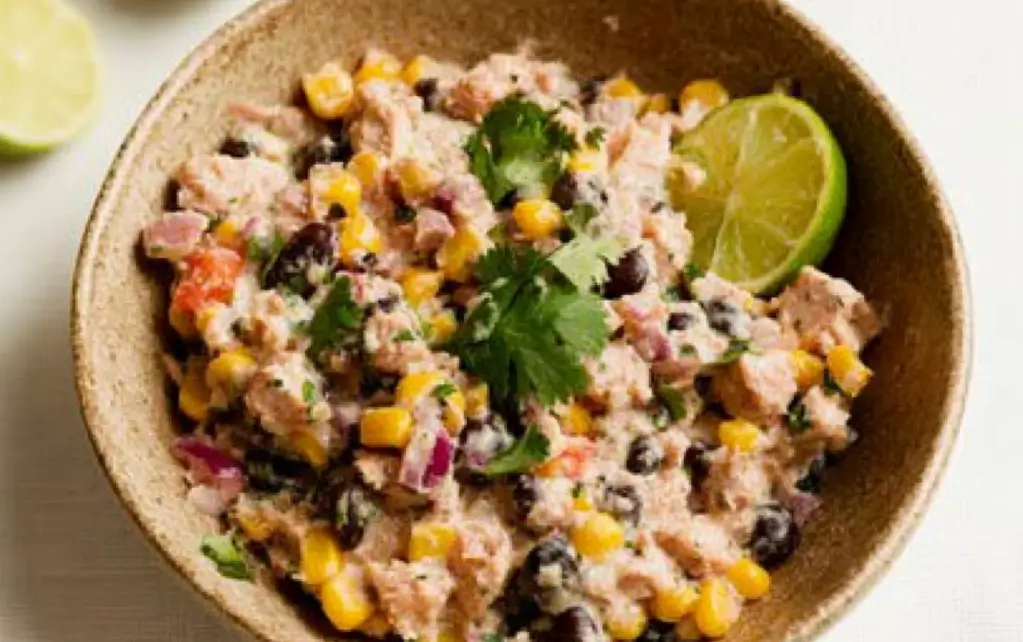
Presentation tips: Serve in a wide, shallow bowl that shows off the color range – the orange-red tuna, black beans, yellow corn, red bell pepper, and green cilantro make a genuinely beautiful color combination. Garnish with a few additional cilantro leaves and a wedge of lime on the rim. Sliced avocado fanned alongside adds a green element and signals the creamy topping option to guests.
Beverage pairings: Sparkling lime water or agua fresca with watermelon or cucumber is the most refreshing, specifically Mexican-adjacent pairing for this salad. A cold Mexican lager (Modelo or Pacifico) is the classic beer pairing for Mexican-inspired food. A crisp Sauvignon Blanc provides enough acidity to complement the lime dressing without being overwhelmed by the cumin and chili powder.

Mexican Tuna Salad FAQ
Yes – grilled, seared, or poached tuna flaked into the salad produces a slightly more elevated version of the same recipe. Grill or sear a pound of tuna steaks until just cooked through (still slightly pink in the center for the best texture), let cool, and flake into the bowl in place of the canned tuna. The fresh tuna version has a meatier, more complex flavor and a less uniform texture. The canned tuna version is faster, more convenient, and significantly less expensive while still producing an excellent salad. Both approaches work with the same dressing and vegetable combination.
The most common cause is inadequately drained canned ingredients. Canned tuna packed in water retains significant moisture even after the can is opened and the liquid poured off. Press the can lid firmly against the tuna over the sink and hold for 20 to 30 seconds to drive out as much water as possible. Similarly, canned black beans and corn need to be drained, rinsed, and patted dry rather than just rinsed quickly. Vegetables like red onion also release moisture into the salad over time – dicing them small reduces the total surface area releasing liquid. A second common cause: the Greek yogurt being too thin. Use a thick Greek yogurt specifically, not a thin or liquidy yogurt.
Several levels of heat adjustment. For mild additional heat: increase the chili powder to a tablespoon. For moderate heat: add one finely diced jalapeño (seeds removed) to the salad and a pinch of cayenne to the dressing. For genuinely spicy: keep the jalapeño seeds, add two jalapeños, increase cayenne to a quarter teaspoon, and add a teaspoon of your favorite hot sauce to the dressing. Set additional hot sauce on the table for people to add to their own serving. The lime and cumin in the base dressing are good companions for heat – they amplify the spice’s character rather than competing with it.
Yes – replace the Greek yogurt with an equal amount of thick, unsweetened coconut yogurt or cashew yogurt. Use vegan mayonnaise (or just extra dairy-free yogurt and skip the mayo entirely). The resulting dressing is slightly different in flavor – coconut yogurt adds a subtle tropical sweetness that works surprisingly well with the lime and cumin, and cashew yogurt is more neutral and very similar to the Greek yogurt result. Most dairy-free yogurts are somewhat thinner than Greek yogurt – drain through a cheesecloth-lined strainer for 30 minutes before using if you want a thicker consistency.
This is one of the best meal prep recipes on the blog for protein-focused eating. The salad keeps for 4 days in the refrigerator and genuinely improves for the first two to three days as the flavors meld. Make a full batch on Sunday (or double it) and have high-protein lunches available through Thursday or Friday with zero morning effort. The 32 grams of protein per serving is enough to sustain energy through a full afternoon without a mid-afternoon snack. The one meal-prep caveat: if adding avocado, add it fresh to each individual serving rather than mixing it into the stored batch, since avocado browns and deteriorates quickly.
Recipes You May Like
If this Mexican tuna salad has become a weekly meal prep staple, here are three more high-protein, no-cook salads worth adding to the rotation:
- Mediterranean Salmon Salad – Another 5-minute, high-protein, no-cook canned fish salad in a completely different, Mediterranean flavor direction. Great for alternating with the Mexican version week to week for variety without additional cooking complexity.
- Italian Grinder Salad – The bold deli-meat salad for when you want something high-protein and bold in flavor but in a different format from tuna. Same no-cook philosophy, completely different Italian-inspired direction.
- Costco Quinoa Salad Copycat – The vegetarian grain-and-lentil companion to this protein salad. Alternating between the two through the week gives you variety in both protein source and flavor direction while keeping both in the same 30-minute, high-protein meal prep category.
Conclusion
This Mexican tuna salad is the recipe that transformed my opinion of canned tuna as a meal prep ingredient. Thoroughly drained canned tuna with black beans, corn, fresh vegetables, and a boldly seasoned Greek yogurt lime dressing produces something genuinely satisfying and specifically flavorful rather than the bland-but-adequate tuna salad that most people default to. 32 grams of protein per serving, 30 minutes of prep, 4 days of storage, and it tastes better each day.
Drain everything thoroughly. Season the dressing boldly before adding it to the bowl. Fold gently rather than stirring aggressively. Don’t skip the cilantro. Taste and adjust before serving. Those five things produce a tuna salad that people genuinely look forward to eating rather than just appreciating nutritionally. Come back and tell me in the comments which serving format you used and whether you added the avocado. And save this on Pinterest for every future week when you want a complete, high-protein lunch handled in one 30-minute cooking session.
Happy cooking, friends!
Callie


Mexican Tuna Salad

This creamy, high-protein Mexican Tuna Salad is loaded with tender tuna, black beans, sweet corn, crisp veggies, and a zesty chili-lime dressing. It’s a no-cook, meal-prep-friendly favorite that’s perfect for busy lunches or light dinners.
- Prep Time: 30 minutes
- Cook Time: 0 minutes
- Total Time: 30 minutes
- Yield: 5 servings 1x
- Category: Lunch / Dinner
- Method: No Cook
- Cuisine: Mexican-Inspired
- Diet: Gluten Free
Ingredients
- 4 (4 oz) cans of tuna, drained
- 1 (15 oz) can black beans, drained and rinsed
- 1 (15 oz) can corn, drained and rinsed
- ½ red onion, diced
- 1 red bell pepper, chopped
- 0.5 oz fresh cilantro, finely chopped
- ½ cup plain Greek yogurt
- 2 tablespoons light mayo
- Juice of 1 lime
- 2 teaspoons garlic powder
- 2 teaspoons chili powder
- 2 teaspoons ground cumin
- 1 teaspoon onion powder
- Salt, to taste
- Black pepper, to taste
Instructions
- Add the drained tuna to a large mixing bowl and flake with a fork
- Toss in the black beans, corn, red onion, red bell pepper, and chopped cilantro
- In a separate small bowl or jar, mix Greek yogurt, mayo, lime juice, garlic powder, chili powder, ground cumin, and onion powder until smooth
- Pour the creamy dressing over the tuna and veggie mixture
- Gently mix until everything is fully combined
- Taste and season with salt and black pepper
- Serve immediately or chill for later


Notes
- Solid white albacore tuna adds a meaty bite, but light tuna works well too
- For extra heat, add diced jalapeños or a dash of hot sauce
- To make it dairy-free, use vegan yogurt and mayo alternatives
- This salad tastes even better after a few hours in the fridge
Nutrition
- Serving Size: 1 cup (approx.)
- Calories: 280
- Sugar: 4g
- Sodium: 490mg
- Fat: 10g
- Saturated Fat: 2g
- Unsaturated Fat: 6g
- Trans Fat: 0g
- Carbohydrates: 18g
- Fiber: 5g
- Protein: 28g
- Cholesterol: 35mg