This post may contain affiliate links. For more information, see our Affiliate Disclosure Policy.
By Callie
Introduction
I make some version of this vegetable frittata almost every single week. That’s not an exaggeration. It started as a Sunday meal prep thing – a way to use up whatever vegetables were about to go bad in the fridge – and over time it became the backbone of my weekday breakfast routine. I’ll pull a cold slice from the fridge, eat it standing at the counter while the coffee brews, and feel like I actually ate a real meal before 8 AM. That might not sound glamorous, but after years of grabbing a granola bar on the way out the door, it’s a big upgrade.
The beauty of this recipe is that it works with almost any combination of vegetables. The version I’m sharing here uses broccoli, red bell pepper, mushrooms, and spinach, which is my most-tested and most-requested combination. But I’ve made it with zucchini, roasted sweet potatoes, asparagus, corn, caramelized onions, and probably a dozen other variations. The formula stays the same: saute the vegetables, whisk the egg custard with ricotta and heavy cream, layer everything in a baking dish, and let the oven do the work.
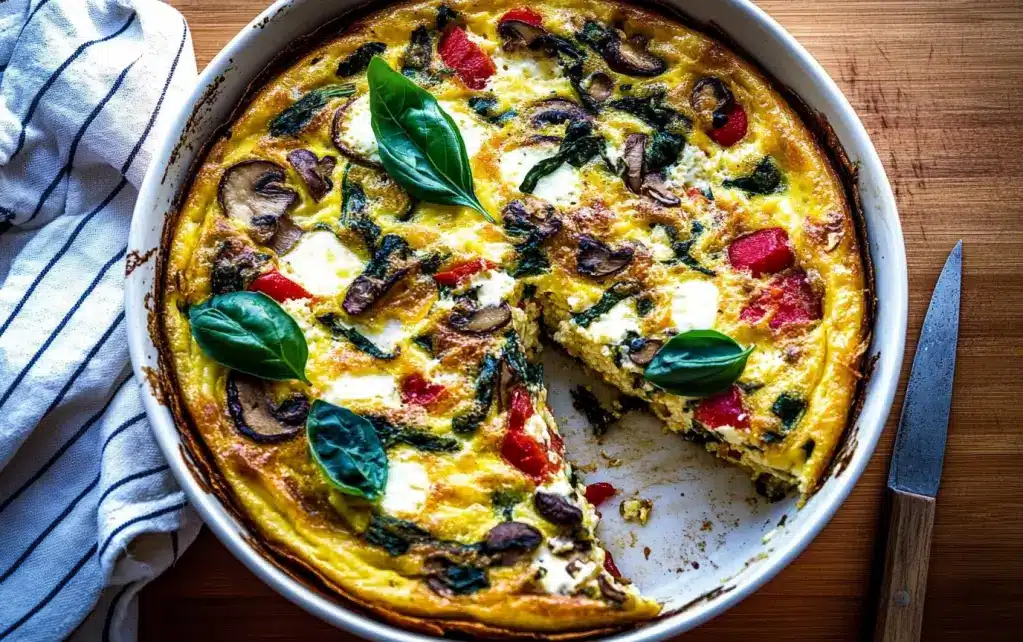
What comes out is a thick, golden, sliceable slab of eggs loaded with tender vegetables, creamy pockets of ricotta, and stretchy melted mozzarella. It’s somewhere between a quiche and an egg bake – custardy and rich but lighter than either one because there’s no crust and the vegetables add brightness. Every slice is packed with protein and produce, it’s naturally gluten-free, and it feeds 8 to 10 people from one pan.
Emily calls it “the egg thing,” which is about the highest compliment a kid can give a vegetable-based dish. My husband just calls it Monday breakfast.
If you love egg-based vegetable dishes, you should also try my Spinach Mushroom and Feta Crustless Quiche – it’s a smaller format with a different flavor profile that’s equally good for meal prep.
Why You Will Like This Vegetable Frittata
- Loaded with vegetables and protein – Between the broccoli, bell pepper, mushrooms, spinach, 12 eggs, ricotta, and mozzarella, every slice is genuinely nutritious. This isn’t a dish where vegetables are an afterthought – they’re the star.
- Naturally gluten-free, keto-friendly, and low-carb – No crust, no flour, no breadcrumbs. Just eggs, dairy, vegetables, and cheese. It fits into most dietary approaches without any modifications.
- Feeds 8 to 10 from one pan – A full 9×13 dish of thick, hearty frittata. Perfect for brunch gatherings, holiday mornings, or a week’s worth of meal prep breakfasts.
- The ricotta makes the texture incredible – Most frittatas use just eggs and cream, which can end up dense. The ricotta creates pockets of creamy richness throughout the custard that keep the texture lighter and more interesting.
- Works with whatever vegetables you have – This is the ultimate fridge-cleanout recipe. Almost any vegetable that can be sauteed, steamed, or roasted works here. The formula is endlessly adaptable.
- Make-ahead and meal-prep friendly – Cook the vegetables the night before, whisk the custard, and assemble in the morning. Or bake it completely on Sunday and slice for the week.
- Tastes good at any temperature – Hot from the oven, room temperature at a brunch buffet, or cold from the fridge on a Tuesday morning. It works every way.
- Simple enough for a weeknight dinner – Paired with a green salad and some crusty bread, this frittata is a perfectly respectable dinner. I serve it for dinner at least twice a month.
Vegetable Frittata Ingredients
This recipe has three components: the sauteed vegetables, the egg custard, and the mix-ins. Everything is straightforward.
The Vegetables
- 16 ounces broccoli (about 1 large head or a bag of florets) – Cut into small florets, roughly bite-sized. The broccoli gets steamed first so it’s tender before going into the frittata. Raw broccoli doesn’t cook through during baking and ends up crunchy and unpleasant.
- 1 onion or leek, diced – Yellow onion is my default. It mellows and sweetens as it sautees. Leeks add a more delicate, slightly sweet flavor if you want something a bit more refined. Dice them small so they distribute evenly.
- 1 to 2 tablespoons olive oil – For sauteing the vegetables. Use enough to coat the pan and keep things from sticking.
- 1 red bell pepper, diced – Adds sweetness, color, and a slight crunch even after cooking. Dice into pieces about the size of a dime for even distribution.
- 8 ounces mushrooms, sliced – White button or cremini (baby bella). Cremini have a deeper, earthier flavor. The mushrooms need to be sauteed until their moisture evaporates completely – this is the same principle as cooking mushrooms for any dish. Wet mushrooms will make your frittata watery.
- Pinch of salt and pepper – Season the vegetables while sauteing. You’ll season the custard separately.
The Egg Custard
- 12 large eggs – This is a big frittata. Twelve eggs gives you a thick, substantial slab that slices cleanly and holds up well for meal prep. Room temperature eggs whisk more smoothly, but cold eggs work fine.
- 1 cup ricotta cheese – This is the secret ingredient. Ricotta adds a creamy richness to the custard that regular eggs and cream alone can’t replicate. You get these little pockets of soft, tangy cheese throughout the finished frittata. Whole-milk ricotta gives the best texture. Sour cream or cottage cheese can substitute.
- 1 cup heavy cream – Creates the rich, custardy base. Sour cream can replace this for a tangier, slightly denser result. For a lighter version, half-and-half works but the frittata won’t be quite as rich.
- 1/2 teaspoon salt
- 1/2 teaspoon pepper
The Mix-Ins
- 1/2 cup fresh basil, torn or roughly chopped (save some for garnish) – The basil adds a bright, herby freshness that lifts the whole dish. Don’t skip it – it makes a bigger difference than you’d expect.
- 1 to 2 cups chopped baby spinach – Raw spinach wilts dramatically during baking, so even two cups cooks down to almost nothing. It adds color and nutrients without changing the flavor much.
- 1 to 2 cups grated mozzarella – Melts beautifully and creates that stretchy, cheesy quality. Cheddar, Monterey Jack, or crumbled goat cheese are all good alternatives depending on the flavor you want.
Callie’s Kitchen Note: I blitz the egg custard in the blender now instead of whisking by hand, and the difference in texture is real. The blender breaks down the ricotta into the egg mixture completely, so instead of visible ricotta lumps, you get a uniformly smooth, creamy custard that bakes up incredibly silky. It takes 20 seconds and it’s worth pulling the blender out for. If you prefer to see distinct ricotta pockets, whisk by hand – both approaches are good, just different.
Ingredient Substitutions
- No ricotta: Sour cream gives a tangier custard. Cottage cheese (blend it smooth first) works and adds extra protein. Greek yogurt is another option but makes the custard slightly thinner.
- Dairy-free: Replace the ricotta with full-fat coconut cream and use a dairy-free shredded cheese. Replace the heavy cream with full-fat coconut milk. The result is slightly different in flavor but the texture holds up well.
- Different vegetables: Zucchini (dice it and salt it first to draw out moisture), roasted sweet potato cubes, asparagus cut into 1-inch pieces, corn kernels, diced butternut squash, or artichoke hearts all work beautifully. The rule is: if it’s a wet vegetable, pre-cook it first to remove moisture.
- Add protein: Cooked and crumbled Italian sausage, diced ham, smoked salmon, or crumbled bacon. About 1 cup of cooked protein is the right amount for this size frittata.
- Different cheese: Sharp cheddar gives a stronger, more assertive flavor. Gruyere adds a nutty depth. Goat cheese crumbled on top before baking creates tangy pockets. Feta works beautifully with a Mediterranean vegetable combination.

How To Make Vegetable Frittata
This is a Project Recipe in terms of the number of components, but the hands-on work is about 35 minutes. The oven does the rest for an hour. Think of it as three phases: cook the vegetables, make the custard, assemble and bake.
Preparing the Vegetables
Preheat your oven to 350 degrees F (175 degrees C). Grease a 9×13-inch baking dish generously with butter, olive oil, or cooking spray. Get into the corners and up the sides.
Start with the broccoli. Steam it until just barely tender – you want it to give slightly when you poke it with a fork but still have some firmness. About 3 to 4 minutes of steaming is right. Overcooked, mushy broccoli will fall apart in the frittata and create wet spots. Undercooked broccoli will be tough and crunchy. Once steamed, spread it on a plate or cutting board to cool. Don’t pile it in a bowl – it’ll continue steaming in its own heat and overcook.
While the broccoli cools, heat the olive oil in a large skillet over medium heat. Add the diced onion (or leek) and cook for 3 to 4 minutes until softened and starting to turn translucent. You’re not looking for browning here, just softening.
Add the diced red bell pepper and sliced mushrooms to the skillet. Season with a pinch of salt and pepper. Cook, stirring occasionally, until the mushrooms have released all their liquid and it has evaporated completely, and the bell peppers are tender. This takes about 8 to 10 minutes. The mushrooms will shrink significantly and turn golden. Don’t rush this step – any residual moisture from the mushrooms will make your frittata watery.
Callie’s Kitchen Note: I learned the hard way that you cannot just throw raw vegetables into the egg mixture and hope for the best. The first frittata I ever made, I tossed in raw broccoli, raw mushrooms, and raw bell peppers. The vegetables released so much water during baking that the center of the frittata was basically an egg soup. Pre-cooking every vegetable takes extra time, but it’s the difference between a firm, sliceable frittata and a watery disaster. If the vegetable has moisture in it, cook it out first.
Making the Egg Custard
In a large bowl (or blender), combine the 12 eggs, ricotta, heavy cream, salt, and pepper. Whisk vigorously until the mixture is smooth and uniform in color. If using a blender, pulse for about 20 seconds until completely smooth. You want no streaks of egg white and no large lumps of ricotta (unless you prefer visible ricotta pockets, in which case whisk gently by hand).
The custard should be a pale yellow, slightly thick, and pourable. If it looks thin and watery, you may have under-whisked and the ricotta is sitting at the bottom. Give it another good stir.
Assembling and Baking
Here’s where it all comes together. Pour about half of the egg custard into the greased baking dish. Spread the cooled steamed broccoli, sauteed onion-pepper-mushroom mixture, torn fresh basil, and chopped baby spinach evenly across the dish. Scatter the grated mozzarella over the vegetables.
Pour the remaining egg custard over everything. Give the dish a gentle shimmy to help the liquid settle into all the gaps between the vegetables. Use a fork or spatula to lightly swirl the top layer so the vegetables and cheese are distributed evenly and not all bunched in one area.
Place the dish on the middle rack of the oven. The middle position gives you the most even heat – too high and the top browns before the center sets, too low and the bottom overcooks.
Bake for approximately 1 hour. Start checking at the 30 to 40 minute mark – if the top is browning too quickly, tent a piece of aluminum foil loosely over the dish and continue baking. You’re looking for the top to be golden brown and slightly puffed, with the center firm to the touch. Give the dish a gentle nudge – the center should not jiggle or look liquid. A slight wobble is acceptable since the residual heat will finish setting it during the rest.
An instant-read thermometer inserted into the center should read at least 160 degrees F.
Resting and Slicing
Let the frittata rest on a wire rack or trivet for at least 5 minutes before slicing. This resting time lets the custard finish setting and creates much cleaner slices. Cut into squares or rectangles – I usually get 8 to 10 generous portions from a 9×13 pan.
Garnish with the reserved fresh basil leaves, a sprinkle of grated Parmesan, and a crack of black pepper.
Callie’s Kitchen Note: I discovered that the frittata slices more cleanly when I let it cool for a full 10 to 15 minutes instead of the minimum 5. At 5 minutes, it’s still quite soft and the slices can be a little floppy. At 10 to 15 minutes, the custard firms up enough to hold its shape perfectly but it’s still warm. If you’re serving this at a brunch buffet, the longer rest time is ideal because it holds its structure on a plate instead of slouching.
Common Mistakes To Avoid
These are the pitfalls I’ve encountered over years of making frittatas, and they’re all preventable.
Not pre-cooking the vegetables. This is the biggest one. Raw vegetables are full of water. Broccoli, mushrooms, bell peppers, zucchini – they all release liquid as they heat up. If that liquid goes into the egg custard during baking, you end up with a watery, soggy frittata that won’t hold together when sliced. Steam, saute, or roast every vegetable before adding it to the dish.
Overmixing the eggs. Whisk until smooth and uniform, then stop. Over-whisking incorporates too much air, which causes the frittata to puff up dramatically during baking and then collapse into a rubbery, dense disc when it cools. You’re making a custard, not a meringue. Smooth and combined is the goal.
Baking at too high a temperature. A 350-degree oven is the sweet spot for a thick frittata like this. Higher temperatures cook the edges and top too fast while leaving the center underdone, and the eggs turn rubbery. Low and slow gives you an evenly set custard from edge to center.
Using too much cheese on top. A heavy blanket of mozzarella can weigh down the egg mixture and prevent it from puffing properly. One to two cups is the right range. If you go heavier, the top layer becomes more of a cheese crust than a frittata, which some people love, but it changes the texture of the whole dish.
Cutting it too soon. I know it’s tempting. The golden top, the smell, the melted cheese. But if you slice into it before the 5-minute rest, the custard hasn’t finished setting and you’ll get messy, oozy slices instead of clean ones. Give it the time.
Storage and Reheating
Storing Leftover Frittata
Let the frittata cool to room temperature before storing. Cover the baking dish with plastic wrap or foil, or transfer individual portions to airtight containers. It keeps in the refrigerator for up to 4 days.
This frittata actually gets better in the fridge after a day. The flavors meld, the ricotta pockets firm up slightly, and the vegetables settle into the custard more completely. I know “better the next day” sounds like something people say to be polite, but in this case I genuinely mean it. Tuesday’s frittata is better than Monday’s.
Freezing Instructions
Individual portions freeze beautifully. Wrap each slice tightly in plastic wrap, then place the wrapped slices in a freezer-safe bag with the air squeezed out. Frozen frittata keeps for up to 3 months.
Thaw overnight in the refrigerator and reheat using one of the methods below. You can also reheat directly from frozen in the microwave – add about 60 seconds to the normal reheating time.
I don’t recommend freezing the whole uncut frittata in the baking dish. It takes too long to thaw evenly and the edges can get mushy while the center is still frozen. Individual portions are the way to go.
Reheating Methods
- Oven (best for texture): Preheat to 300 degrees F. Place the portion on a baking sheet and warm for 10 to 15 minutes. The gentle heat keeps the eggs tender rather than rubbery and warms the vegetables through without overcooking.
- Microwave (fastest): Heat on medium power (50%) in 30-second intervals until warm. Full power makes the edges of the eggs tough and rubbery. Medium power takes an extra 30 seconds but the texture is much better.
- Stovetop (best for crispy bottom): Heat a small amount of butter or olive oil in a nonstick skillet over low heat. Place the frittata slice in the pan, cover with a lid, and cook for 3 to 4 minutes. The bottom gets golden and slightly crispy while the top warms through from the trapped steam. This is my personal go-to method because the crispy base adds a texture you don’t get any other way.
The USDA recommends reheating egg-based dishes to an internal temperature of 165 degrees F. An instant-read thermometer takes the guesswork out, particularly when reheating from frozen.
Meal Prep Strategy
This is my number-one meal prep recipe because the math is so straightforward. Bake one frittata on Sunday, let it cool, slice into 8 to 10 portions, and store them individually. That’s your breakfast for the entire work week plus a couple of extras for lunches.
I stack the wrapped portions in the fridge and grab one each morning. Sixty seconds in the microwave on medium power and it’s ready. Sometimes I eat it plain, sometimes I put it on a piece of toast, sometimes I wrap it in a tortilla with a drizzle of hot sauce. It’s the most versatile meal prep item I’ve found.
Callie’s Kitchen Note: I tested making a double batch by baking two frittatas side by side on the same oven rack. It works, but you need to add about 10 minutes to the bake time and rotate the pans halfway through. The pan closer to the oven wall will brown faster. If you’re doing serious meal prep for a family or want to freeze a full batch, doubling is definitely worth the extra 10 minutes.
Vegetable Frittata Variations
The base recipe is my go-to, but here are the tested directions I’ve taken it depending on what’s in the fridge or what season it is.
- Mediterranean version – Swap the broccoli for diced zucchini and add sun-dried tomatoes, kalamata olives, and artichoke hearts. Use crumbled feta instead of mozzarella and add a teaspoon of dried oregano to the custard. This version tastes like a Greek vacation and pairs beautifully with a lemon-dressed arugula salad.
- Broccoli cheddar version – Keep the broccoli but swap the mozzarella for sharp cheddar and the ricotta for sour cream. Skip the basil and add a pinch of dry mustard powder to the custard. Tastes like broccoli cheddar soup in frittata form. This is my husband’s preferred version.
- Roasted butternut squash and sage (fall version) – Replace the broccoli and bell pepper with 2 cups of roasted butternut squash cubes. Add 2 tablespoons of chopped fresh sage instead of basil. Use Gruyere instead of mozzarella. The sweet squash with the nutty Gruyere and earthy sage is an incredible fall combination.
- Spring asparagus and goat cheese – Replace the broccoli with blanched asparagus cut into 1-inch pieces. Skip the mushrooms. Use crumbled goat cheese in place of the mozzarella and add fresh dill instead of basil. Bright, light, and perfect for April through June.
- Southwest version – Use diced poblano peppers instead of bell pepper, add corn kernels and drained black beans. Swap the mozzarella for pepper jack and add a teaspoon of cumin to the custard. Serve with salsa, avocado slices, and a dollop of sour cream.
- Italian sausage and roasted red pepper – Brown and crumble 8 ounces of Italian sausage, scatter diced jarred roasted red peppers through the vegetables, and use provolone instead of mozzarella. Add dried Italian seasoning to the custard. This is the version I make when I want something heartier.
- Smoked salmon and dill (brunch showstopper) – Skip the broccoli and mushrooms. Layer in 4 ounces of thinly sliced smoked salmon, capers, and thinly sliced red onion. Use cream cheese dolloped in small pieces throughout instead of ricotta. Add fresh dill instead of basil. This one looks and tastes impressive enough for a special-occasion brunch.
Serving Suggestions
What To Serve With Vegetable Frittata
Since this is already a substantial, protein-rich dish, sides should add freshness, carbs, or variety without being too heavy.
A simple green salad is my default pairing. Mixed greens, cherry tomatoes, cucumber, and a bright vinaigrette. The acidity of the dressing cuts through the richness of the eggs and cheese and makes the whole plate feel balanced. I usually go with a lemon vinaigrette or a simple red wine vinegar and olive oil dressing.
Buttery toast or crusty bread turns a slice of frittata into a complete meal. Sourdough is my first choice. A warm baguette works too. The carbs add substance and give you something to soak up any stray bits of cheesy custard on the plate.
Fresh fruit keeps things light. A bowl of mixed berries, sliced melon, or a halved grapefruit alongside the frittata adds natural sweetness and brightness without competing with the savory flavors.
Roasted potatoes or hash browns if you want a heartier meal. Breakfast potatoes with a little salt, pepper, and paprika alongside a slice of frittata is a very satisfying plate.
Occasion Ideas
- Sunday meal prep for the work week (my primary use)
- Weekend brunch centerpiece
- Light weeknight dinner with salad and bread
- Baby or bridal shower brunch
- Potluck contribution (easy to transport in the baking dish)
- Holiday morning breakfast that’s lighter than a heavy casserole
- Serve in muffin-tin portions for a grab-and-go option at parties
Beverage Pairings
- Strong coffee or espresso – The roasted bitterness of coffee pairs well with the rich, cheesy eggs. My default morning combination.
- Herbal tea – Chamomile or peppermint if you want something lighter and calmer alongside the savory frittata.
- Fresh-squeezed orange juice – Classic brunch pairing. The acidity and sweetness contrast nicely with the savory eggs and cheese.
- Light white wine – A crisp Sauvignon Blanc or dry Pinot Grigio works at a brunch setting. The acidity in the wine cuts through the richness of the ricotta and cream.
- Mimosas or sparkling water with lemon – For a celebratory brunch or just because it’s Saturday.
Presentation Tips
Slice the frittata while still in the baking dish and use a wide spatula to lift each piece cleanly. Garnish individual plates with fresh torn basil leaves and a light dusting of grated Parmesan. A small crack of fresh black pepper on top looks polished. If serving at a buffet, keep the frittata in the baking dish with a serving spatula and scatter a handful of fresh basil over the top. The green basil against the golden top makes it look beautiful with zero effort.
For individual portions, a small dollop of sour cream, a spoonful of pesto, or a few slices of avocado alongside the frittata slice adds both color and a creamy accent.

Vegetable Frittata FAQ
Yes, and it still turns out well. Replace the ricotta with full-fat coconut cream (the thick part from the top of a chilled can of full-fat coconut milk). Replace the heavy cream with the remaining coconut milk or unsweetened almond milk. Use a dairy-free shredded cheese in place of the mozzarella – most melt reasonably well these days.
The dairy-free version has a slightly different flavor (there’s a faint coconut note from the cream) and the texture is a touch less rich than the original. But it holds together well, slices cleanly, and tastes very good. I’ve served it to mixed groups and the dairy-free eaters were thrilled to have something substantial rather than the usual “just eat the fruit” option.
Three things to check. First, the top should be golden brown and slightly puffed. Second, press the center gently with your finger – it should spring back and feel firm, not liquid or jiggly. A very slight wobble is fine since the residual heat will continue cooking the center during the 5-minute rest. Third, an instant-read thermometer inserted into the center should read at least 160 degrees F.
If the top is browning beautifully but the center is still soft, tent a piece of aluminum foil loosely over the top to prevent further browning and keep baking in 5-minute increments. Every oven has hot spots, so trust what you see and feel over the timer.
Absolutely. Halve all the ingredients and use an 8×8-inch baking dish. Reduce the bake time to about 35 to 45 minutes since the smaller dish means a thinner frittata that sets faster. Start checking at 30 minutes.
You can also make individual portions in a standard 12-cup muffin tin. Grease each cup well, divide the vegetable and custard mixture evenly, and bake at 350 degrees F for about 20 to 25 minutes. The muffin-tin version is great for grab-and-go meal prep since each portion is already pre-sized.
Yes, and it’s my recommended approach for weekday mornings. The night before, steam the broccoli, saute the vegetables, and whisk the custard. Store the cooked vegetables and the custard in separate containers in the fridge.
In the morning, grease the baking dish, layer the vegetables and cheese, pour the custard over, and bake. Total morning hands-on time is about 5 minutes.
I don’t recommend fully assembling the frittata (vegetables and custard combined in the baking dish) the night before and refrigerating it. The vegetables can release moisture as they sit in the custard, and the bottom layer tends to get soggy. Keep the components separate until you’re ready to bake.
Yes, and it’s an easy way to make the frittata even more filling. The best additions are cooked and crumbled Italian sausage (about 8 ounces), diced ham (about 1 cup), crumbled cooked bacon (4 to 5 strips), or thinly sliced smoked salmon (about 4 ounces).
Make certain all meat is fully cooked before adding it to the frittata. Raw meat won’t cook through properly in the egg custard during baking. Add cooked meat as a layer with the vegetables before pouring the custard.
Almost always a vegetable moisture issue. The most common culprits are mushrooms that weren’t sauteed long enough (they should be dry and golden, with no visible liquid in the pan) and spinach or broccoli that wasn’t properly drained.
If you used frozen spinach, it needs to be thawed and squeezed dry in a towel the same way you would for a quiche. If you used zucchini, it should be diced, salted, left in a colander for 15 minutes to draw out moisture, then patted dry before adding.
The custard ratio in this recipe (12 eggs to 1 cup cream and 1 cup ricotta) is calibrated for vegetables that have been pre-cooked and drained. If additional moisture enters the equation from underprepared vegetables, the custard can’t absorb it all and you end up with watery pockets.
Recipes You May Like
If this vegetable frittata is your style, here are a few more veggie-loaded egg dishes from my kitchen:
- Spinach Mushroom and Feta Crustless Quiche – A smaller format with a different flavor profile. Same idea of eggs and vegetables without a crust, but with a tangier feta-forward flavor. Great for meal prep.
- Veggie and Cheese Breakfast Casserole – A bigger, cheesier egg bake with a different vegetable combination. Feeds more people and has a slightly different texture from the frittata.
- Baked Vegetable Frittata – A variation on the frittata concept with a different vegetable lineup and cooking approach. If you like this recipe, you’ll love that one too.
Conclusion
This vegetable frittata is one of those recipes that I come back to week after week because it just works. It’s flexible enough to absorb whatever vegetables are in the fridge, substantial enough to carry me through a busy morning, and simple enough that I can make it on a Sunday without feeling like I spent the whole day cooking. The combination of the rich ricotta custard, the sauteed vegetables, the fresh basil, and the golden melted mozzarella on top hits every mark – protein, produce, flavor, and convenience.
Whether you’re baking it for a Saturday brunch with friends, portioning it for weekday meal prep, or serving it as a light dinner alongside a salad, I think you’ll find it earns its place in your regular rotation too. It earned its place in mine a long time ago.
If you give it a try, leave me a comment and tell me what vegetable combination you went with. I’m always looking for new ideas. And pin this to your Pinterest board so you have it saved for next time. More of my recipes are always going up on my Pinterest page too.
Happy cooking!
Callie

Vegetable Frittata Recipe (Oven-Baked & Easy!)

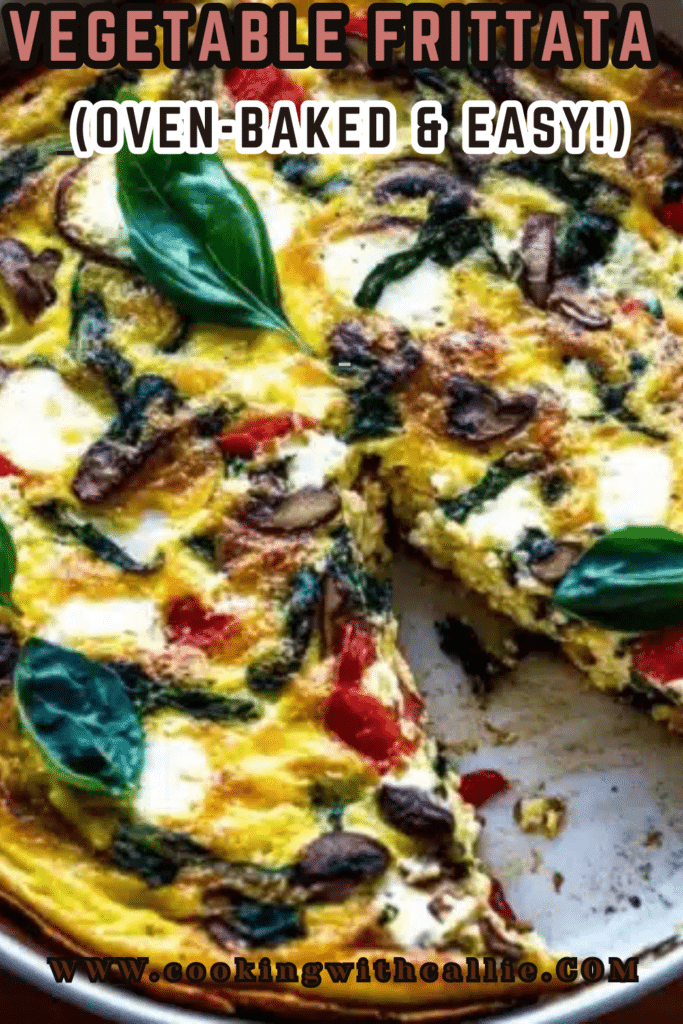
This Vegetable Frittata is a flavorful, protein-packed, and easy-to-make dish perfect for breakfast, brunch, or meal prep. Baked to perfection, it features tender broccoli, sautéed peppers and mushrooms, creamy ricotta, and melty cheese, all in a fluffy, crustless egg base. Naturally gluten-free, keto-friendly, and vegetarian, this frittata is as nutritious as it is delicious. Serve it warm with a side salad or toast for a satisfying meal.
- Prep Time: 35 minutes
- Cook Time: 60 minutes
- Total Time: 1 hour 35 minutes
- Yield: 8–10 servings 1x
- Category: Breakfast, Brunch
- Method: Oven-baked
- Cuisine: American, Mediterranean
- Diet: Vegetarian
Ingredients
Vegetables & Seasoning
- 16 ounces broccoli, cut into small florets
- 1 onion or leek, diced
- 1–2 tablespoons olive oil
- 1 red bell pepper, diced
- 8 ounces mushrooms, sliced
- Pinch of salt and pepper
Egg Mixture (Custard Base)
- 12 large eggs
- 1 cup ricotta (or sour cream)
- 1 cup heavy cream (or sour cream)
- ½ teaspoon salt
- ½ teaspoon pepper
Mix-ins
- ½ cup fresh basil (save some for garnish)
- 1–2 cups chopped baby spinach
- 1–2 cups grated mozzarella (or another melty cheese like cheddar, jack, or crumbled goat cheese)
Instructions
- Preheat the oven to 350°F (175°C) and grease a 9×13-inch baking dish or 12-inch skillet.
- Steam the broccoli until just tender, then set aside to cool.
- Sauté the vegetables: Heat olive oil in a pan over medium heat. Sauté the diced onion or leek for 3-4 minutes until translucent. Add the bell peppers and mushrooms, season with salt and pepper, and cook until softened.
- Prepare the egg custard: In a large bowl, whisk together the eggs, ricotta, heavy cream, salt, and pepper until smooth. (For an extra creamy texture, blend in a food processor.)
- Assemble the frittata: Pour half of the egg mixture into the greased baking dish. Layer in the cooked vegetables, basil, spinach, and cheese. Pour in the remaining egg mixture, then gently swirl to distribute the ingredients.
- Bake for 50-60 minutes, or until the center is puffed and slightly firm. If the top browns too quickly, tent with foil around 30-40 minutes.
- Cool & serve: Let the frittata rest for 5 minutes before slicing. Serve warm with fresh basil on top.


Notes
- Dairy-free option: Use full-fat coconut milk instead of heavy cream and a dairy-free cheese alternative.
- Substitutions: Try zucchini, asparagus, or roasted sweet potatoes instead of broccoli.
- Meal prep friendly: Store leftovers in the fridge for up to 4 days or freeze individual slices for up to 3 months.
Nutrition
- Serving Size: 1 slice (based on 10 servings)
- Calories: 280
- Sugar: 2g
- Sodium: 340mg
- Fat: 21g
- Saturated Fat: 10g
- Unsaturated Fat: 9g
- Trans Fat: 0g
- Carbohydrates: 5g
- Fiber: 1g
- Protein: 16g
- Cholesterol: 240mg