This post may contain affiliate links. For more information, see our Affiliate Disclosure Policy.
The upside-down tart is specifically one of baking’s oldest and most satisfying techniques: toppings placed on the bottom of the pan (or in this case, directly on the parchment), covered with pastry dough, baked upside-down so the toppings caramelize against the pan’s heat, and then flipped at the end to reveal a beautifully caramelized surface as the presentation side. The classic tarte tatin (caramelized apples under flipped pastry) is the most famous version. These upside down puff pastry tarts apply the same technique to individual puff pastry rectangles with both sweet and savory filling options, producing six show-stopping tarts from one pastry sheet in under 40 minutes with no special equipment, no pastry skills, and no technique more complex than drizzling honey onto parchment and placing a rectangle of pastry on top.
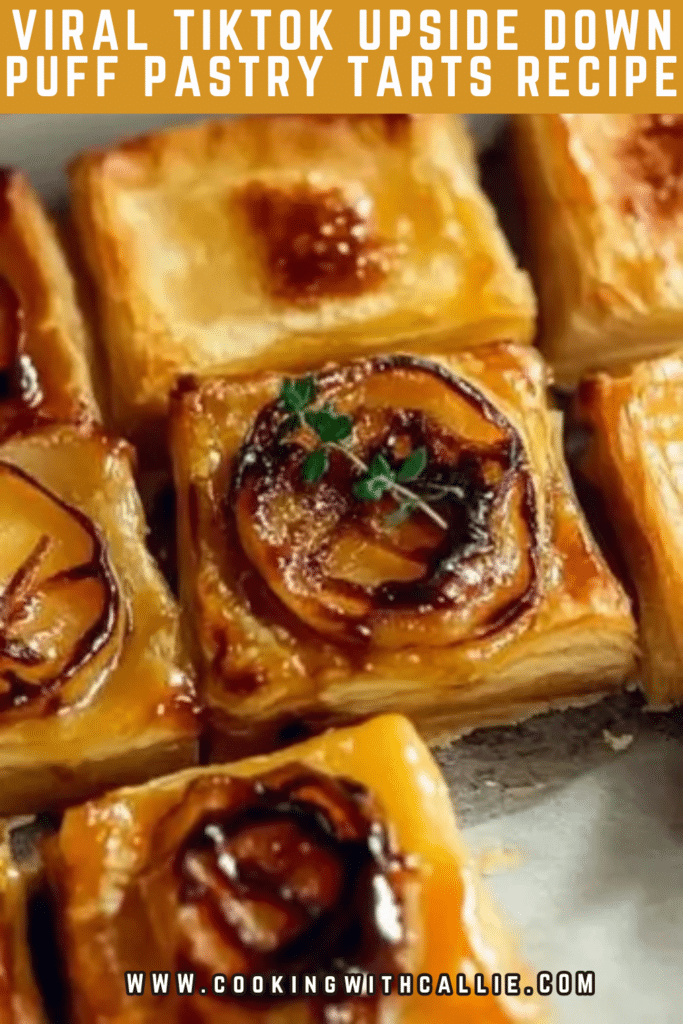
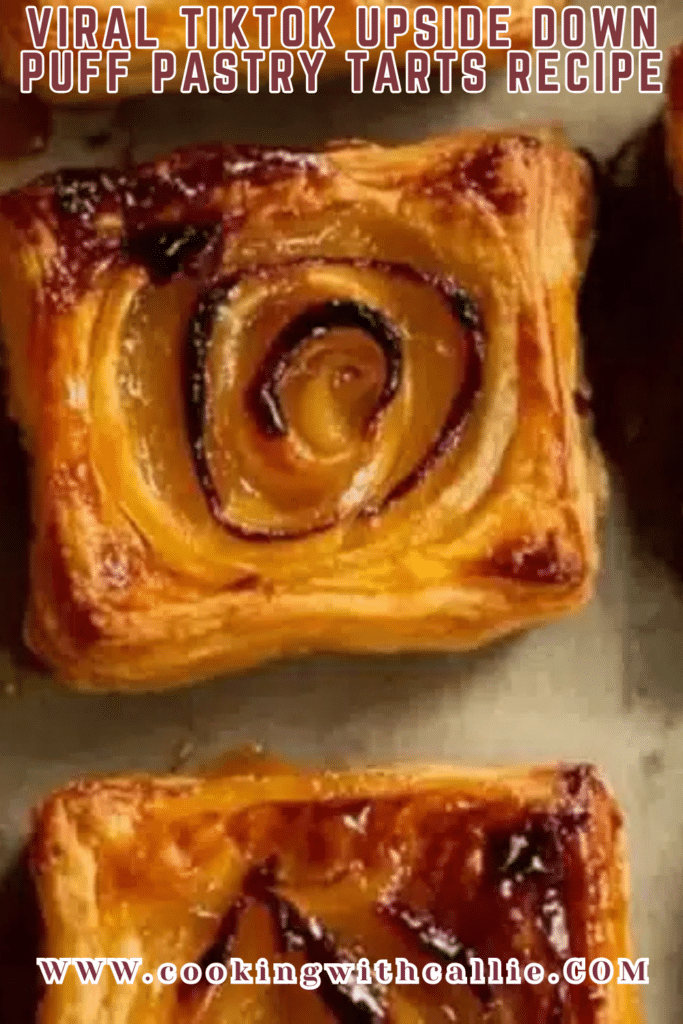
The reason this went viral on TikTok is specifically the flip reveal. The just-baked tarts look like golden, puffed rectangles of pastry from the oven – unremarkable visually. The moment of flipping each tart to reveal the caramelized, glossy, beautifully arranged filling on the exposed side is specifically the food-video moment that works because the visual transformation is dramatic and genuinely surprising to people who haven’t seen the technique before. But beyond the visual: the upside-down caramelization produces a specifically better result than simply placing the same fillings on top of unbaked pastry. The honey or jam placed directly against the parchment and covered by the pastry caramelizes against the parchment’s heat during baking, concentrating its sweetness and producing a glossy, slightly sticky caramelized layer that amplifies every filling ingredient placed above it. Apple slices caramelized this way taste more specifically apple-and-honey than they would simply placed on top of baked pastry.
Three filling directions in this recipe produce six tarts total (two of each) from one pastry sheet – a genuinely complete brunch spread or appetizer assortment from one 40-minute baking session. I made these for a Saturday brunch after seeing them three times in my For You Page and the whole batch was gone before the coffee had been poured. My friend Jess specifically ate three of the brie and prosciutto ones and asked for the recipe before she’d finished the last bite. For the other puff-pastry-based appetizer that produces a similarly impressive visual result with similar minimal effort, my Homemade Soft Pretzels are the yeasted alternative that requires more effort but produces a significantly different, equally crowd-pleasing result for the same party table.
Why You Will Like These Upside Down Puff Pastry Tarts
- The upside-down caramelization technique produces a significantly better result than simply placing toppings on top of unbaked pastry – Honey placed directly on the parchment and covered by the pastry caramelizes against the parchment’s heat during baking, concentrating its sweetness and producing a glossy, caramelized layer that coats every filling ingredient. This caramelized layer is specifically more complex, more specifically concentrated in flavor, and more visually impressive than the same filling placed on top of baked pastry without the caramelization effect.
- Cold puff pastry placed in a preheated oven produces maximum puff and maximum crispness – Puff pastry that has warmed to room temperature before baking doesn’t produce the same dramatic layered puff because the fat layers between the pastry’s sheets have softened and partially merged. Cold, just-thawed pastry going directly into a 400-degree oven produces the most dramatic layer separation and the most specifically golden, most specifically crispy result.
- Three different fillings from one pastry sheet provides a genuinely varied brunch or appetizer spread without additional effort – The sweet, the savory-meaty, and the savory-cheese directions together cover the full range of guest preferences and produce a visually diverse board from one preparation session.
- The flip reveal is specifically the moment that produces the “how did you make these?” response from every guest – Visually, the transformation from golden pastry rectangle to beautifully caramelized, glistening topped tart is genuinely dramatic. The reveal is part of the presentation strategy and is worth performing at the table rather than in the kitchen.
- Crimping the edges with a fork seals the filling and contributes to the puff – Sealed edges prevent the filling from leaking out during baking and also help contain the steam that produces the pastry’s puff. Uncrimped edges allow steam to escape from the sides rather than lifting the pastry layers.
- Under 40 minutes from thawed pastry to table – specifically the most impressive-to-effort-ratio appetizer available – No pastry skills, no special equipment, no complex technique. The hardest step is drizzling honey on parchment paper.
Upside Down Puff Pastry Tart Ingredients
Base (for all 6 tarts)
- 1 sheet puff pastry, thawed (Dufour all-butter brand specifically recommended; Pepperidge Farm works well)
- 1 large egg, whisked for egg wash
Apple Cinnamon Tarts (makes 2)
- 1/2 apple, thinly sliced (Honeycrisp or Pink Lady)
- 1 teaspoon ground cinnamon
- 1 tablespoon honey
Brie and Prosciutto Tarts (makes 2)
- 2 slices prosciutto
- 2 slices triple cream brie
- 2 teaspoons honey
- Freshly cracked black pepper
Cheddar, Shallot, and Thyme Tarts (makes 2)
- 1/2 shallot, thinly sliced into rings
- 1/4 cup freshly shredded sharp cheddar
- 2 teaspoons honey
- A few sprigs fresh thyme
Ingredient Notes and Shopping Tips
Puff pastry – all-butter versus standard and why the distinction matters here: Puff pastry is made by layering fat between thin sheets of dough through a process of folding and rolling that produces hundreds of thin layers. When baked, the water in the fat produces steam that lifts the layers apart, creating the characteristic puff. All-butter puff pastry (Dufour brand, found at specialty grocery stores and Whole Foods) uses butter as the fat, which produces more flavor (from butter’s milk solids and dairy character), more dramatically golden color (from butter’s browning properties), and a more specifically rich, more specifically flaky texture. Standard puff pastry (Pepperidge Farm, the most widely available brand) uses a combination of fats that produces adequate puff and good flavor but less specifically rich and less specifically buttery than the all-butter version. For the apple cinnamon and cheddar tarts where the pastry’s flavor specifically contributes to the finished result: all-butter is worth finding. For the brie and prosciutto version where the fillings are assertively flavored: standard puff pastry is adequate.
Thawing puff pastry – the specific method that keeps it cold enough for maximum puff: Frozen puff pastry thawed at room temperature for 30 to 45 minutes on the counter works but the pastry’s fat layers begin to soften and partially merge as the pastry warms, reducing the puff’s drama. The ideal thawing method: transfer from the freezer to the refrigerator the night before baking and thaw overnight in the refrigerator. Refrigerator-thawed pastry remains cold and firm, the fat layers remain distinct, and the result when baked produces more dramatic layering and more specifically impressive puff. If thawing at room temperature in a time crunch: work quickly with the cold pastry and return to the refrigerator for 10 minutes if it becomes too warm and soft during assembly.
Brie selection – why triple cream specifically: Triple cream brie has had additional cream added during production, producing a higher fat content (approximately 75% fat in dry matter) that melts more completely and more specifically smoothly than standard double cream brie. At 400 degrees F for 20 to 25 minutes, triple cream brie collapses into a molten, uniformly melted pool with no remaining visible texture. Standard brie melts well but may retain more structure. Either works; triple cream produces the most dramatically melty, most specifically luscious result that is most visible in the flip reveal.
Substitutions That Work
- Fig jam instead of honey: Produces a more specifically deep, more specifically fruity caramelized layer; particularly excellent under the brie and prosciutto combination where the fig’s sweetness specifically echoes the traditional fig-and-cheese pairing
- Maple syrup instead of honey: More specifically maple-warm; particularly good under the apple cinnamon combination where it echoes the fall-harvest direction
- Pears instead of apples: More specifically floral, more specifically soft; require slightly less baking time to caramelize; particularly good with brie instead of the standard apple-cinnamon direction – pear and brie is a specifically excellent combination
- Pancetta instead of prosciutto: More specifically salty, more specifically cured-meat assertive; dice small and scatter rather than laying flat slices; particularly good with a honey-dijon spread instead of plain honey
- Gruyere instead of cheddar: More specifically nutty, more specifically complex; melts very smoothly; produces a more specifically French-inspired direction alongside the shallot and thyme
- Goat cheese instead of brie: More specifically tangy, less specifically melty (goat cheese holds its form better than brie during baking); produces a different visual (visible white cheese pieces rather than uniformly melted pool) but genuinely excellent flavor particularly with fresh herbs and honey

How To Make Upside Down Puff Pastry Tarts
Six stages: thaw and cut the pastry, assemble upside down, crimp and egg wash, bake, rest, and flip.
1: Thawing and Cutting the Puff Pastry
Thaw the puff pastry sheet according to the package instructions – preferably overnight in the refrigerator for maximum cold-pastry puff. If thawing at room temperature: the pastry should be pliable but still cool to the touch and should unfold without cracking (indicating it’s properly thawed) but without being soft or warm (indicating over-thawing). A properly thawed sheet unfolds cleanly along its fold lines, doesn’t crack at the creases, and feels slightly cool and firm rather than soft and warm.
Preheat the oven to 400 degrees F.
Unfold the sheet on a lightly floured surface. Most standard puff pastry sheets come folded in thirds. Cut along the three fold lines to produce three equal rectangles. Cut each rectangle across the middle to produce six smaller rectangles of equal size – approximately 3 by 4 inches each depending on the brand’s sheet dimensions. These six pieces are the bases for the six tarts. Handle the cut pastry as minimally as possible and keep it cool – excessive handling warms the fat layers and reduces the puff.
2: The Upside-Down Assembly – Honey on the Parchment First
Line a large rimmed baking sheet with parchment paper. Arrange the filling positions across the parchment – the approximate footprint of each tart rectangle spaced a generous inch apart since the pastry will puff outward slightly during baking.
For each tart: place the filling components directly onto the parchment in the space where the tart will sit. This is the upside-down logic: what will be on top after flipping goes onto the parchment first, and the pastry covers it from above.
Apple Cinnamon (2 tarts): Drizzle half a tablespoon of honey in a thin layer on the parchment within each tart’s footprint. Sprinkle half a teaspoon of cinnamon over the honey. Arrange 4 to 6 thinly sliced apple pieces in a single, overlapping layer over the cinnamon-honey base. The apple slices should be thin enough that they’ll be fully tender after 20 to 25 minutes at 400 degrees; half-inch or thicker slices will be undercooked at the center. Aim for a thickness of approximately an eighth of an inch.
Brie and Prosciutto (2 tarts): Drizzle one teaspoon of honey. Lay one slice of prosciutto folded loosely over the honey (the folding creates some texture variety in the finished tart). Place one slice of brie on top of the prosciutto. Crack a few turns of black pepper across the brie. The brie will melt during baking and the prosciutto will become slightly crisped at the edges that are exposed to the parchment’s heat – both effects are specifically desirable.
Cheddar, Shallot, and Thyme (2 tarts): Drizzle one teaspoon of honey. Scatter a few thin shallot rings across the honey. Scatter two tablespoons of freshly shredded sharp cheddar over the shallots. Strip the leaves from two or three fresh thyme sprigs and scatter across the cheddar. The thyme’s volatile aromatic oils bloom against the hot caramelizing honey and cheese during baking, infusing the full tart with a specific herby warmth.
Callie’s Kitchen Note: The honey-on-the-parchment step is specifically what produces the caramelized finish that makes these tarts visually and flavor-wise different from a standard puff pastry tart with toppings on top. The honey placed directly on the parchment gets direct heat contact from the bottom of the pan during baking and caramelizes against the parchment’s surface. By the time you flip the tarts, that honey has gone from a thin golden drizzle to a specifically sticky, amber-caramelized glaze that coats every filling piece and produces the beautiful glossy surface of the revealed tarts. Don’t skip the honey – it’s the specific ingredient that makes the upside-down technique produce a better result than simply putting the same fillings on top of baked pastry.
3: Covering With Pastry, Crimping, and Egg Wash
Place one puff pastry rectangle on top of each assembled filling, covering it completely. The pastry should extend to the edges of the filling and slightly beyond on all sides – this overhang is what gets crimped to seal the filling inside. Press the pastry rectangle down gently to make contact with the filling layer.
Using the tines of a fork, press firmly around the full perimeter of each pastry rectangle to crimp the edges. The crimping seals the filling inside the pastry enclosure and helps contain the steam that the filling produces during baking – this steam specifically contributes to the pastry’s puff. Press firmly enough that the fork tines make visible impressions through the full pastry thickness, not just decorative surface marks. A properly crimped edge resists casual pressure without opening.
Using a pastry brush, coat the entire top surface of each pastry rectangle with the whisked egg. Cover the full visible surface including the crimped edges – the egg wash should look wet and uniform rather than splotchy. The egg wash specifically produces the deep golden-brown color and slight glossiness of the baked pastry surface. Without egg wash: the pastry bakes to a pale, matte finish. With egg wash: it bakes to a specifically golden, slightly glossy, specifically appealing appearance.
Callie’s Kitchen Note: Don’t let the egg wash drip down the sides of the pastry onto the parchment. Egg wash that pools at the pastry’s base specifically glues the pastry to the parchment during baking and makes the flip significantly more difficult – the edge has effectively been glued to the paper. Apply with the brush moving from the center outward, stopping at the very edge without letting any egg run over the side. If some does drip: blot with a dry paper towel before putting the tray in the oven.
4: Baking and Visual Doneness Indicators
Slide the assembled tray into the preheated 400-degree oven. Bake for 20 to 25 minutes. At 10 minutes: peek to see how the pastry is browning. At 20 minutes: the pastry should be deeply golden-brown across the full surface, the edges should look slightly darker than the center, and the pastry should be dramatically puffed – visibly risen from its assembled height. The bottom of the parchment sheet may show some slight caramelized honey spotting visible through the paper – this indicates the caramelization is happening correctly.
The tarts are done when the pastry’s color is specifically deep golden-brown throughout (not pale yellow, which means under-baked; not dark brown or scorched at edges, which means slightly over-baked) and the pastry is fully puffed with no soft, un-risen spots at the center. If the center looks soft and un-puffed while the edges are golden: the oven‘s heat isn’t reaching the center adequately – move the rack closer to the oven‘s top heating element and continue for 3 to 5 more minutes.
5: The 2 to 3 Minute Rest and the Flip Reveal
Remove the tray from the oven. Let the tarts rest on the baking sheet for 2 to 3 minutes. This brief rest allows the caramelized honey and melted cheese or fruit juices underneath the pastry to firm slightly from their just-baked liquid state to a more viscous state that holds together better during the flip. Attempting to flip immediately from the oven: the filling components slide off the pastry surface since the honey-caramel is still very liquid. After 2 to 3 minutes: the honey-caramel is sticky and slightly firmer and the filling adheres to the pastry during the flip.
Using a large, flat spatula: slide the spatula completely under one tart, lifting it from the parchment surface. Holding a serving board, plate, or second piece of parchment paper close to the tart: flip the tart onto the receiving surface in one confident, quick motion. The pastry’s golden surface (which was facing up during baking) is now facing down and the caramelized filling (which was facing down against the parchment during baking) is now facing up and revealed. The reveal: glossy caramelized honey, tender apple slices or glistening melted brie or caramelized shallots and thyme, all set against the concentrated honey-caramel layer. This is the moment.
Common Mistakes To Avoid
Five specific habits affect the tarts’ appearance and structure.
Over-warm puff pastry going into the oven. Pastry that has softened to room temperature doesn’t puff dramatically. Work with cold, just-thawed pastry and return to the refrigerator for 10 minutes between filling and baking if it warms during assembly.
Overfilling. Too much filling produces tarts that overflow during baking, leak through the crimped edges, and can’t be flipped cleanly. The quantities specified for each filling are specifically calibrated for clean, non-overflowing results. Less filling than specified: adequate. More: problematic.
Inadequate edge crimping. Lightly pressed crimps open during baking and allow the filling to escape. Press firmly with the fork along the full perimeter – the tines should leave visible impressions through the full pastry depth.
Letting egg wash drip down the sides onto the parchment. Dripped egg wash glues the pastry edge to the parchment during baking and makes the flip difficult. Apply carefully from center outward and blot any drips before baking.
Flipping before the 2 to 3 minute rest. The still-liquid caramel filling slides off the pastry during an immediate flip. The rest allows the caramel to firm enough to hold the filling in place through the flip. Wait specifically.
Storage and Reheating
Refrigerator up to 3 days in a sealed container with parchment between layers: The tarts maintain reasonable quality refrigerated but the pastry loses its crispness to the surrounding container’s humidity over time. Oven reheating at 350 degrees F for 5 to 10 minutes restores most of the pastry’s crispness – specifically the recommended reheating method. Toaster oven at the same temperature for 4 to 5 minutes is excellent for single tarts. Microwave reheating makes the pastry soft and somewhat soggy from the steam generated inside the pastry layers – specifically avoid for these tarts.
Freezing unbaked assembled tarts: The most practical make-ahead approach for entertaining. Assemble the tarts (filling on parchment, pastry on top, crimped, egg-washed but not yet baked), freeze on the baking sheet until solid, then transfer to a sealed freezer bag with parchment between tarts. Bake from frozen at 400 degrees F for 25 to 30 minutes. The frozen pastry goes from freezer to hot oven and produces excellent puff – sometimes even better than the fresh-assembled version because the fat layers are maximally cold and distinct.
Puff Pastry Tart Variations
The upside-down caramelization technique works with virtually any combination of honey-or-jam plus filling.
Pear and Gorgonzola Direction: Replace the apple with very thinly sliced ripe but firm pear (Bosc or Anjou). Replace the cheddar with crumbled gorgonzola (use approximately two teaspoons per tart – gorgonzola is assertively flavored and a small amount goes far). Use the same honey base. The pear’s floral sweetness against the gorgonzola’s specific funky, creamy blue character is a more specifically sophisticated, more specifically dinner-party-appropriate pairing than the apple-cinnamon direction.
Fig and Prosciutto Direction (Holiday): Replace honey with fig jam (one teaspoon spread directly on the parchment). Layer prosciutto, then two or three thinly sliced fresh figs, then a few small pieces of brie. A pinch of fresh thyme. The fig jam caramelizes more specifically and more dramatically than plain honey and produces a more specifically complex, more specifically sophisticated caramelized layer that is perfect for holiday entertaining.
Peach and Goat Cheese Direction (Summer): Replace honey with a balsamic reduction (simmer two tablespoons of balsamic vinegar with a teaspoon of honey until reduced to a glaze). Layer two or three very thin peach slices over the balsamic. Scatter a teaspoon of fresh goat cheese crumbles over the peach. A few fresh basil leaves tucked in. The summer direction is more specifically light, more specifically acidic from the balsamic, and specifically beautiful visually with the golden peach against the caramelized balsamic glaze after flipping.
Mediterranean Direction: Replace honey with olive tapenade (a thin smear, about a teaspoon). Layer roasted red pepper strips (from a jar, patted dry), a few Kalamata olive halves, and crumbled feta. Skip the egg wash on these and brush with olive oil instead. The Mediterranean direction produces a more specifically savory, more specifically salty tart with no sweetness – good for guests who find the honey-sweet caramelization too dessert-adjacent for a savory appetizer.
Serving Suggestions
These upside down puff pastry tarts are specifically the appetizer or brunch item that produces the reveal moment at the table.
For a brunch table: Arrange all six flipped tarts on a wooden board, varying the three flavors in alternating positions. Add a small bowl of additional honey at one corner, a small bunch of fresh thyme at another, and a few arugula leaves scattered loosely across the board. The three-flavor variety across the board means guests can try all three or focus on their preference. The presentation is specifically the kind of composed, restaurant-adjacent food photography moment that earns genuinely enthusiastic responses and photographs well for social sharing. Perform the flip at the table rather than in the kitchen when possible – the reveal is part of the experience.
For a cocktail party appetizer: Cut each tart in half diagonally to produce 12 smaller triangular pieces from the six tarts. Arrange on a slate or white serving board. The smaller format allows guests to try multiple flavors without committing to a full tart. Place small cards with each flavor name alongside the corresponding tart pieces for guests who want to navigate the variety – “Apple Cinnamon,” “Brie and Prosciutto,” “Cheddar, Shallot, and Thyme.”
Beverage pairings by tart type: The apple cinnamon tarts pair most specifically with hot spiced apple cider or a chai latte – the warm apple and cinnamon character in the drink specifically mirrors the tart’s own spice direction. The brie and prosciutto tarts pair most specifically with a glass of crisp Prosecco or a still Chardonnay – both wines’ slight creaminess and low tannin specifically complements brie’s richness without overwhelming its delicate flavor. The cheddar, shallot, and thyme tarts pair most specifically with a dry pale ale or a dry rosé – the slight bitterness of the beer or the mild fruitiness of the rosé specifically cuts through the cheddar’s richness and complements the thyme’s herby character.

Upside Down Puff Pastry Tarts FAQ
The upside-down assembly is specifically what produces the caramelized filling surface that makes these tarts visually impressive and more specifically flavorful than a standard top-topping puff pastry tart. When honey and filling ingredients are placed directly on the parchment paper and covered by the pastry, the parchment’s heat from below specifically caramelizes the honey against its surface during baking – the same mechanism that produces the caramelized apple layer in a classic tarte tatin. This caramelization concentrates the honey’s sugars into a sticky, amber-caramel layer that coats every filling piece above it and produces the specific glossy, caramelized surface that is revealed when the tart is flipped. The same fillings placed on top of the pastry (the standard approach for a cheese or fruit pastry) would simply bake without the caramelization effect because the toppings are exposed to dry oven air rather than being pressed against a hot surface.
Caramelized honey can bond to parchment during baking. Three practices specifically prevent sticking. First: use genuine parchment paper (not wax paper, which melts at high temperatures, and not a bare baking sheet without parchment, which will produce irreversible bonding). Second: allow the 2 to 3 minute rest after baking before flipping – the caramel is at maximum liquid temperature immediately from the oven and flows toward any gaps between pastry and parchment. After the brief rest, the caramel has firmed enough that the tart lifts as a unified piece rather than the caramel bonding to the parchment. Third: if a tart seems to be sticking despite proper resting: run a thin offset spatula or butter knife carefully around the tart’s perimeter, between the parchment and the tart’s edge, to break the caramel bond before lifting the full tart with the wide spatula.
Yes – and if you have a specific flavor direction that you know your audience will love, making all six the same is genuinely the better choice than three different fillings. The three-flavor approach is specifically designed for mixed audiences at a brunch or party where flavor preferences are unknown and variety demonstrates both effort and thoughtfulness. For a known audience: six brie-and-prosciutto tarts for a wine night, six apple-cinnamon tarts for a fall brunch, six cheddar-shallot-thyme tarts for a cocktail party. The ingredient list scales directly: for six of any one filling, triple the quantities listed for “makes 2.”
Inadequate puff comes from one of three causes. First and most common: the pastry was too warm when it went into the oven. Fat layers that have warmed and softened don’t produce the same steam-separation that cold, distinct fat layers produce when hit with 400-degree heat. Keep the pastry cold throughout the assembly process and bake immediately. Second: the oven wasn’t fully preheated. A partially heated oven doesn’t provide the aggressive initial heat that produces the steam immediately upon the cold pastry’s contact with the hot air. Preheat fully for 15 to 20 minutes. Third: old or partially refrozen puff pastry. Pastry that has been partially thawed and refrozen has compromised fat-layer integrity and doesn’t puff as dramatically. Use fresh-from-frozen pastry for the best puff.
Recipes You May Like
If these upside down puff pastry tarts have become a brunch and entertaining staple, here are three more impressive-looking, minimal-effort appetizers and brunch items worth having alongside them:
- Honey Lavender Whipped Goat Cheese With Fresh Figs – The no-bake cheese spread companion for the same entertaining occasion. While the tarts provide the warm, baked, pastry-and-caramelized-filling element of the brunch spread, the whipped goat cheese provides the cold, creamy, elegant spread element alongside crackers or crostini. Both involve honey as a flavor component; both look significantly more effort than they require; together they produce a genuinely impressive appetizer table.
- Charcuterie Skewers – For the appetizer spread where the puff pastry tarts provide the warm, baked element and the charcuterie skewers provide the cold, assembled, handheld element. Both look assembled and composed; both are genuinely quick; and together they cover the full range of warm-and-cold, baked-and-fresh appetizer formats at the same party.
- Homemade Soft Pretzels – For the weekend when you want a more specifically from-scratch, yeasted bread project that produces a different kind of “wow” response. The puff pastry tarts are the no-technique, maximum-impression weekday option; the soft pretzels are the Saturday project that fills the kitchen with an incredible yeast-and-baking smell and produces something that people specifically remember. Both are genuinely impressive; the effort level is substantially different.
Conclusion
These upside down puff pastry tarts are the recipe that specifically converts “I can’t bake” into “everyone thinks I can bake” because the technique does all the visual and flavor work: honey placed on parchment caramelizes into a glossy coating under the pastry’s heat, fillings become more specifically concentrated and more specifically beautifully arranged by the caramelization process, and the flip reveal produces a visual drama that is disproportionate to the actual effort of drizzling honey onto paper and placing a pastry rectangle on top.
Keep the pastry cold throughout. Use real parchment paper. Don’t overfill. Crimp the edges firmly. Apply egg wash carefully without dripping. Wait 2 to 3 minutes after baking before flipping. Perform the flip at the table when possible – the reveal is part of the recipe. These seven things produce upside-down puff pastry tarts that earn the “how did you make these?” response from every person who sees them and the “can you make these every weekend?” response from every person who eats them. Come back and tell me in the comments whether you tried the pear and gorgonzola direction or the peach and goat cheese summer version. And save this on Pinterest for every future brunch, cocktail party, and “I need to bring something impressive and I have 40 minutes” occasion.
Happy cooking, friends!
Callie
Viral TikTok Upside Down Puff Pastry Tarts Recipe

These TikTok-famous Upside Down Puff Pastry Tarts are the ultimate sweet-and-savory appetizer. Made with buttery puff pastry, a touch of honey, and creative layers like apple cinnamon, brie and prosciutto, or cheddar with shallots, each tart flips into golden caramelized perfection. They’re quick, easy, fun to make, and perfect for brunches, holidays, or snack time.
- Prep Time: 35 minutes
- Cook Time: 25 minutes
- Total Time: 1 hour
- Yield: 6 pastries 1x
- Category: Appetizer
- Method: Baked
- Cuisine: Modern American
- Diet: Vegetarian
Ingredients
- 1 puff pastry sheet, defrosted
- 1 egg, whisked for egg wash
Cinnamon Apple (for 2 tarts):
- 1/2 apple, sliced
- 1 tsp cinnamon
- 1 tbsp honey
- Brie & Prosciutto (for 2 tarts):
- 2 slices prosciutto
- 2 slices brie cheese
- 2 tsp honey
- Black pepper
- Cheddar, Shallot & Thyme (for 2 tarts):
- 1/2 shallot, thinly sliced
- 1/4 cup shredded cheddar cheese
- 2 tsp honey
- Fresh thyme
Instructions
- Preheat oven to 400°F
- Cut thawed puff pastry into 6 even rectangles using the fold lines
- Line a baking sheet with parchment paper
- To assemble each tart:
- Apple Cinnamon: Drizzle 1/2 tbsp honey on parchment, sprinkle 1/2 tsp cinnamon, layer apple slices, cover with puff pastry
- Brie & Prosciutto: Drizzle 1 tsp honey, lay prosciutto, brie, black pepper, then puff pastry
- Cheddar & Shallot: Drizzle 1 tsp honey, add shallots, cheddar, thyme, then puff pastry
- Gently crimp the edges of each tart with a fork
- Brush tops with egg wash
- Bake for 20–25 minutes or until golden brown and puffed
- Cool slightly before gently flipping with a spatula
- Serve warm or at room temperature


Notes
- Use high-quality all-butter puff pastry for the best flavor
- Don’t overfill the tarts to avoid leaking
- Let them cool for a couple minutes before flipping for cleaner results
- Customize with seasonal fruits or cheeses you love
- Keep an eye on the oven — baking times may vary
Nutrition
- Serving Size: 1 tart
- Calories: 280
- Sugar: 6g
- Sodium: 220mg
- Fat: 18g
- Saturated Fat: 9g
- Unsaturated Fat: 7g
- Trans Fat: 0g
- Carbohydrates: 24g
- Fiber: 1g
- Protein: 5g
- Cholesterol: 35mg